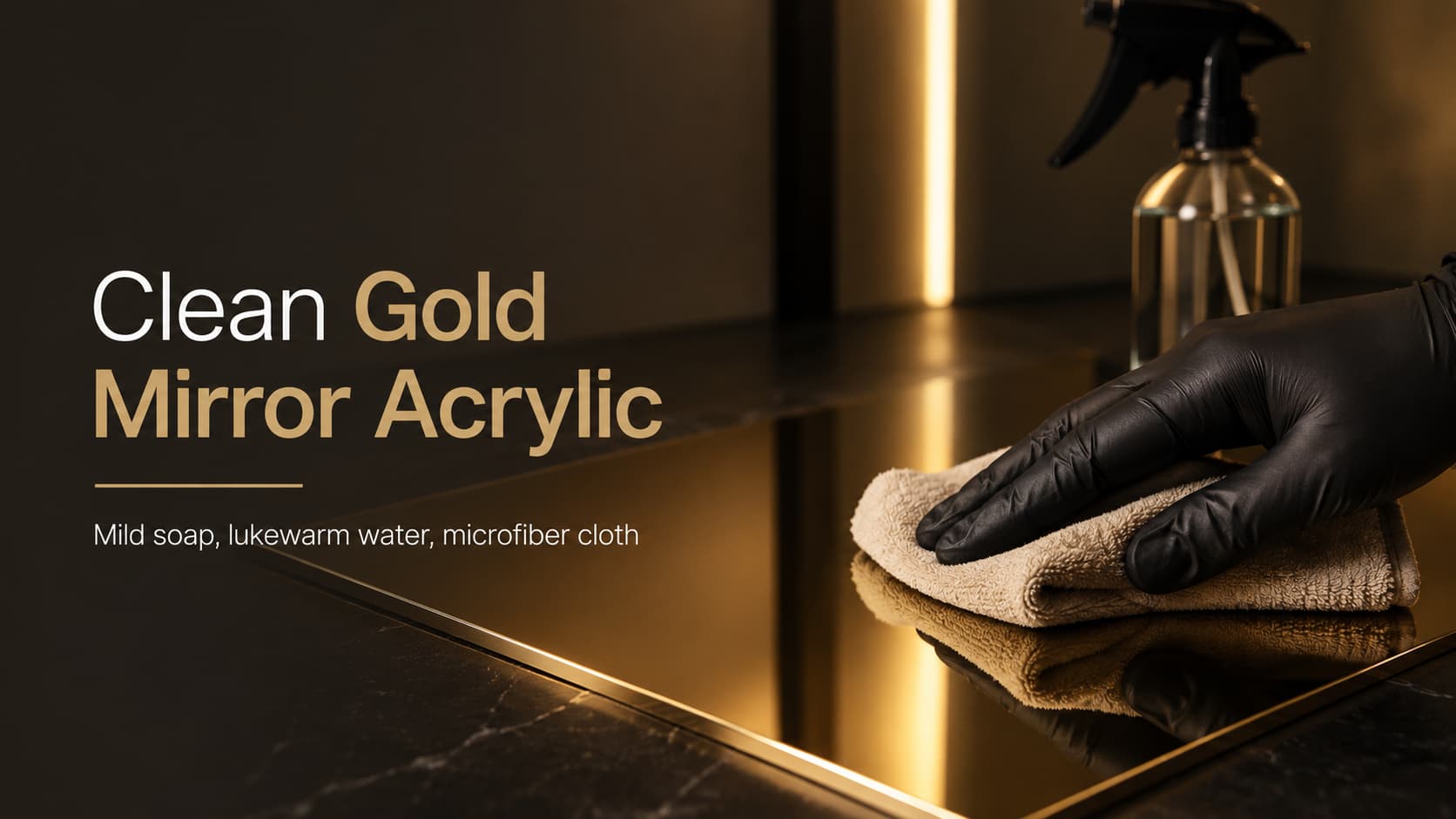
Gold mirror acrylic is one of the most eye-catching materials used in modern signage, retail displays, wall decoration, event design, and branded visual merchandising. It gives a bright metallic look, reflects light beautifully, and is much lighter and safer to handle than traditional glass mirror.
But there is one thing every user should know: gold mirror acrylic should not be cleaned like glass.
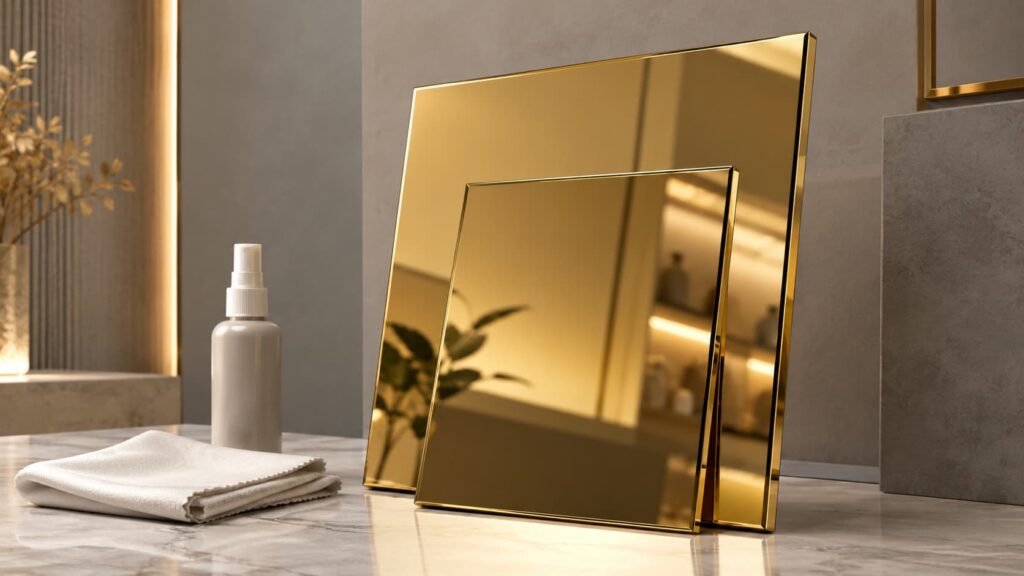
A gold mirror acrylic sheet may look like a glass mirror, but the material underneath is usually PMMA, commonly known as acrylic. PMMA is widely used as a lightweight glass substitute in signs, displays, windows, lenses, and many other applications because it offers good clarity, rigidity, and easier fabrication compared with glass.
At Grandview, we manufacture acrylic sheets and acrylic mirror materials for signage, display, decoration, and custom fabrication projects. From our production and customer application experience, most surface problems on gold mirror acrylic do not come from normal use. They usually come from the wrong cleaner, rough wiping, poor handling, or cleaning the sheet after it has already been cut, drilled, or stressed.
This guide explains how to clean gold mirror acrylic safely, what to avoid, and how to keep the surface looking bright and professional for a longer time.
Before we explain the full cleaning process, here is the short version. If you only remember one rule, treat gold mirror acrylic as a delicate plastic mirror, not as glass. Use mild cleaning, soft cloth, and light pressure.
Quick Cleaning Checklist for Gold Mirror Acrylic
| Do | Do Not | Why It Matters |
|---|---|---|
| Use lukewarm water | Do not use hot water | Gentle water helps loosen dust without affecting backing layers, adhesives, or installed parts |
| Use mild soap | Do not use ammonia glass cleaner | Gold mirror acrylic is not glass, and strong glass cleaners may damage the acrylic surface |
| Use a clean microfiber cloth | Do not use paper towels | Paper towels can leave fine scratches on reflective acrylic surfaces |
| Remove loose dust first | Do not dry wipe dusty panels | Dust particles can act like fine sand and create micro-scratches |
| Wipe with light pressure | Do not scrub hard | Excess pressure may scratch the surface or flex thin sheets |
| Blot dry gently | Do not polish aggressively | Heavy rubbing can leave swirl marks on the mirror finish |
| Test cleaners first | Do not use acetone or lacquer thinner | Strong solvents can damage PMMA and may cause surface stress problems |
| Protect laser-cut edges | Do not use alcohol-heavy cleaners near edges | Cut edges may carry internal stress and are more sensitive to crazing |
What Is Gold Mirror Acrylic?
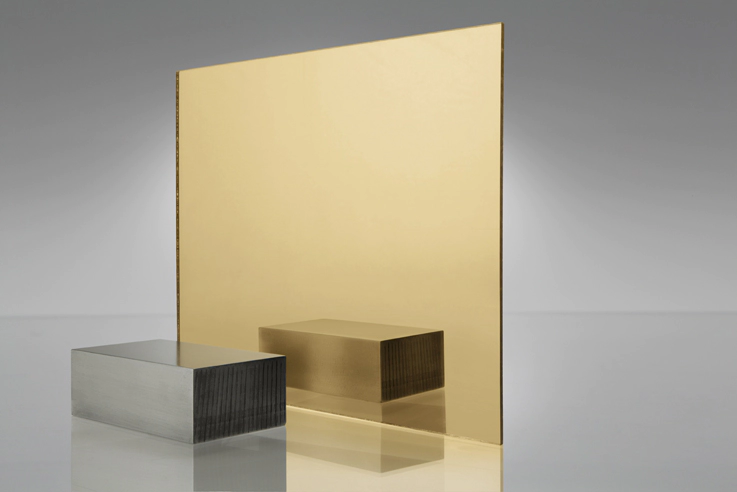
Gold mirror acrylic is an acrylic sheet with a reflective gold mirror finish. It is designed to create the look of a gold mirror while keeping the advantages of acrylic: lighter weight, easier cutting, better impact resistance than glass, and more flexible fabrication options.
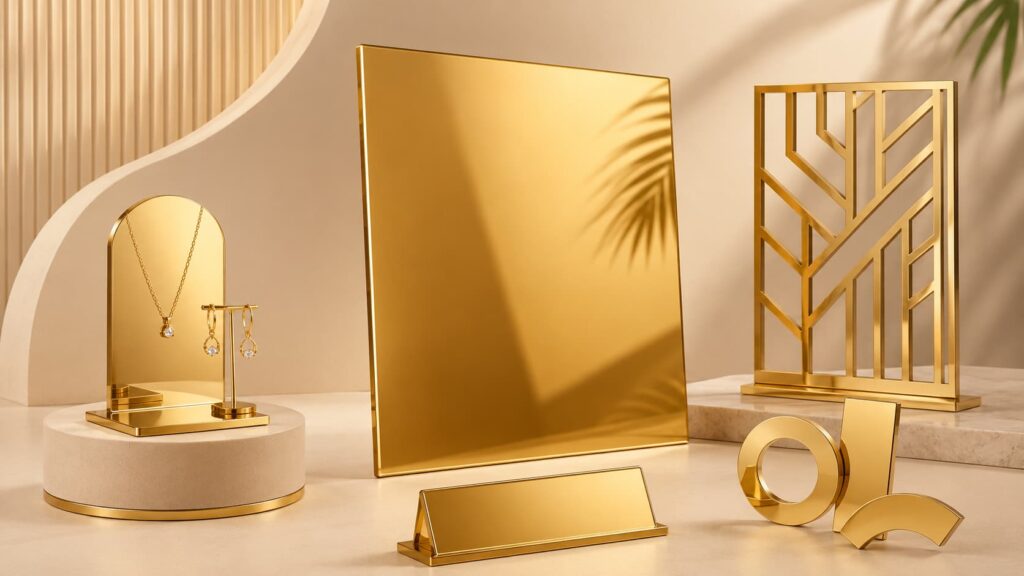
This is why a gold mirror acrylic sheet is often used for:
- Retail store signs and brand logos
- Cosmetic and jewelry displays
- Hotel, restaurant, and showroom decoration
- Wedding and event displays
- Award plaques and nameplates
- Laser-cut letters and decorative shapes
- POS displays and exhibition stands
- Wall panels and interior feature areas
Compared with glass, acrylic is easier to cut, drill, shape, polish, and install. PMMA also has a much lower density than glass, which makes acrylic panels easier to transport and mount for signage and display projects. MatWeb lists PMMA specific gravity around 1.19 g/cc, while PMMA is commonly described as roughly half the density of glass depending on the glass type. (MatWeb)
However, acrylic is softer than glass. This means it needs a gentler cleaning method, especially when the surface is mirror-finished.
Why Gold Mirror Acrylic Needs Gentle Cleaning
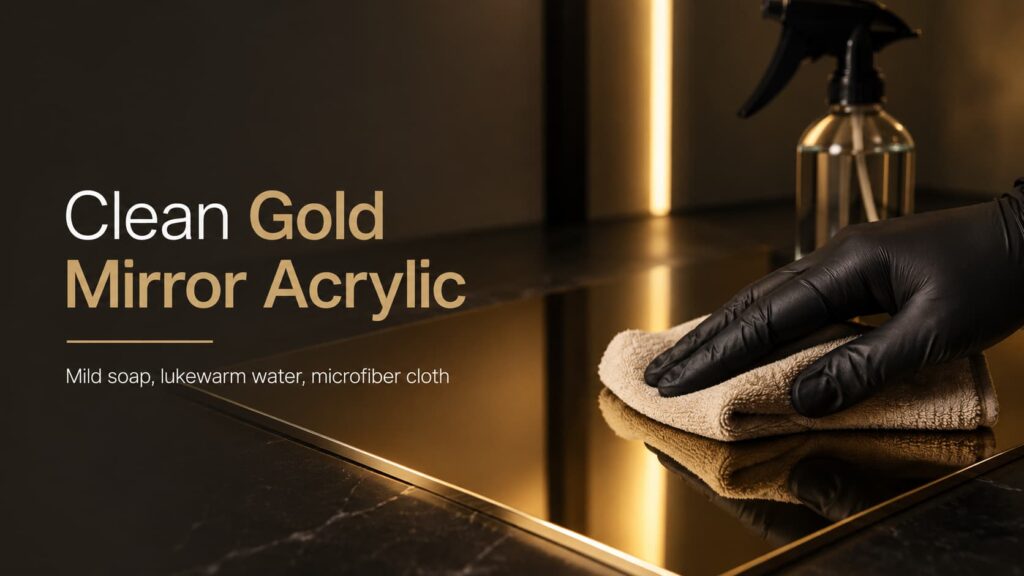
The main reason is simple: the mirror surface shows everything.
Fingerprints, dust, water spots, swirl marks, and tiny scratches are more visible on a reflective gold surface than on many ordinary plastic sheets. If the panel is used in a retail shop or under bright LED lighting, small cleaning marks can look even more obvious.
For commercial projects, this is more than a cosmetic problem. A scratched or cloudy mirror surface can make a display look old, cheap, or poorly maintained. For luxury retail, jewelry counters, cosmetic display stands, wedding decorations, and hotel interiors, the surface finish is part of the value of the material.
There is also a technical reason. PMMA can be sensitive to certain solvents, and solvent exposure may increase the risk of stress cracking or crazing under certain conditions. Studies on PMMA have shown that solvent exposure can affect crazing behavior, especially when the material is already under stress. (PMC)
That is why Grandview always recommends using a plastic-safe cleaning method, not a glass-cleaning habit.
The Best Way to Clean Gold Mirror Acrylic
For most users, the safest method is very simple:
Use lukewarm water, mild soap, and a clean microfiber cloth.
You do not need strong chemicals for daily cleaning. In fact, strong cleaners often create more risk than benefit.
Step 1: Remove loose dust first
Before touching the surface with a cloth, remove loose dust. Dust particles can act like fine sand. If you wipe a dusty gold mirror surface directly, you may drag those particles across the panel and create micro-scratches.
For loose dust, you can use:
- Clean air from a safe distance
- A very soft brush
- A light water rinse, if the panel is not installed with sensitive components
- A damp microfiber cloth with almost no pressure
Avoid dry rubbing. Dry wiping is one of the easiest ways to create fine swirl marks on mirror acrylic.
Step 2: Prepare mild soapy water
Mix a small amount of mild dish soap or neutral detergent with lukewarm water. The solution should be gentle. It does not need to be thick, foamy, or highly concentrated.
Do not use hot water. Hot water is not necessary and may affect adhesives, printed graphics, backing layers, or installation tapes in some projects.
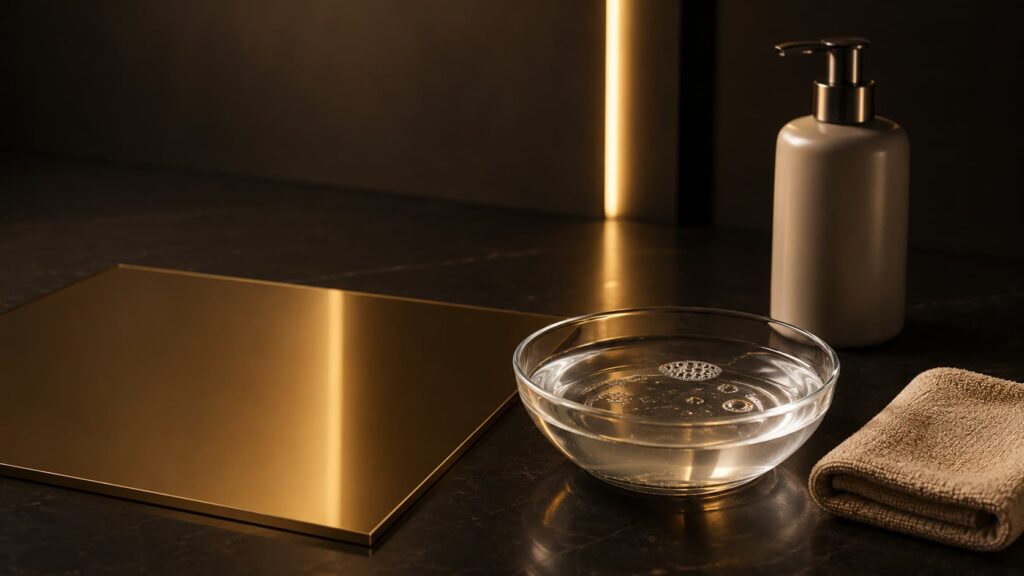
Step 3: Wipe gently with a microfiber cloth
Use a clean microfiber cloth. Dip it into the soapy water and wipe the surface with light pressure.
For best results, wipe in straight lines rather than scrubbing in circles. Circular rubbing can leave visible swirl patterns, especially under strong light.
If there is a fingerprint or oily mark, do not press harder immediately. Let the damp cloth sit on the area for a few seconds, then wipe gently again.
Step 4: Remove soap residue
After cleaning, use another clean cloth dampened with plain water to remove any soap residue. This step is important because dried soap can leave streaks on a mirror surface.
For larger panels, clean section by section instead of trying to clean the whole sheet at once.
Step 5: Blot dry
Use a soft clean microfiber cloth or chamois cloth to blot the surface dry. Do not rub aggressively when the surface is nearly dry. Friction is higher at this stage, and aggressive rubbing may create fine marks.
Safe and Unsafe Cleaning Materials
You can include the following table in the article. It is useful for readers and also helps Google understand the content clearly.
| Cleaning Material | Safe for Gold Mirror Acrylic? | Grandview Recommendation |
|---|---|---|
| Lukewarm water | Yes | Best first step for dust and light dirt |
| Mild dish soap | Yes | Use diluted, not concentrated |
| Neutral detergent | Yes | Good for routine cleaning |
| Clean microfiber cloth | Yes | Best cloth for mirror acrylic |
| Soft chamois cloth | Yes | Useful for gentle drying |
| Anti-static plastic cleaner | Usually yes | Test first, especially on printed or coated parts |
| Paper towel | No | May leave fine scratches |
| Rough cotton rag | No | Can trap dust and scratch the surface |
| Abrasive sponge | No | Can permanently damage the mirror finish |
| Ammonia glass cleaner | No | Not recommended for acrylic surfaces |
| Acetone | Never | Strong solvent; can damage acrylic quickly |
| Lacquer thinner | Never | Too aggressive for acrylic |
| Alcohol-heavy cleaner | Avoid | Higher risk near cut, drilled, or stressed edges |
💡The key rule is: if a cleaner is designed for glass, metal, or kitchen stains, do not assume it is safe for acrylic.
Common Mistakes to Avoid
Mistake 1: Using glass cleaner
This is the most common mistake. Many people see a mirror surface and reach for glass cleaner. But gold mirror acrylic is not glass. Some glass cleaners may contain ammonia or other ingredients that are not suitable for acrylic.
Instead, use mild soap and water.
Mistake 2: Wiping the panel when it is dry and dusty
Dry dust can scratch the surface. Always remove or loosen dust first.
Mistake 3: Using paper towels
Paper towels feel soft, but they are not ideal for mirror acrylic. They can leave fine scratches or lint. A clean microfiber cloth is much safer.
Mistake 4: Cleaning too hard
More pressure does not mean better cleaning. If the stain is stubborn, soften it first. Pressing hard may damage the surface or bend thin acrylic sheets.
Mistake 5: Cleaning laser-cut edges with alcohol
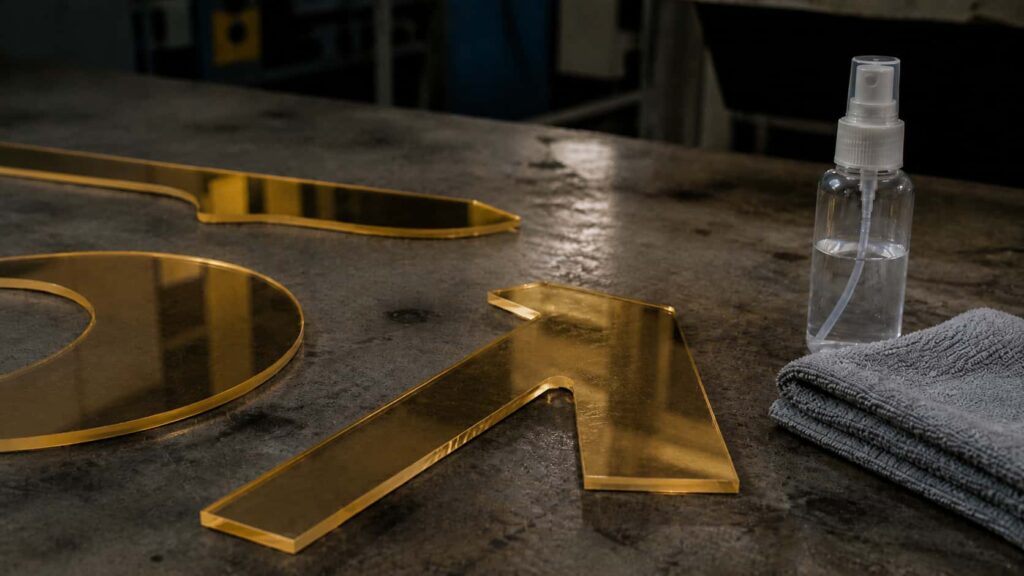
Laser-cut acrylic letters and shapes may carry internal stress along the cut edge. If the wrong solvent touches these stressed areas, fine cracks or crazing may appear. PMMA is known to be affected by some organic solvents, and solvent-related stress cracking is a known concern in acrylic materials.
For laser-cut gold mirror acrylic, keep cleaning gentle and avoid alcohol-heavy cleaners around the edges.
Cleaning Gold Mirror Acrylic in Different Applications
Gold mirror acrylic is used in many industries, so the cleaning method should match the application.
| Application | Main Problem | Cleaning Frequency | Best Practice |
|---|---|---|---|
| Retail display | Fingerprints and dust | Daily or weekly | Use microfiber cloth and mild soap |
| Cosmetic display | Powder, oil, fingerprints | Daily | Clean lightly and often |
| Jewelry display | Fingerprints under strong lighting | Daily | Blot dry carefully to avoid streaks |
| Wall decoration | Dust and water spots | Weekly or monthly | Use light pressure and avoid dry wiping |
| Event decoration | Handling marks | Before and after use | Keep protective film on during transport |
| Laser-cut signage | Edge stress and dust | As needed | Avoid solvent contact near edges |
| Outdoor sign panel | Rain marks and pollution | Monthly or after dirt buildup | Rinse dust first before wiping |
For B2B display projects, we recommend creating a simple cleaning instruction sheet for installers, store staff, or event teams. Many surface problems happen because the final user does not know the material is acrylic.
How to Remove Fingerprints
Fingerprints are very common on gold mirror acrylic because the reflective surface makes oil marks easy to see.
To remove fingerprints:
- Wet a microfiber cloth with mild soapy water.
- Wipe gently in one direction.
- Use a second damp cloth with clean water.
- Blot dry with a soft cloth.
Avoid alcohol wipes. They may remove fingerprints quickly, but they can create long-term risk, especially near laser-cut, drilled, bonded, or bent areas.
How to Remove Adhesive Residue
Adhesive residue may appear after removing protective film, labels, masking tape, or temporary installation tape.
Start with the safest method:
- Soften the residue with warm soapy water.
- Use a microfiber cloth to gently lift the residue.
- Do not scrape with a knife or metal blade.
- Do not use acetone or strong solvent.
- Test any special cleaner on a scrap piece first.
For factories or sign makers, if you need to remove adhesive residue before printing, bonding, or installation, test the cleaner on the same batch of material first. This is especially important for mirror acrylic because the reflective layer, backing paint, adhesive backing, and protective film may all respond differently.
How to Care for Thin Gold Mirror Acrylic Sheets
Thin acrylic sheets need extra care. Many gold mirror acrylic sheet products used in signs, decorative panels, and POS displays are 1mm, 2mm, 3mm, or 1/8 inch thick. These sheets are easy to fabricate and install, but they can flex during cleaning.
When cleaning thin gold mirror acrylic:
- Support the panel from the back.
- Do not press in the center of an unsupported sheet.
- Avoid bending the sheet while wiping.
- Keep the protective film on as long as possible before final installation.
- Store sheets with clean protective layers between them.
This is especially important for mirror acrylic used in retail displays, where the final surface is viewed closely.
How to Reduce Static and Dust Attraction
After removing protective film, acrylic sheets may attract dust because of static electricity. This can be frustrating for display makers, especially before printing, packaging, or installation.
To reduce static:
- Avoid dry wiping.
- Use a plastic-safe anti-static cleaner if suitable.
- Keep the working area clean.
- Use gloves when handling finished panels.
- Avoid sliding sheets against each other.
In production environments, anti-static tools may help before printing, painting, or packaging. For everyday users, gentle damp cleaning is usually enough.
Material Quality Also Matters
Cleaning is important, but sheet quality also affects long-term appearance. A premium gold mirror acrylic sheet should have a clean reflective finish, stable backing, good flatness, and consistent color. Poor-quality sheets may show spots, uneven reflection, weak coating, or surface defects more easily.
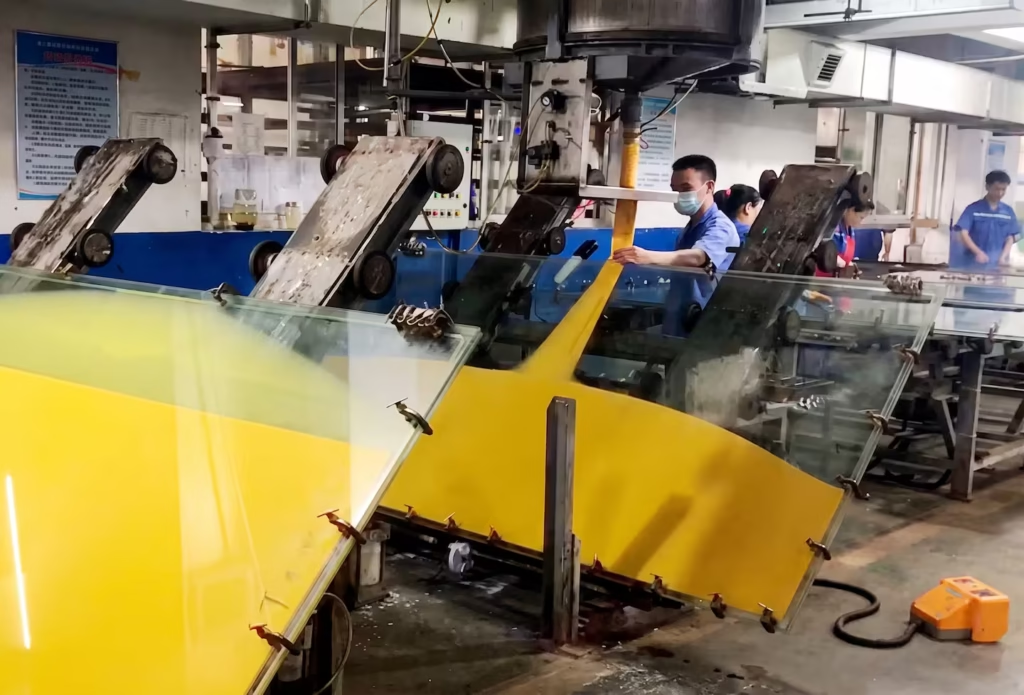
Grandview’s acrylic mirror sheets are made from 100% virgin PMMA and designed as a lightweight, shatter-resistant alternative to traditional glass mirror for displays, decoration, and custom projects. Grandview also operates a 50,000 sqm acrylic manufacturing facility with 8 automatic lines and focuses on 100% virgin MMA cast acrylic sheet production.
For commercial buyers, this matters because a high-quality material can reduce problems during cutting, installation, display, and maintenance.
If your project combines mirror acrylic with clear acrylic, colored acrylic sheets, frosted acrylic, glitter acrylic, or printed acrylic panels, it is better to use one safe cleaning standard for the whole display system. This helps avoid confusion during installation and store maintenance.
Conclusion
Cleaning gold mirror acrylic is not difficult, but it does require the right method. The safest approach is to remove loose dust first, clean with lukewarm water and mild soap, wipe gently with a clean microfiber cloth, remove residue, and blot dry.
Avoid glass cleaners, acetone, ammonia, abrasive pads, paper towels, dry rubbing, and aggressive solvent-based products. Be extra careful with laser-cut letters, thin sheets, drilled parts, and installed display panels.
A gold mirror acrylic sheet is chosen because it looks premium. With proper cleaning and handling, it can keep that clean reflective look for retail displays, signage, event decoration, wall panels, and custom fabrication projects.
From Grandview’s manufacturing and application experience, the best result comes from three things working together: good material selection, careful fabrication, and safe maintenance.

FAQ
Can I use glass cleaner on gold mirror acrylic?
No. Gold mirror acrylic should not be cleaned like glass. Many glass cleaners may contain ingredients that are not suitable for acrylic. Use mild soap, lukewarm water, and a clean microfiber cloth.
What is the safest cleaner for gold mirror acrylic?
The safest cleaner is diluted mild soap in lukewarm water. For most fingerprints, dust, and light dirt, this is enough.
Can I use alcohol to clean gold mirror acrylic?
It is better to avoid alcohol-heavy cleaners, especially near laser-cut, drilled, bent, or stressed edges. Alcohol may increase the risk of crazing in stressed acrylic parts.
How do I remove scratches from gold mirror acrylic?
Very light marks may sometimes be improved with acrylic-safe plastic polish, but mirror acrylic should be handled carefully. Deep scratches may not be fully repairable. Always test on a small area first.
Why does my gold mirror acrylic look cloudy after cleaning?
Cloudiness may come from the wrong cleaner, soap residue, hard rubbing, or chemical attack. Stop using the cleaner immediately and rinse gently with clean water.
Can gold mirror acrylic be used outdoors?
It can be used in some outdoor applications, but performance depends on sheet quality, coating, UV exposure, installation method, and environment. For outdoor signage, ask your supplier about weather resistance and recommended maintenance.
Should I remove the protective film before installation?
No. Keep the protective film on as long as possible during cutting, handling, transport, and installation. Remove it only before final inspection and cleaning.
Is gold mirror acrylic suitable for laser cutting?
Yes, many gold mirror acrylic sheets can be laser cut, but the cut edge should be cleaned carefully. Avoid strong solvents and alcohol-heavy cleaners near laser-cut edges.
Where can I buy custom gold mirror acrylic sheets?
Grandview supplies acrylic mirror sheets and custom acrylic sheet solutions for signage, displays, decoration, and OEM/ODM projects. You can contact the Grandview team for custom sizes, colors, thicknesses, and fabrication support.