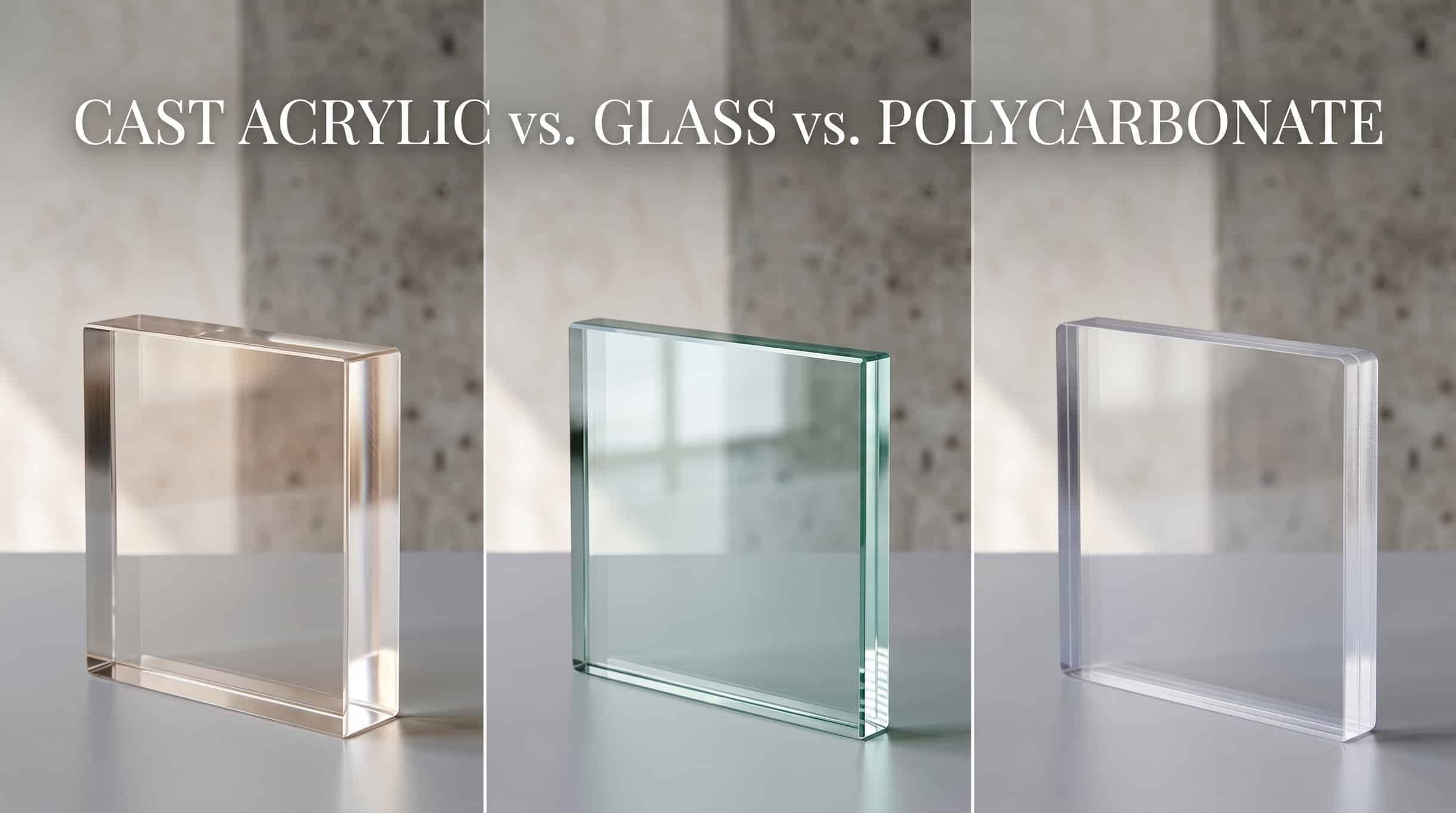
Choosing the right transparent material can make or break a commercial fabrication project. Whether you are designing backlit channel letters for a global brand, constructing luxury retail display cases, or installing architectural lighting, the material you select dictates not only the aesthetic quality but also the manufacturing cost and long-term durability.
Fabricators and procurement managers often face a critical, high-stakes decision: Cast Acrylic vs. Glass vs. Polycarbonate: Which is Best for Your Commercial Project? Making the wrong choice often leads to disastrous results—shattered glass during shipping, yellowing polycarbonate in outdoor signage, or melted, ruined edges during laser cutting.
At Grandview Acrylic, we have been at the forefront of premium acrylic manufacturing since 2009. Serving clients in over 100 countries, our engineers frequently help global businesses navigate these material selection pitfalls. Many buyers use terms like Plexiglass (a famous brand of acrylic) and traditional glass interchangeably, but their performance in a commercial setting couldn’t be more different.
In this comprehensive guide, we will break down the exact performance data, machinability, and ideal applications for these three transparent materials, helping you optimize your yield, reduce rework, and elevate your brand presentation.
Quick Data Breakdown: Material Comparison Table
For engineers and fabricators looking for fast, objective answers, we have compiled the core technical specifications of premium cast acrylic, polycarbonate, and traditional glass.
| Feature / Material | Premium Cast Acrylic Sheets (PMMA) | Polycarbonate (PC) | Traditional Mineral Glass |
| Light Transmission | 92% (Highest optical clarity) | 88% (Slightly less clear, grayish tint) | 80% – 90% (Often has a green tint) |
| Impact Resistance | 10x to 17x stronger than glass | 250x stronger than glass | Low (Shatters easily upon impact) |
| Weight Profile | 50% lighter than glass | 50% lighter than glass | Very heavy (High shipping costs) |
| Laser Machinability | Excellent (Produces perfect flame-polished edges) | Poor (Edges melt, turn brown or yellow) | Cannot be laser cut |
| UV Resistance | Naturally UV stable (10-year warranty against yellowing) | Requires special coating (Prone to yellowing) | Excellent UV stability |
| Cost Range | Moderate to Premium | High | Low (but high handling/shipping costs) |
| Best Used For | High-end signage, retail POS displays, thin-sheet illuminated boxes | Machine guards, riot shields, bulletproof windows | Traditional building windows, structural architecture |
Cast Acrylic Sheets (Plexiglass): The King of High-End Displays
When people ask about Plexiglass or acrylic glass, they are usually referring to Polymethyl Methacrylate (PMMA). However, not all acrylic is created equal. In the high-end commercial sector, particularly for thin-sheet applications, Cast Acrylic Sheets are the undeniable gold standard.
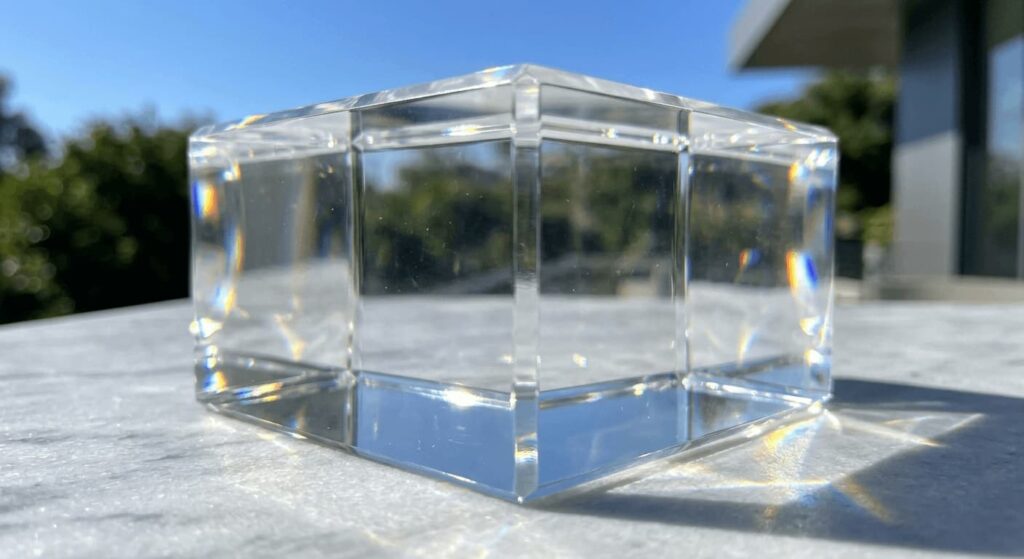
Why “Cast” and “Virgin” Materials are Crucial
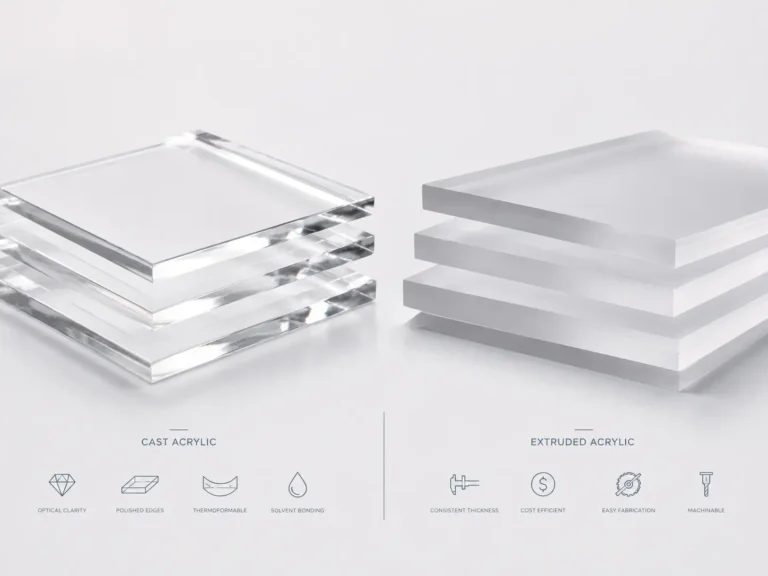
It is essential to distinguish between cheap extruded acrylic and premium cast acrylic. As a leading cast acrylic manufacturer, Grandview always advises clients that for anything involving precision fabrication, cast is mandatory. Extruded acrylic contains internal manufacturing stress; when you attempt to drill it, route it, or apply fastening pressure, it is highly prone to cracking and crazing.
Furthermore, the raw material matters immensely. At Grandview, we utilize 100% virgin Mitsubishi MMA across our 8 advanced Taiwanese production lines. This uncompromising standard ensures that our cast sheets offer flawless clarity, zero impurities, and exceptional structural stability, making them the perfect canvas for demanding OEM and ODM fabrications.
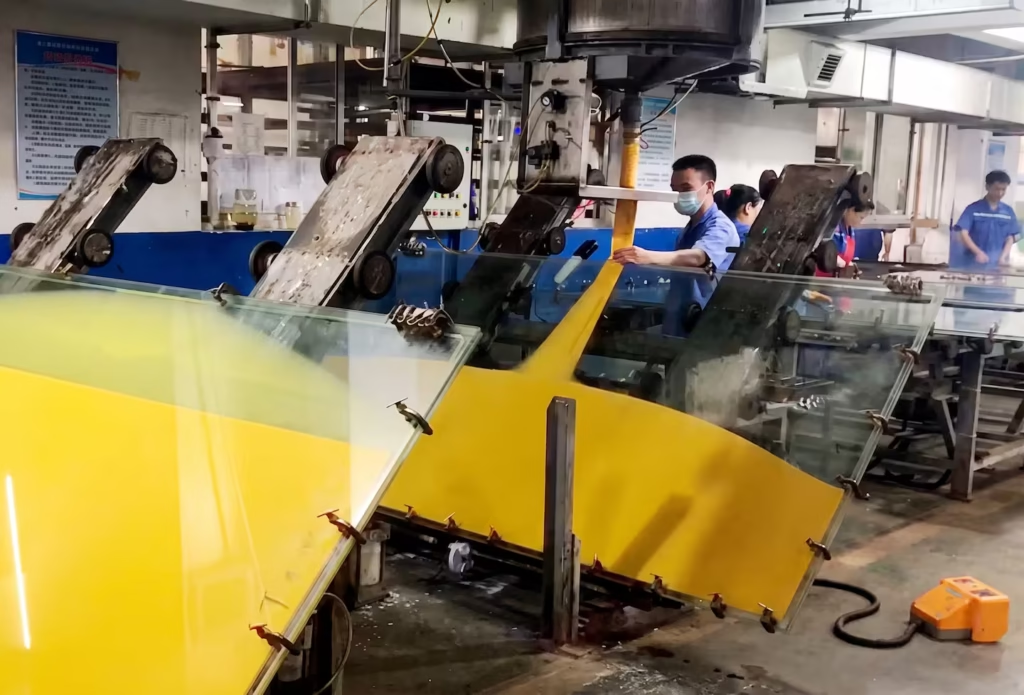
The Magic of Laser Cutting And Optical Clarity
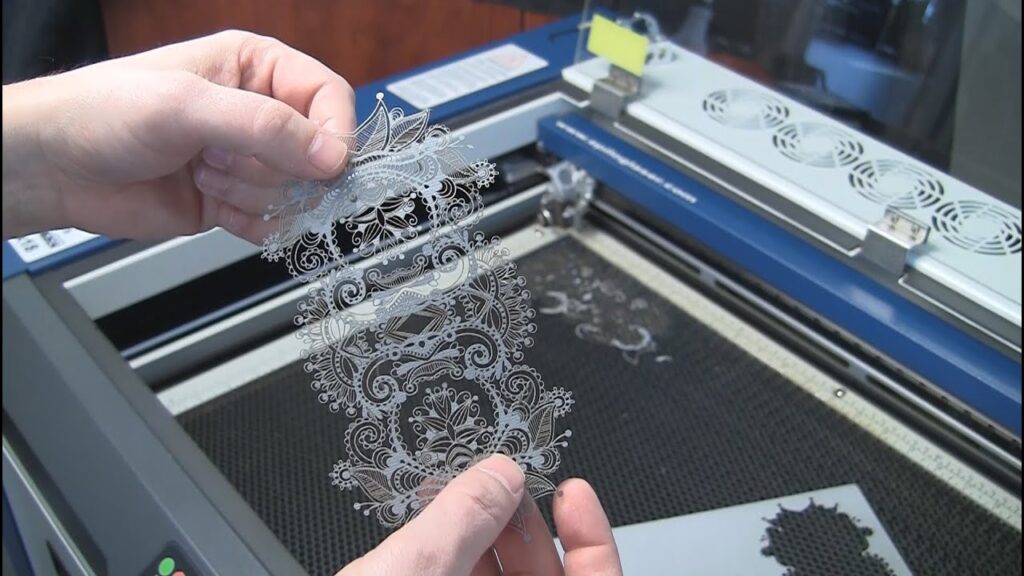
For sign makers and display fabricators, especially those utilizing thin sheets (1mm to 3mm), cast acrylic offers an unmatched advantage: flawless laser cutting. When a laser cuts through a high-quality cast acrylic sheet, the heat naturally vaporizes the material, leaving a perfectly smooth, glossy, flame-polished edge. You do not need to waste labor hours on secondary mechanical polishing.
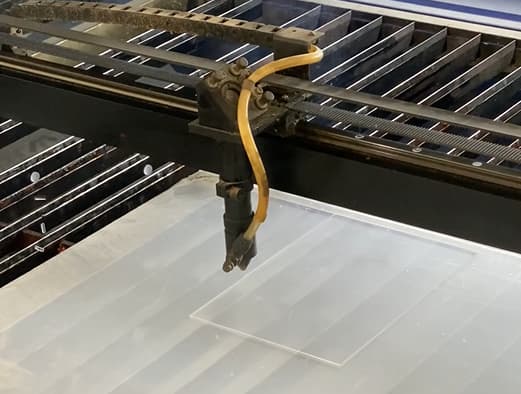
Additionally, with a light transmission rate of 92%, clear acrylic actually allows more light to pass through than standard glass. If you are sourcing clear acrylic wholesale for edge-lit signs or cosmetic display stands, this optical purity ensures your LED lights diffuse perfectly without the ugly “hot spots” or color distortion that plague lower-grade materials.
Polycarbonate: The Indestructible Workhorse
Polycarbonate (often known by brand names like Lexan) is an incredible engineering plastic famous for its extreme, almost aggressive durability.
The Unbreakable Factor
If your primary concern is blunt-force impact, polycarbonate is the winner. It is roughly 250 times stronger than glass and approximately 30 times stronger than acrylic. It is virtually unbreakable. You can hit a sheet of polycarbonate with a hammer, and it will merely dent or bounce the hammer back. This makes it exceptional for heavy-duty industrial applications, safety glazing, and security barriers.
Where Polycarbonate Fails in Signage and Displays
Despite its strength, polycarbonate is rarely the best choice for visual merchandising, thin-sheet fabrication, or illuminated signage. First, its light transmission is lower (around 88%), and it naturally possesses a subtle blue or grey tint that dulls warm LED lighting.
More importantly, it is a nightmare for display fabricators to laser cut. The material absorbs the laser’s heat poorly, causing the edges to melt, bubble, and turn an unsightly yellow or brown color. Additionally, standard polycarbonate has terrible UV resistance. If placed outdoors under direct sunlight without an expensive secondary coating, it will quickly yellow and become brittle. By contrast, premium cast acrylic is naturally UV stable.
Traditional Glass: The Heavyweight Legacy
Glass is the oldest clear material on the market. It offers fantastic scratch resistance—superior to both acrylic and polycarbonate—and excellent chemical resistance. It also will not degrade under UV light.
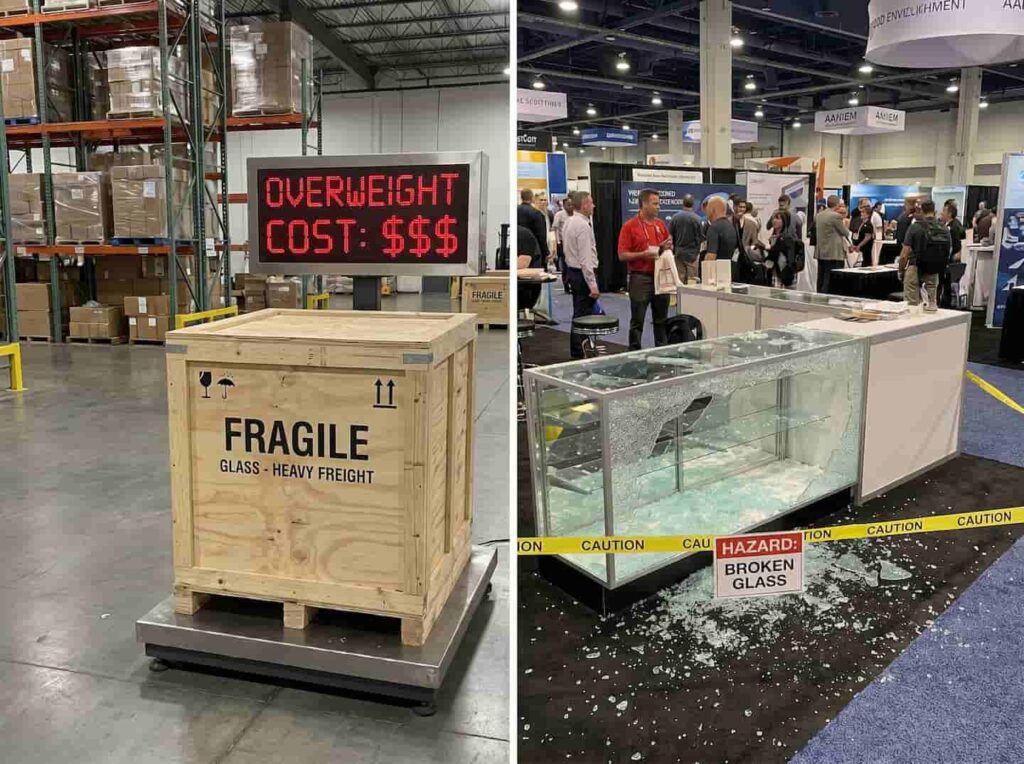
However, for commercial B2B projects like global store rollouts, trade show booths, or suspended signage, glass is a massive liability. It is incredibly heavy, which exponentially increases your international freight and handling costs. It is rigid and dangerous; if a display is bumped, glass shatters into sharp, hazardous shards. Furthermore, shaping, drilling, and customizing glass requires specialized wet-cutting tools, drastically slowing down production timelines compared to precision CNC machining of acrylic plastics.
Decision Scenarios: Choosing the Right Material for Your Application
If you and your engineering team are still debating, “Cast Acrylic vs. Glass vs. Polycarbonate: Which is Best for Your Commercial Project?”, let’s look at a few real-world B2B scenarios to finalize your decision.
Scenario 1: Luxury Retail Displays And Backlit Signage
The Winner: Cast Acrylic Sheets
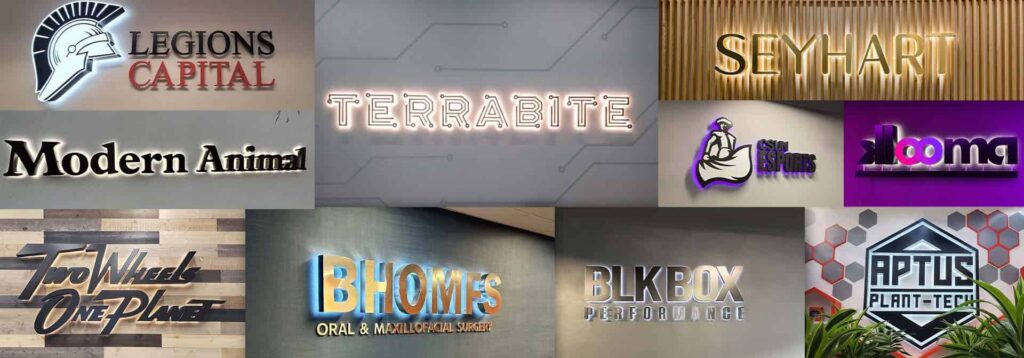
When you are building cosmetic displays for a high-end department store or luminous 3D channel letters for a brand’s storefront, aesthetic perfection is non-negotiable. You need thin sheets that can be intricately laser-cut into complex logos. You need 92% light transmission for brilliant illumination. A reliable acrylic sheet supplier will always steer you toward cast acrylic for these visually demanding, precision-machined tasks.
Scenario 2: Machine Guards And High-Impact Zones
The Winner: Polycarbonate
If you are building safety shields for CNC machinery, transparent barriers for heavy-traffic public transit stations, or protective visors, you cannot risk the material cracking under impact. In environments where safety and impact resistance absolutely supersede optical perfection, polycarbonate is the undeniable choice.
Scenario 3: Global Rollouts And Budget Optimization
The Winner: Cast Acrylic
While standard glass might seem cheaper upfront, the hidden costs of shipping heavy glass and replacing shattered pieces quickly destroy your project budget. Conversely, while polycarbonate is tough, it is significantly more expensive than acrylic. Cast acrylic hits the sweet spot—it provides a premium, glass-like appearance, is lightweight for efficient global logistics, and offers more than enough durability for commercial display environments.
The Grandview Factory Advantage: Beyond the Material
When choosing a reliable plexiglass supplier for your project, the material itself is only half the equation. Buying standard 4×8 feet sheets from a local distributor often leads to massive headaches and wasted budget for fabrication plants. Partnering directly with a world-class source factory like Grandview Material provides distinct advantages that local distributors simply cannot offer.
Unrivaled Capacity and Strict Thickness Tolerances
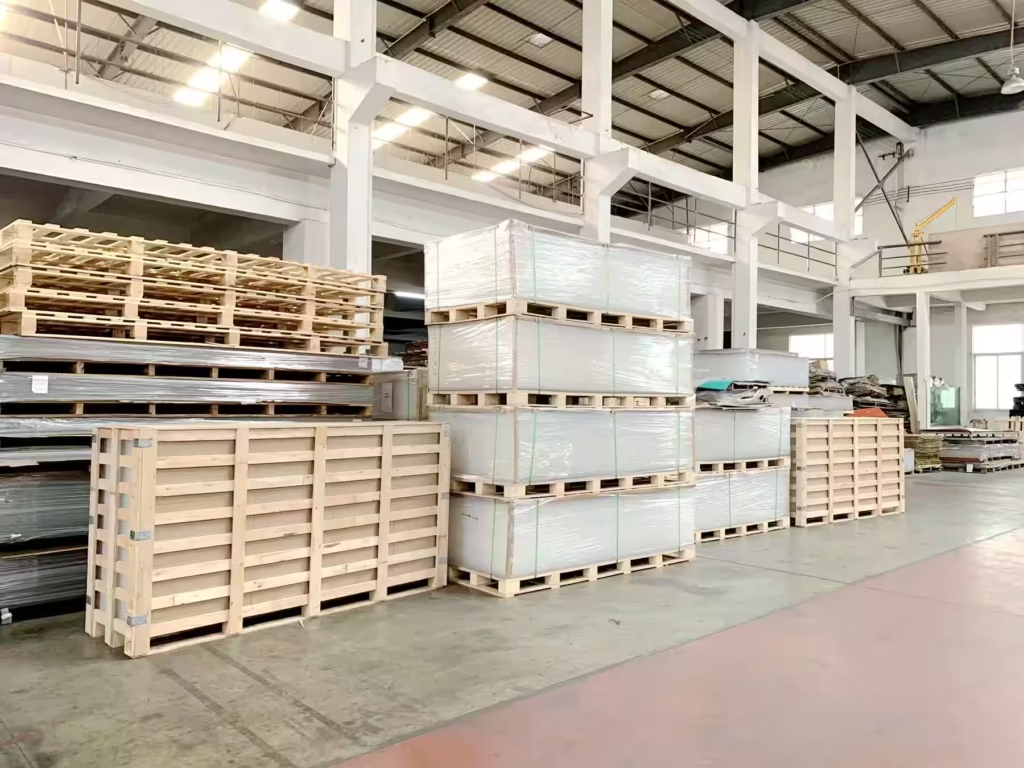
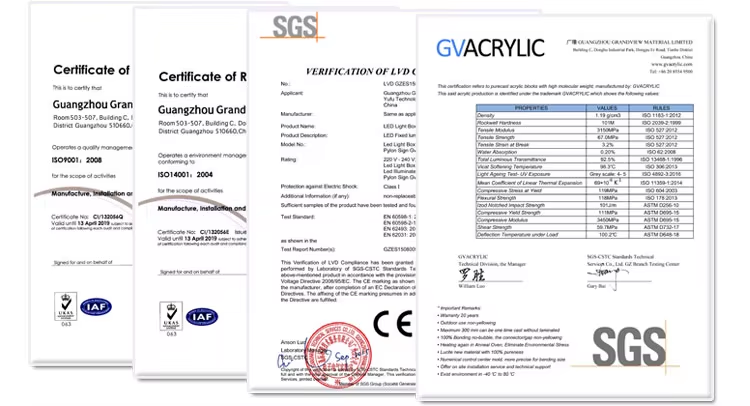
Operating out of a sprawling 50,000 sqm state-of-the-art facility, Grandview maintains a consistent monthly capacity of over 8,000 sheets. In the world of thin-sheet display fabrication, thickness tolerance is critical. Standard industry acrylic can fluctuate wildly. Thanks to our advanced automated lines and rigorous ISO-certified quality control, we maintain ultra-strict thickness tolerances. This ensures that when you order a 2mm sheet, your laser cutter and seamless bonding teams can rely on consistent precision.
Custom Sizing And Yield Optimization
Distributors sell stock sizes. If your project requires panels that are 35×35 inches, cutting them out of a standard sheet generates a massive amount of expensive off-cut waste. By working directly with Grandview, we offer OEM and ODM custom fabrication. We can produce sheets in custom dimensions tailored specifically to your cutting files. This factory-direct “yield optimization” strategy routinely saves our global partners up to 20% in raw material waste.
Infinite Colors and 10-Year Reliability
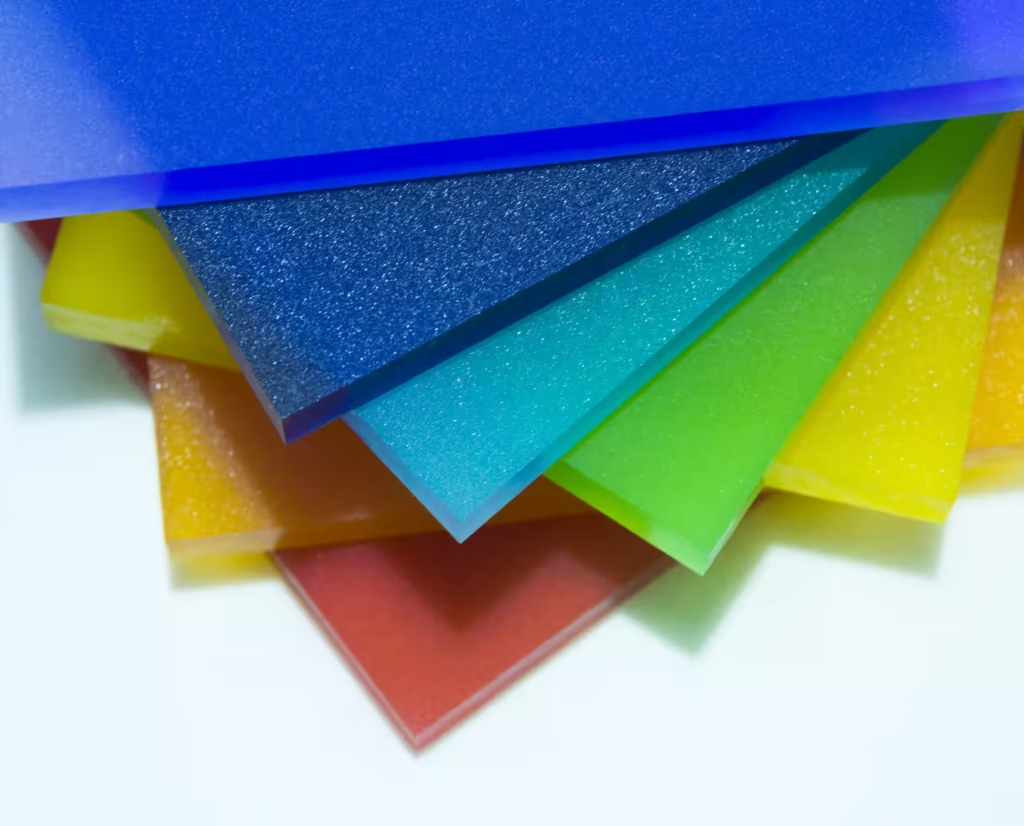
Brand consistency is everything. If a global brand needs signage that perfectly matches their specific Pantone corporate color, standard transparent acrylic won’t suffice. With our advanced color-matching technology, we bring your unique brand colors and textures to life. Best of all, because we use 100% new MMA, we back our premium acrylic solutions with a robust 10-year warranty, ensuring zero yellowing over time.
Frequently Asked Questions (FAQs)
Is Polycarbonate stronger than Plexiglass?
Yes, polycarbonate is significantly stronger regarding blunt impact. It is about 250 times stronger than glass, while Plexiglass (cast acrylic) is about 10 to 17 times stronger than glass. However, acrylic offers vastly superior optical clarity, scratch resistance, and UV stability.
Does Polycarbonate turn yellow in the sun?
Yes, standard polycarbonate will quickly yellow and become hazy when exposed to prolonged UV radiation. Cast acrylic, engineered with 100% virgin MMA, is naturally UV-stable and will remain crystal clear outdoors for years.
Can you laser cut Polycarbonate?
While technically possible, it is highly discouraged for commercial displays. Laser cutting polycarbonate results in melted, burned, and yellowed edges. Cast acrylic is the superior choice for laser cutting, yielding a flawless, polished edge instantly.
Are acrylic glass and cast acrylic the same thing?
“Acrylic glass” is a broad consumer term for clear acrylic plastic. Within the fabrication industry, we must specify whether it is “cast” or “extruded.” Always choose “cast acrylic” for commercial machining, bonding, and display purposes to ensure structural integrity and avoid cracking.
Conclusion: Let’s Build Your Next Project
Understanding the technical nuances between these materials is the first step toward a successful build. The answer to “Cast Acrylic vs. Glass vs. Polycarbonate: Which is Best for Your Commercial Project?” ultimately depends on your priority. If absolute optical clarity, flawless laser-cut edges, and premium brand aesthetics are your goals, Cast Acrylic is the undisputed champion.
Do not let standard distributor sizes and poor tolerances ruin your fabrication yield and profit margins.
Need a Custom Size or Infinite Color Match for Your Next Global Rollout? Partner with a source factory that empowers your business. At Grandview, our skilled team combines decades of fabrication expertise with advanced automated production lines to deliver precision, durability, and factory-direct pricing.
Explore Our Capabilities or contact us today to request a Premium Acrylic Thin-Sheet Sample Kit for your laser testing. Experience the Grandview difference firsthand.