Learning how to cut acrylic sheets perfectly is essential, whether you are an independent fabricator working on a custom prototype or a procurement manager overseeing a global retail display rollout.
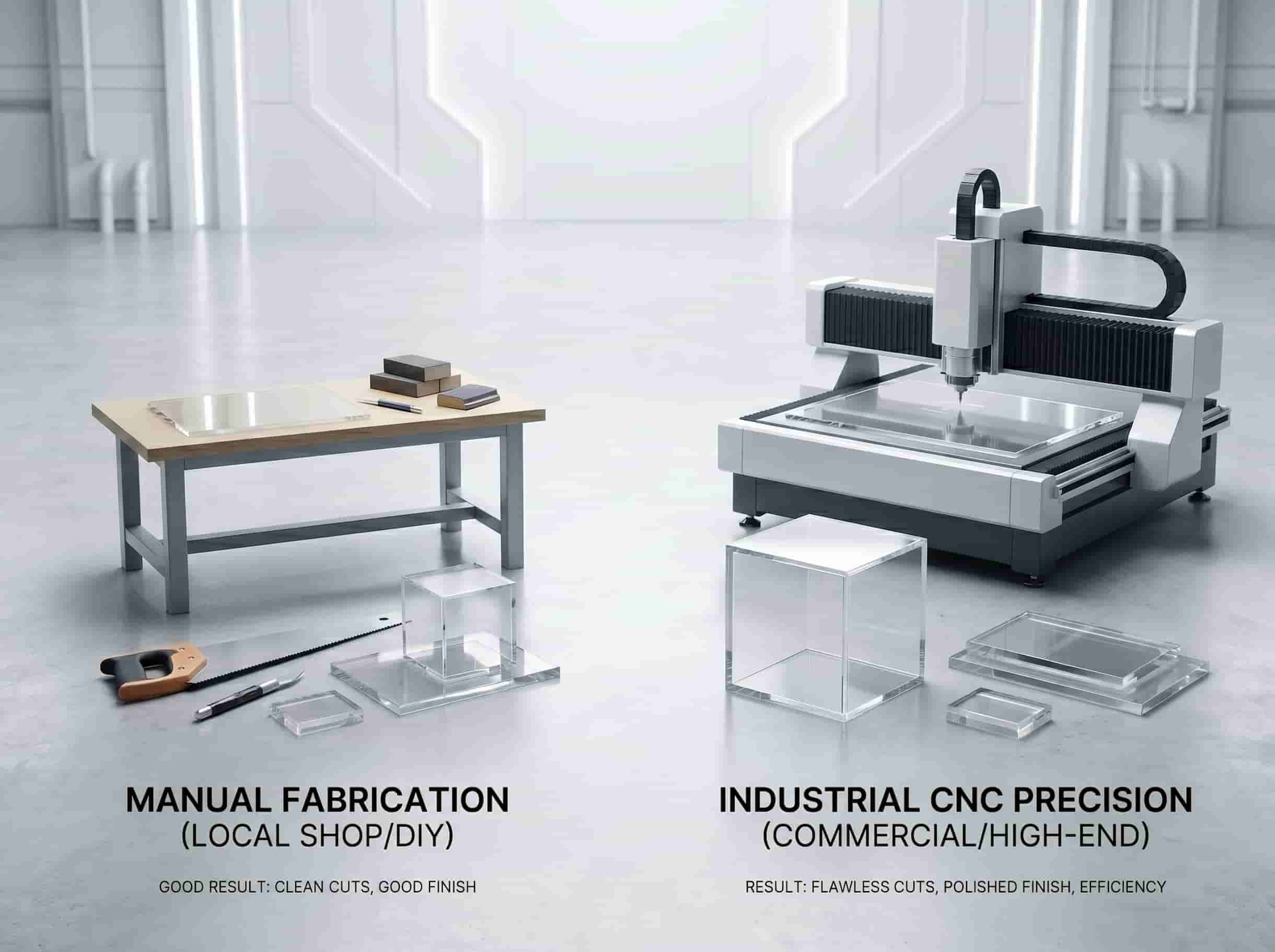
Fabricators constantly face the ultimate decision: How to cut acrylic sheets: manual tools vs. industrial CNC precision? While local shops or DIY enthusiasts might rely on handheld saws and scoring knives, producing high-end commercial signage and luxury display cases requires a completely different level of technological infrastructure. In this comprehensive guide, we will break down the exact processes, tools, and industry secrets required to achieve a flawless cut every single time.
The Foundation of a Clean Cut: Why Material Quality Matters First
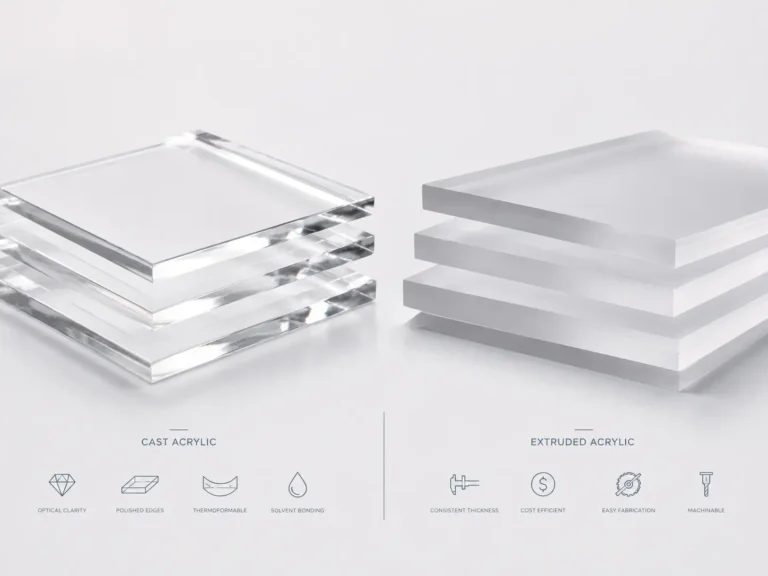
Before discussing router bits and laser settings, we must address the industry’s biggest open secret: A perfect cut depends 50% on your tools and 50% on the raw material. Many fabricators struggle with acrylic melting around the saw blade or chipping along the edge, incorrectly blaming their equipment. Often, the real culprit is cheap, extruded acrylic or recycled resin. Extruded acrylic contains high internal stress, making it highly susceptible to cracking during mechanical fabrication.
For high-end applications like illuminated channel letters and cosmetic displays, you must use premium cast acrylic sheets. At Grandview Acrylic, our sheets are manufactured using 100% virgin Mitsubishi MMA. This guarantees a structurally stable material that machines beautifully, resists melting under high friction, and provides an unparalleled 92% light transmission.

Quick Reference: Cutting Methods Comparison Table
To help you make an informed decision for your project, here is a breakdown of the standard cutting methods used across the industry.
| Cutting Method | Best Used For | Required Tool / Spec | Edge Quality | Production Scale |
| Scoring Knife | Straight cuts on thin acrylic sheets (under 3mm) | Heavy-duty scoring knife, straight edge | Matte, slightly rough | DIY / Single Prototype |
| Circular / Table Saw | Straight, long cuts for sizing large sheets | Plastic-cutting blade (80+ teeth), zero-clearance insert | Clean, requires sanding | Low to Medium |
| Jigsaw | Basic curves and cutouts | Fine-tooth blade (downward-cutting action) | Rough, requires heavy sanding | Low / Custom shapes |
| Industrial CNC Router | Complex geometries, exact tolerances, 3D profiling | CAD/CAM software, carbide-tipped spiral upcut bits | Smooth, highly precise | Mass Commercial Rollout |
| Industrial Laser Cutter | Intricate designs, sharp internal corners, thin sheets | High-power CO2 laser, vector software | Flawless, flame-polished | Mass Commercial Rollout |
Manual Tools: For Prototypes and Small-Scale Fixes
If you are working on a small-scale repair, a one-off prototype, or lack access to a state-of-the-art plastics fabrication shop, manual tools can get the job done if used correctly.
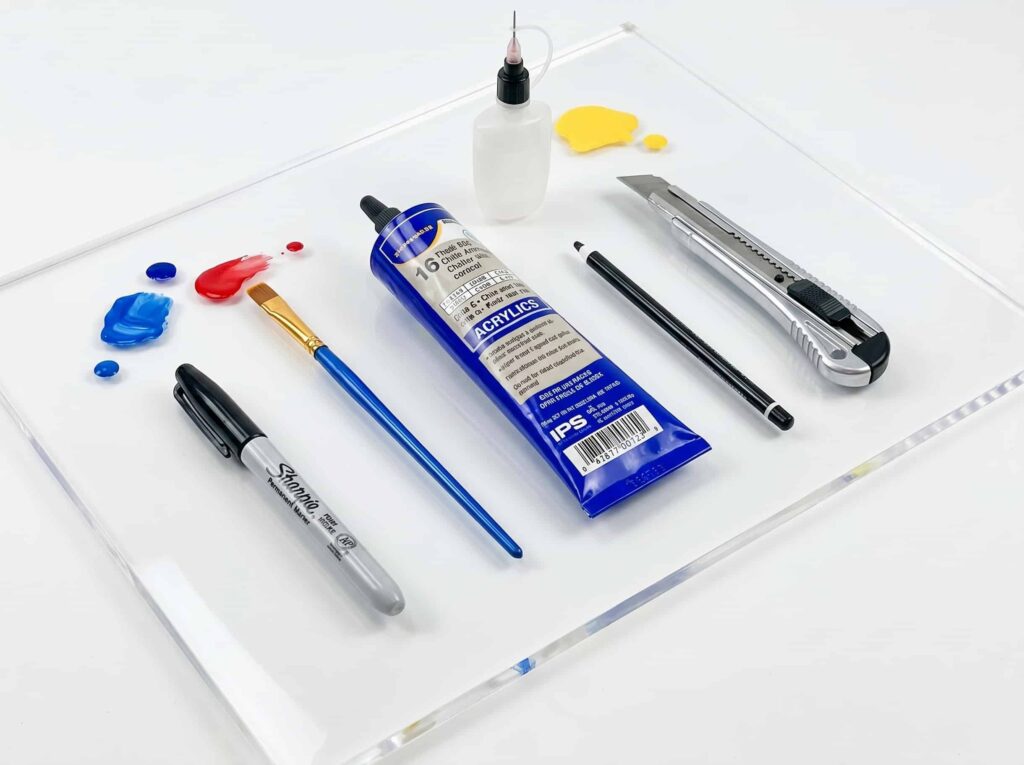
Scoring Knife (For Thin Acrylic Sheets)
For very thin clear acrylic sheets (typically 1mm to 3mm), a scoring knife is the most accessible tool.
- Leave the protective film on the sheet to prevent scratching.
- Clamp a metal straight edge along your cut line.
- Apply firm, even pressure and pull the scoring knife along the line 5 to 10 times. You must create a deep, continuous groove.
- Position the scored line exactly over the sharp edge of your worktable.
- Apply quick, downward pressure to the overhanging piece to snap it cleanly.
Table Saws and Jigsaws
When cutting thicker sheets manually, a table saw or circular saw is required. The absolute critical factor here is the blade. You cannot use a standard wood blade; you must use a specialized plastic-cutting blade with closely spaced teeth (ideally 80 teeth or more).
For curved designs, a jigsaw can be utilized. To prevent the up-and-down motion from lifting and cracking the plastic, apply masking tape over the cut line and use a fine-toothed, downward-cutting blade. Always keep the tool moving at a steady pace—stopping in the middle of a cut will cause friction heat, which quickly melts the acrylic around the blade.
Industrial CNC Precision And Laser Cutting: For Commercial Rollouts
While manual tools are fine for basic sizing, they cannot meet the rigorous demands of the modern B2B landscape. When global brands order hundreds of custom display cases or large-scale architectural signage, strict thickness tolerances and absolute repeatability are mandatory. This is where industrial solutions take over.
CNC Routing: Unmatched Repeatability for Signage
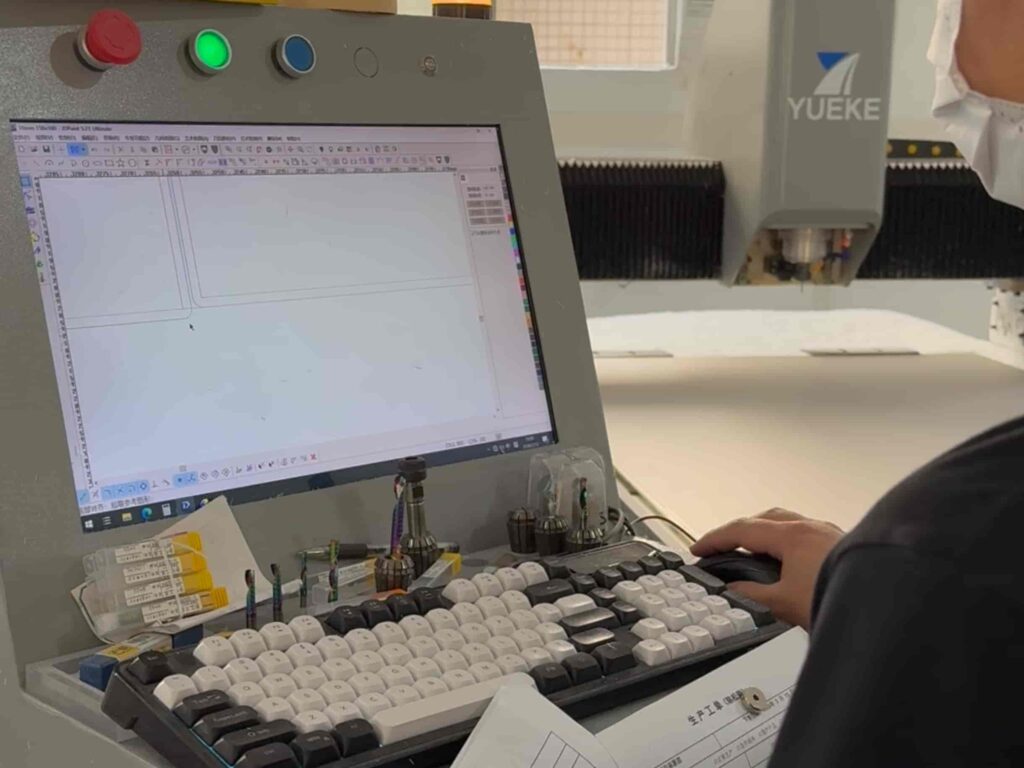
Computer Numerical Control (CNC) routers are the backbone of large-scale custom acrylic fabrication. Using sophisticated CAD/CAM software, engineers program exact digital paths for the machine to follow.
- The Advantage: A CNC router can cut 1,000 identical pieces with zero deviation. It operates with a vacuum bed to securely hold large acrylic sheets perfectly flat, eliminating the vibrations that cause edge chipping. By optimizing feed rates and utilizing carbide-tipped spiral bits, industrial CNC machines carve through thick acrylic flawlessly, leaving a smooth edge ready for immediate edge-lighting or structural bonding.
Laser Cutting: The Secret to Perfect Flame-Polished Edges
When evaluating how to cut acrylic sheets: manual tools vs. industrial CNC precision, laser cutting sits in a class of its own—especially for thin acrylic sheets used in POS displays and intricate logos.
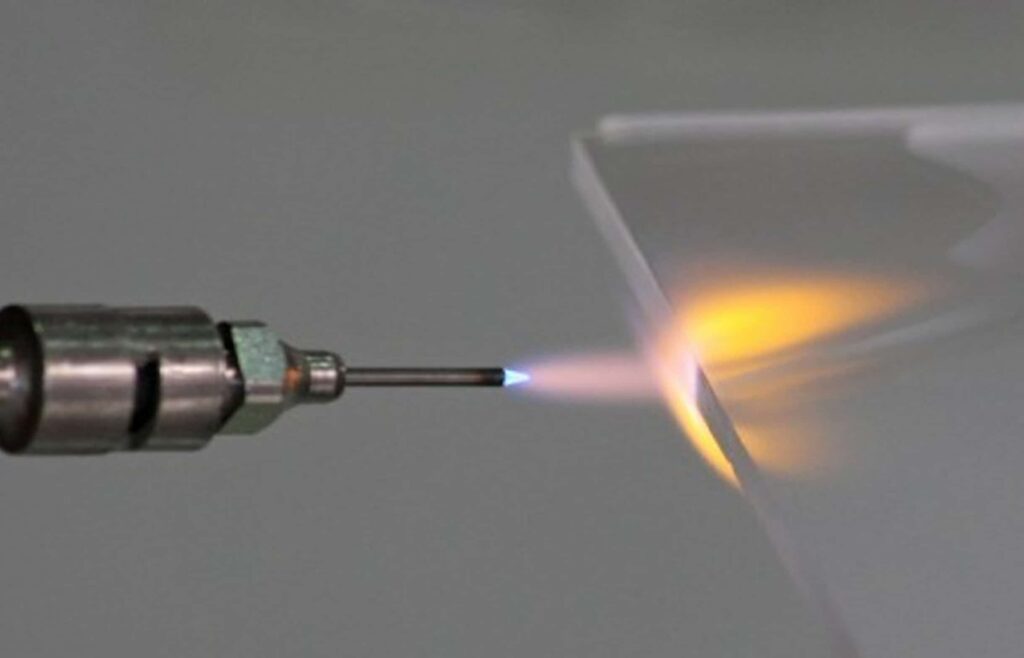
- The Advantage: A CO2 laser cutter does not use friction; it uses focused heat to instantly vaporize the cut line. Because our Grandview cast acrylic is formulated from premium virgin MMA, the laser melts the edge seamlessly, naturally cooling into a brilliant, glossy, flame-polished finish. This eliminates the need for hours of manual sanding and polishing, drastically reducing labor costs and shortening lead times for large export orders.
Overcoming Common Fabrication Headaches
Local fabrication shops often struggle with two main issues: chipping and warping.
Chipping occurs when the feed rate (how fast the material moves) and the spindle speed (how fast the blade spins) are mismatched, or when using inferior extruded acrylic. Warping is a severe issue in thin sheets, occurring when thermal heat from standard cutting tools builds up unevenly.
Source factories solve these issues through advanced cooling systems (like mist coolants during CNC routing) and by leveraging advanced Taiwanese production lines that ensure rigorous thickness consistency across the entire acrylic sheet, mitigating thermal stress.
The Grandview Advantage: Factory-Direct Custom Fabrication
If you are a signage manufacturer or display builder, relying on manual cutting or outsourcing to local middle-man shops limits your scalability and eats into your profit margins.
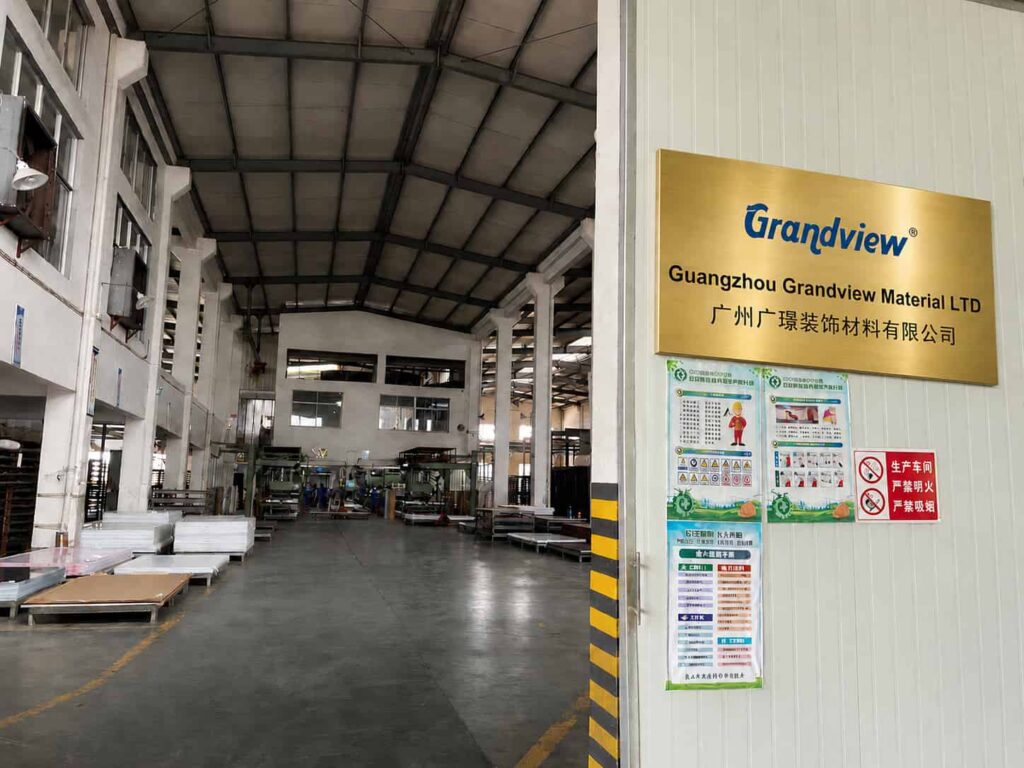
At Grandview Material, we empower global businesses by combining raw material excellence with state-of-the-art custom fabrication. Operating a sprawling 50,000 sqm ISO-certified facility, we don’t just supply premium clear acrylic sheets—we deliver comprehensive OEM and ODM solutions.
- Yield Optimization: Don’t waste money cutting standard 4×8 sheets down to size. We can manufacture custom-sized sheets directly from the factory, saving you up to 20% in off-cut waste.
- Precision Fabrication: Equipped with industrial CNC routers and high-format laser cutters, we can deliver fully fabricated, precision-cut components directly to your assembly line, whether you are in North America, Europe, or the Middle East.
Frequently Asked Questions (FAQs)
What is the best tool to cut clear acrylic sheets at home?
For thin sheets (under 3mm), a scoring knife is the safest and easiest method. For thicker sheets, a circular saw or table saw equipped with a fine-toothed plastic-cutting blade is recommended.
Why does my acrylic melt when I try to cut it with a jigsaw?
Acrylic melts due to excessive friction heat. This happens if your blade is dull, if you are using a blade with too few teeth, or if you stop moving the saw mid-cut. Using a proper downward-cutting blade and maintaining a steady feed rate will prevent melting.
Can CNC routers cut thin acrylic sheets without cracking them?
Yes. Industrial CNC routers use powerful vacuum beds to hold thin sheets completely flat and secure. Combined with exact computer-controlled feed rates and specialized routing bits, they cut thin acrylic perfectly without any vibration or cracking.
Does laser cutting produce toxic fumes?
Laser cutting cast acrylic vaporizes the material and produces fumes that must be safely evacuated. Professional fabrication facilities use industrial-grade exhaust and filtration systems to ensure a safe environment and a pristine cut.
Conclusion: Elevate Your Next Project
Understanding how to cut acrylic sheets: manual tools vs. industrial CNC precision is about understanding the scale and quality required for your final product. Manual tools are excellent for quick fixes, but when aesthetic perfection, optical clarity, and mass repeatability are on the line, industrial precision is the only answer.
Stop dealing with rough edges, melted seams, and poor yields from standard distributor sheets. Elevate your manufacturing process by partnering directly with the source.
Are you planning a high-volume commercial rollout? Tagged under our Acrylic Solutions, Grandview is ready to be your global fabrication partner. [Contact our factory engineers today] to request a custom quote or secure a Premium Acrylic Sample Kit for your own CNC and laser testing.