FROM FEEDSTOCK TO BUYER CHECKPOINT
Two production routes.
One finished sheet.
Five checks buyers should keep.
Cell casting turns a liquid MMA-based mixture into sheet inside a glass cell. Extrusion melts PMMA and shapes it through a die and calibration line. The route explains how the sheet is formed—but the checkpoints protect the project.
- 01Liquid MMAreaction mixture
- 02Glass Cellplates + spacer
- 03Polymerizecontrolled cure
- 04Demoldrelease sheet
- 05Finishmask + inspect
- 01PMMA Feedgranules / compound
- 02Meltheated barrel
- 03Flat Diecontinuous profile
- 04Calibraterollers + cooling
- 05Finishmask + inspect
How are acrylic sheets made, and why does the production route matter after the sheet leaves the factory? An acrylic sheet can arrive looking clear, flat, and clean yet still create problems when it becomes a slot-fit fixture, a drilled machine guard, or a bonded cover. Visual inspection alone does not reveal everything about how the sheet will behave during fabrication.
For B2B buyers, understanding how acrylic sheets are made is therefore not just material knowledge. It helps determine what should be measured, sampled, processed, and approved before repeat production.
QUICK ANSWER
Casting forms PMMA inside a cell. Extrusion reshapes PMMA through a continuous line.
CELL CAST Liquid MMA-based material polymerizes between glass plates.
EXTRUSION PMMA granules or molding compound are melted, formed, calibrated, cooled, and cut.
CONTINUOUS CAST A separate recognized sheet category within the wider casting family.
The manufacturing route does not end at the factory; it shows up again at the cutting table.
From MMA or PMMA Feedstock to Finished Acrylic Sheet
Two terms are often mixed together. MMA, or methyl methacrylate, is the liquid monomer used to form PMMA. PMMA, or poly(methyl methacrylate), is the finished acrylic polymer.
Cell-cast production generally forms the polymer while the material is inside the casting cell. Extrusion normally begins with PMMA that has already been polymerized and supplied as granules or molding compound. This distinction explains why casting involves a controlled polymerization stage, while extrusion involves melting, shaping, calibration, and cooling.[1]
Do not describe both routes as if the same material enters the same forming process.
The polymer is formed during controlled reaction inside the cell.
different forming route
The existing polymer is melted, shaped, calibrated, and cooled.
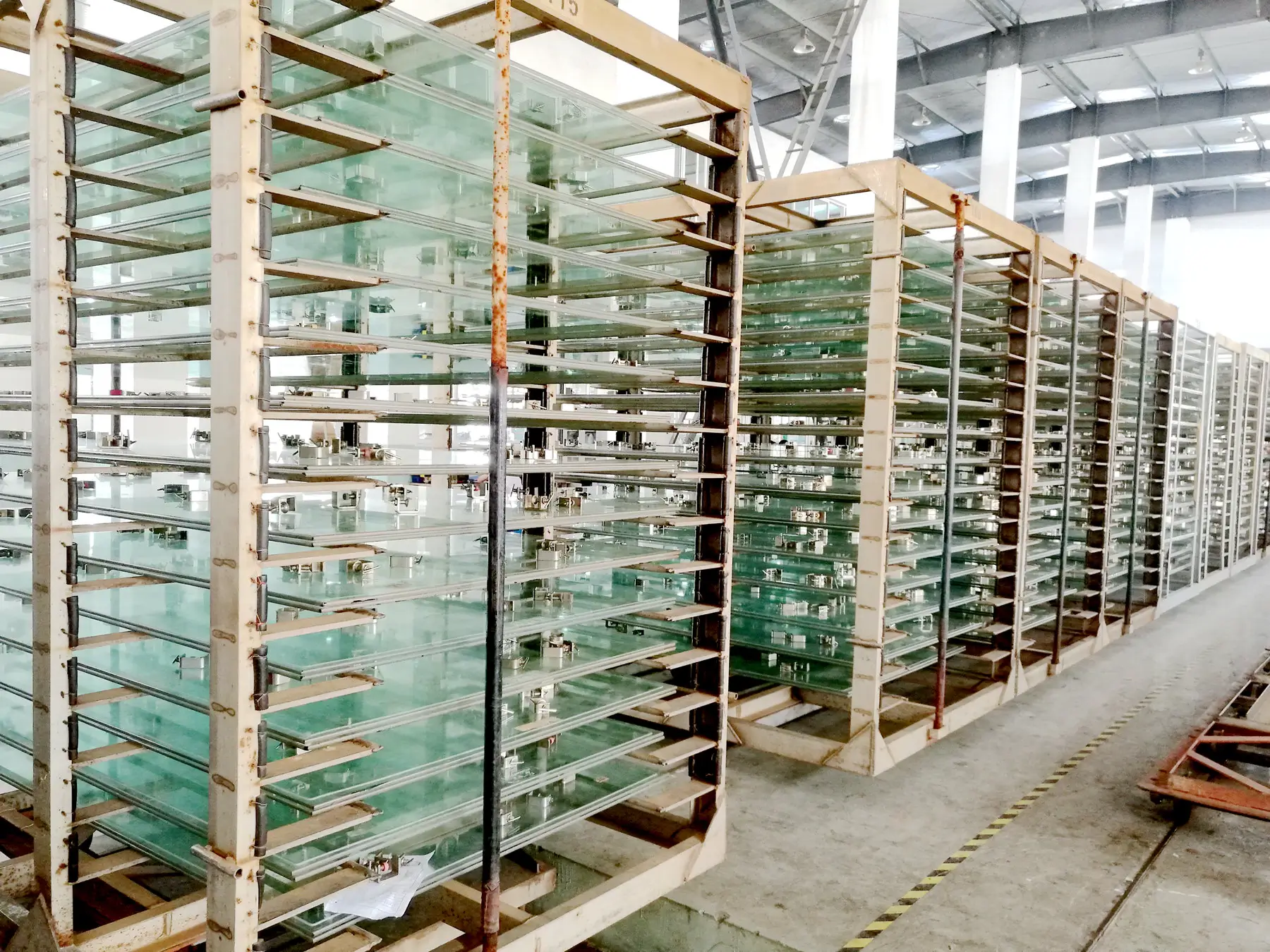
How Cell-Cast Acrylic Sheets Are Made
Traditional cell-cast production forms one sheet inside an individual casting cell. The process is best understood as a controlled reaction system—not as molten plastic being poured into a simple mold.
GLASS CELL / SECTION VIEW
MIX GASKET / SPACER GLASS
-
CAST-01
Prepare the Casting Cell
Two glass plates are assembled with a flexible gasket or spacer. The space between them helps establish the nominal thickness, while the plate surfaces influence the resulting sheet surface.
-
CAST-02
Fill and De-air
A liquid MMA-based reaction mixture enters the cell. The assembly may be positioned to help trapped air escape before polymerization progresses.
-
CAST-03
Polymerize and Cure
Under controlled conditions, the liquid mixture reacts and becomes a solid PMMA sheet. The polymer is formed during this stage.
-
CAST-04
Demold the Sheet
After the reaction is complete, the glass plates and spacer are removed and the sheet is released carefully to protect its surface.
-
CAST-05
Trim, Mask, and Inspect
The sheet is trimmed or cut, protected with masking, inspected, and prepared for handling or shipment. ACRYLITE describes optical clarity and thickness checks after demolding.[2]
Grandview’s own cast production overview can be reviewed on the acrylic sheet factory page. Any published process photograph should show the actual stage being described rather than serve as generic factory decoration.
How Extruded Acrylic Sheets Are Made
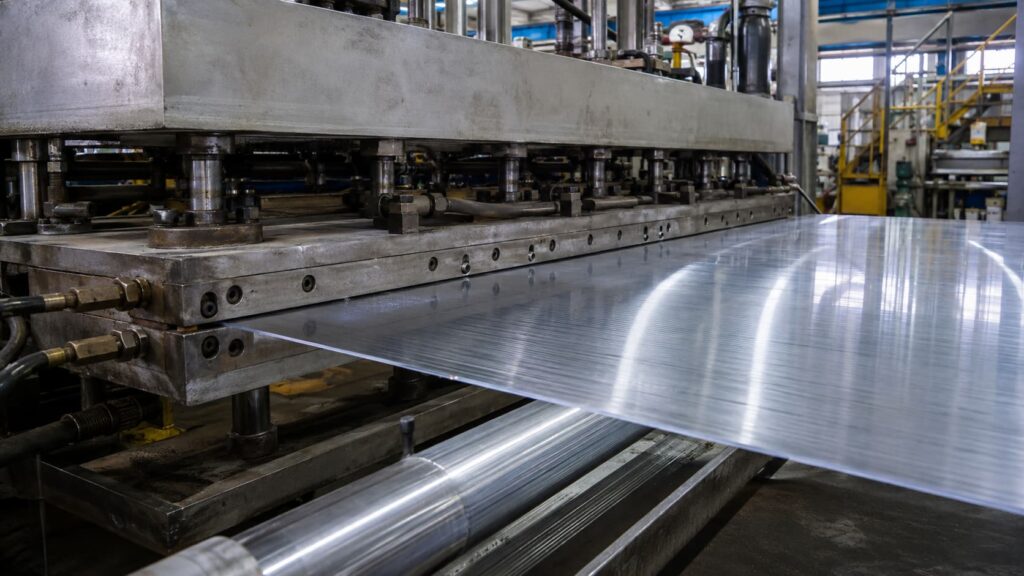
Extruded acrylic is produced as a continuous sheet. The process starts with polymerized PMMA feedstock and uses a connected melting, forming, calibration, cooling, and finishing line.
Scroll horizontally on smaller screens to follow the material flow.
- EX-01
Feed PMMA
Granules or molding compound enter the extruder.
- EX-02
Melt and Move
A heated barrel and rotating screw soften, mix, and pressurize the polymer.
- EX-03
Form Through a Die
The molten PMMA passes through a flat die to create a continuous sheet profile.
- EX-04
Calibrate and Cool
Temperature-controlled rollers help establish the surface and final thickness before cooling.
- EX-05
Mask, Cut, Inspect
The sheet is protected, cut to length or format, inspected, and packed.
Cast and Extruded Production at a Glance
| Production Point | Cell-Cast Acrylic | Extruded Acrylic | Buyer Checkpoint |
|---|---|---|---|
| Starting material | Liquid MMA-based reaction mixture | PMMA granules or molding compound | Confirm route and grade |
| Forming method | Polymerized between glass plates | Melted and pushed through a flat die | Confirm material identification |
| Thickness formation | Influenced by casting-cell spacing | Controlled through die and roll calibration | Review tolerance and measure critical batches |
| Surface formation | Influenced by the glass plate surface | Influenced by die and roller surfaces | Approve the required finish |
| Final operations | Demolding, trimming, masking, inspection | Cooling, masking, cutting, inspection | Confirm protection and delivery condition |
This comparison explains how the sheets are formed. It does not establish which one is automatically better. For a detailed application and fabrication comparison, see the separate guide to cast vs extruded acrylic sheets.
What the Production Route Can—and Cannot—Tell You
The manufacturing route helps predict which questions need to be asked. It cannot replace the product specification.
THE ROUTE MAY INFLUENCE
- Thickness consistency
- Available colors, textures, or custom grades
- Response to heating, machining, cementing, or polishing
- Production economics and practical order quantities
- How the sheet surface is formed
THE ROUTE DOES NOT PROVE
- A specific thickness tolerance
- Optical or surface quality
- Color consistency between orders
- Suitability for every environment or adhesive
- The appearance after cutting, bending, or bonding
Five Quality Checkpoints B2B Buyers Should Verify
“Quality checked” is too broad to function as a purchase requirement. A useful review identifies the evidence needed at each release gate.
Material release should follow the part—not a generic promise.
Five checks before repeat production
-
QC-01Production Route and Grade
“Acrylic” alone does not identify the exact material.
CONFIRMIDENTIFYCast, continuous cast, or extruded; product grade; color and surface.
-
QC-02Nominal and Actual Thickness
Slots, frames, fasteners, and assemblies depend on real dimensions.
CONFIRMMEASUREApplicable tolerance, measurement method, and critical fit range.
-
QC-03Surface and Appearance
A sheet can meet dimensional needs but fail a visible application.
CONFIRMVIEWScratches, inclusions, finish, color, and actual viewing conditions.
-
QC-04Processed Sample
A flat-sheet approval does not show the final edge, hole, bend, or joint.
CONFIRMPROCESSA test coupon or sample made with the intended fabrication process.
-
QC-05Masking, Traceability, and Packing
Handling and transport affect appearance and repeat orders.
CONFIRMRELEASEProtective masking, batch identification, packing, and approved specification.
FIT-CRITICAL OR APPEARANCE-CRITICAL PART?
Review the sheet together with the next fabrication step.
Share the application, intended cutting or forming process, and whether you need whole sheets, cut blanks, or finished parts.
Review the Production CheckpointsThe Manufacturing Route Shows Up at the Cutting Table
Some differences become visible only after fabrication begins. That is why the next operation—not the material name alone—should guide sample approval.
Slots and Frames
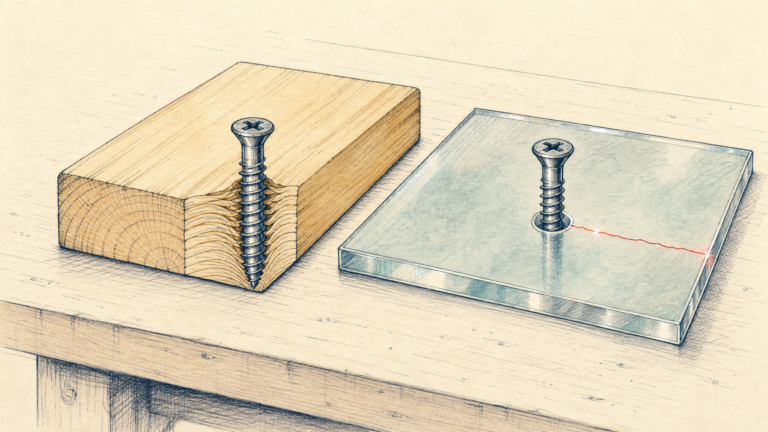
Actual sheet thickness can affect whether parts insert cleanly, sit loose, or require file changes.
MEASURE BATCHDrilled Guards and Covers
Hole geometry, tooling, material stress, support, and assembly method should be reviewed together.
TEST FEATUREVisible Cut and Polished Edges
Approve the edge after the intended laser, CNC, and polishing sequence—not while the sheet remains flat and masked.
APPROVE FINISHBent or Bonded Parts
Grade, geometry, heating or adhesive process, and existing stress all contribute to the final result.
PROCESS SAMPLEFor deeper process planning, continue with the guides to acrylic sheets for laser cutting and custom acrylic machining.
Common Buying Mistakes
-
FAULT 01
Choosing Only by Clarity or Price
Two sheets can both look clear while differing in grade, measured thickness, surface condition, or processing response.
SAFER ACTION: ALIGN THE MATERIAL SCOPE BEFORE COMPARING PRICE -
FAULT 02
Locking the CAD to Nominal Thickness
Designing a tight slot around the catalog thickness without checking the applicable tolerance or batch can create difficult or loose assembly.
SAFER ACTION: CONFIRM TOLERANCE + MEASURE PRODUCTION MATERIAL -
FAULT 03
Approving Only an Unprocessed Sheet
A flat sample cannot show the final laser edge, machined feature, drilled hole, bend, print, or visible bonded joint.
SAFER ACTION: APPROVE THE CRITICAL PROCESSED FEATURE -
FAULT 04
Treating the Route as the Complete Specification
“Cast” and “extruded” are useful categories, but neither label describes every performance or appearance requirement.
SAFER ACTION: RECORD THE GRADE, SAMPLE, AND FINISHED REQUIREMENT
For structural thickness selection, use the separate acrylic sheet thickness guide. For fit-critical parts, also measure the production material.
Approve the Actual Batch and the Processed Sample
A production-ready approval does not jump directly from a product label to mass production. It moves through a short sequence that connects the material to the drawing and finished part.
Do not release repeat production until the critical feature has been represented.
- 01Confirm
Production route and material grade
- 02Measure
Actual sheet or representative batch
- 03Test
Coupon with critical slot, hole, edge, or bend
- 04Approve
Processed sample representing visible and functional features
- 05Record
Material, drawing revision, dimensions, finish, and packing
DECISION RULEIf fit is critical, measure and approve the actual batch before locking the CAD; if appearance is critical, approve the processed sample—not only the flat sheet.
BEFORE THE PRODUCTION FILE IS LOCKED
Validate the sheet, the drawing, and the critical processed feature together.
Send the drawing, nominal thickness, fit-critical dimensions, planned fabrication, and approximate quantity.
Send a Drawing for Process ReviewWhat to Prepare Before Requesting a Quote
“Clear acrylic sheet required” identifies a material family but does not give the supplier enough information to review fit, processing, or delivery. Add the details that affect this project.
From Sheet Route to Deliverable
Complete the relevant fields. Leave the production route open if you need a material review.
What the sheet or part must do.
Whole sheet, cut blank, or finished part.
Cast, extruded, named grade, or open for review.
Color, transparency, surface, and visible faces.
Thickness, overall size, drawing, and critical fit.
Cutting, drilling, bending, polishing, bonding, or printing.
Prototype, first batch, or repeat requirement.
Masking, packing, and destination.
Frequently Asked Questions
What raw material is used to make acrylic sheets?
Acrylic sheet is made from PMMA. Cell-cast production generally starts with a liquid MMA-based reaction mixture that polymerizes inside the casting cell. Extrusion usually starts with polymerized PMMA granules or molding compound.
What is the main manufacturing difference between cast and extruded acrylic?
Cell-cast acrylic is polymerized between glass plates as individual sheets. Extruded acrylic is melted, pushed through a die, calibrated by rollers, and produced continuously.
What is continuous-cast acrylic?
Continuous-cast acrylic is a recognized PMMA sheet category within the broader casting family. Buyers should review the specific grade and technical documentation because the category name alone does not define every property.
Does the manufacturing method determine which acrylic sheet is better?
No. It helps narrow the decision, but the better option depends on the grade, thickness, geometry, fabrication method, appearance requirement, quantity, and project conditions.
Why can measured acrylic thickness differ from nominal thickness?
Nominal thickness identifies the product size, while permissible variation depends on material type, grade, thickness range, manufacturing process, and applicable specification. Fit-critical projects should confirm the relevant tolerance and measure production material.
Should a processed sample be tested before mass production?
Yes, when the project depends on tight assembly, visible edges, drilled holes, bends, printing, bonding, or another critical fabrication result. The sample should represent the final process rather than only the unprocessed sheet.
Conclusion: From Production Route to Production-Ready Specification
Acrylic sheets are mainly formed by polymerizing liquid MMA in a casting system or by melting and continuously extruding PMMA. That explains how the sheet is made—but it is only the beginning of a B2B specification.
The production route should lead to practical checks: confirm the grade, measure critical material, test the intended process, approve the finished features, and record the requirements for repeat production.
FROM MATERIAL ROUTE TO PRODUCTION REQUIREMENT
Need whole sheets, cut blanks, or drawing-based parts?
Share the application, dimensions, critical fabrication step, quantity, packing requirement, and destination for a practical project review.
Submit the Project RequirementTECHNICAL SOURCE FILE
References and Further Reading
-
[1]How PLEXIGLAS® Is Produced
Source: Röhm / POLYVANTIS. Supports the glass-cell casting sequence, PMMA extrusion feedstock, screw and die forming, multi-roll calibration, masking, and cutting stages.
View Source -
[2]How Cast Acrylic Sheet Is Made
Source: ACRYLITE® / POLYVANTIS. Supports glass-cell assembly, gasket-controlled spacing, reaction and curing, demolding, optical and thickness inspection, masking, and packing.
View Source -
[3]Difference Between Cast and Extruded Acrylic Sheet
Source: ACRYLITE® / POLYVANTIS. Provides product-specific context for manufacturing route, thickness tolerance, cementing, thermoforming, and fabrication-related selection.
View Source -
[4]ISO 7823-1 — PMMA Cast Sheets
Source: International Organization for Standardization. Defines the cast-sheet category within the ISO 7823 PMMA sheet series.
View Source -
[5]ISO 7823-3 — PMMA Continuous-Cast Sheets
Source: International Organization for Standardization. Identifies continuous-cast PMMA sheet as a separate recognized product category.
View Source
Material behavior and purchase requirements remain grade- and project-specific. Confirm the applicable supplier data, drawing, measurement method, and representative processed sample before production.