What You’ll Learn About Acrylic Sheets for Laser Cutting
This guide explains how B2B buyers can choose acrylic sheets for laser cutting in retail displays, POS displays, signage panels, and OEM fabrication projects. It focuses on material selection, edge quality, cutting tolerance, color consistency, and what to prepare before requesting a custom quote.
Material Selection
Learn how to choose acrylic sheets for laser cutting in retail displays, POS displays, signage panels, and OEM parts.
Acrylic Sheet Options
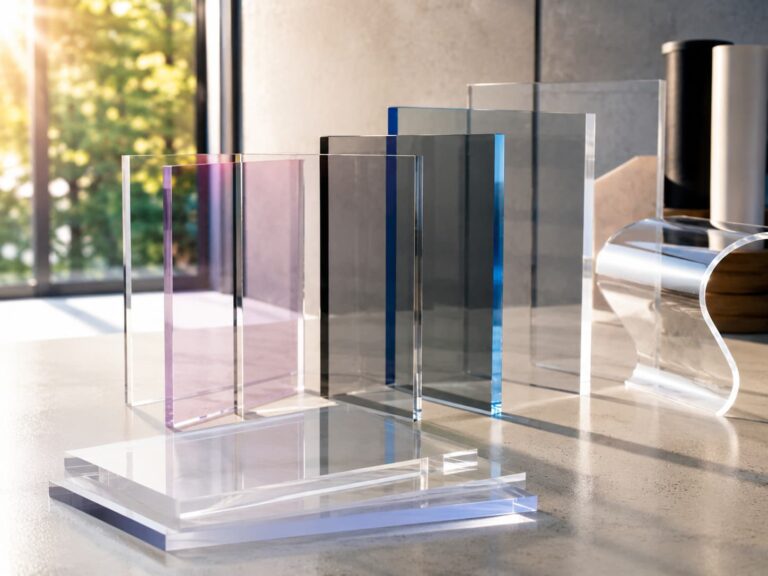
Compare clear, colored, mirror, cast, and extruded acrylic options for different display, signage, and fabrication needs.
Edge Quality & Tolerance
Understand what affects edge quality, cutting tolerance, color consistency, surface protection, and final assembly quality.
Quote Preparation
See what information B2B buyers should prepare before requesting a custom laser cutting quote.
Why Acrylic Sheets for Laser Cutting Matter in B2B Projects
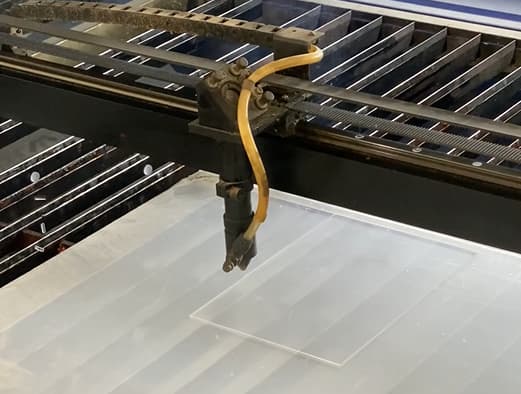
Laser cutting is widely used in acrylic display and signage projects because it can create clean profiles, detailed shapes, logo plates, display panels, and custom components with efficient production. For B2B buyers, however, the key question is not only whether acrylic can be laser cut. The more important question is whether the selected acrylic sheet can meet the visual, dimensional, and assembly requirements of the final project.
In retail displays, POS displays, brand fixtures, sign faces, and OEM acrylic components, small material differences can affect the finished result. Sheet thickness, color consistency, light transmission, protective film, cutting tolerance, and edge finish all influence how the final product looks and performs. A display part with a rough edge, visible burn mark, poor fit, or inconsistent color may create problems during assembly or reduce the perceived quality of the brand presentation.
For this reason, acrylic sheets for laser cutting should be selected based on the application, not only based on price or appearance. A material that works well for a simple flat panel may not be suitable for a display structure with slots, holes, bending, polishing, bonding, or lighting requirements.
Planning a laser cut acrylic project? Send your color, thickness, quantity, and drawing requirements for a custom material and fabrication review.
What Types of Acrylic Sheets Are Suitable for Laser Cutting?
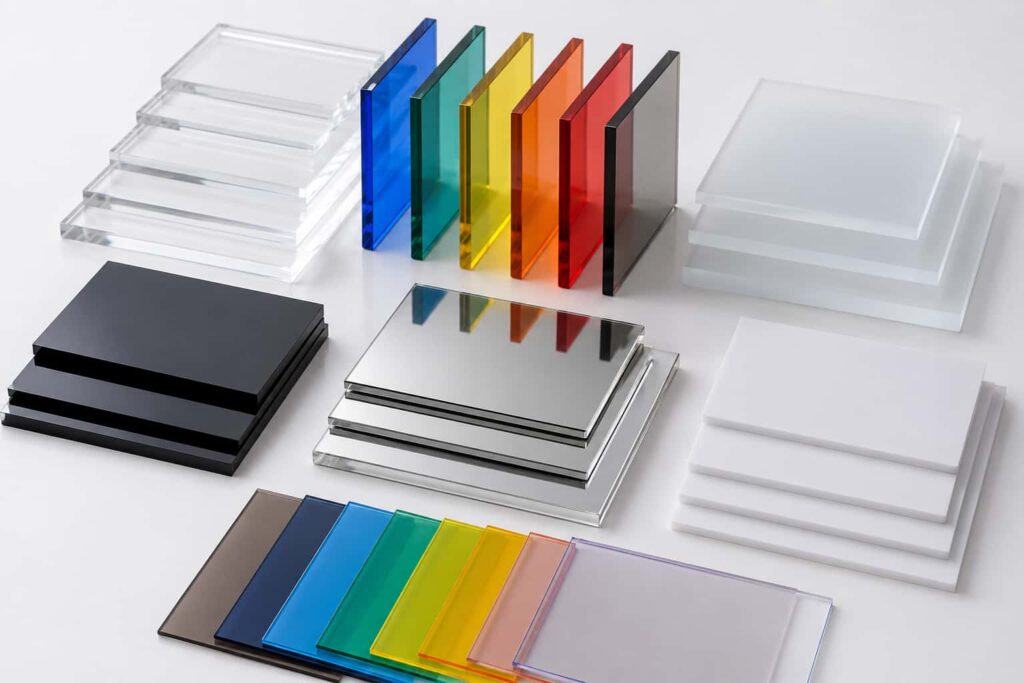
Different acrylic sheet types can be used for laser cutting, but each option has its own characteristics. The right choice depends on the project’s function, visual effect, fabrication process, and budget.
Clear Acrylic Sheets
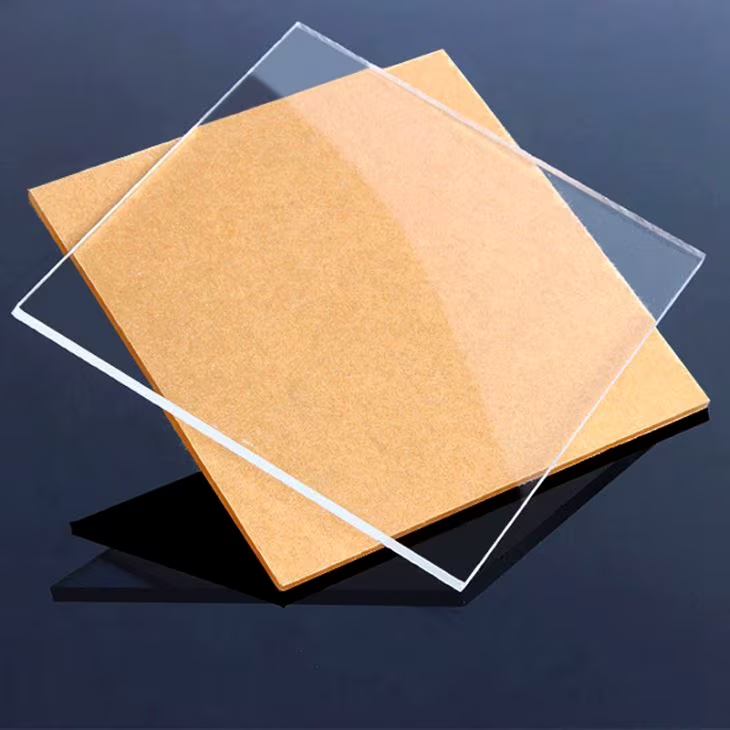
Clear acrylic sheets are often used for transparent display panels, protective covers, product risers, shelves, and signage windows. They are valued for their clean appearance and ability to show products clearly. When used for laser cutting, buyers should pay attention to edge clarity, surface protection, and whether the cut edge will remain visible in the final display.
For display-quality parts, protective film and careful handling are important. Even if the cutting profile is accurate, surface scratches can reduce the final visual quality.
Colored Acrylic Sheets
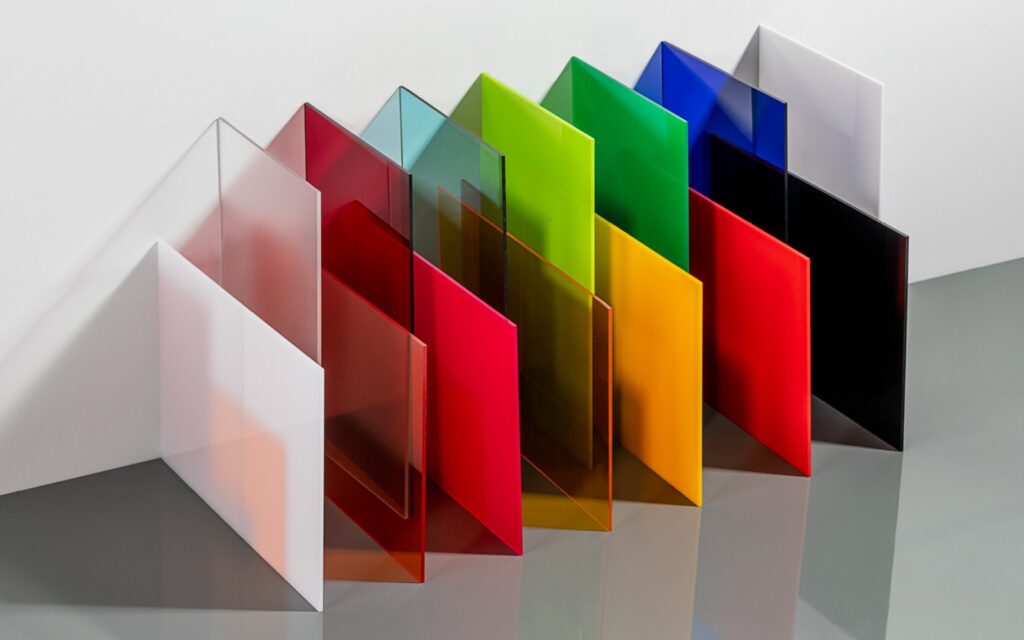
Colored acrylic sheets are commonly used in retail displays, POS displays, decorative panels, brand fixtures, and signage elements. They help create a stronger visual identity than clear panels alone. For B2B projects, the main concerns are color consistency, batch stability, surface finish, and whether the color works under the project’s lighting environment.
A color that looks suitable on a screen may appear different under store lighting, backlighting, or daylight. For larger or repeat orders, buyers should confirm physical samples before production.
Mirror Acrylic Sheets

Mirror acrylic sheets are often used for decorative display panels, logo backgrounds, promotional fixtures, and high-contrast visual elements. They can create a strong design effect, but they also require more attention during cutting, handling, and packaging.
Because mirror surfaces can show scratches more easily, buyers should confirm protective film, packaging method, and whether the cut edge will be exposed in the final application.
Cast and Extruded Acrylic Sheets
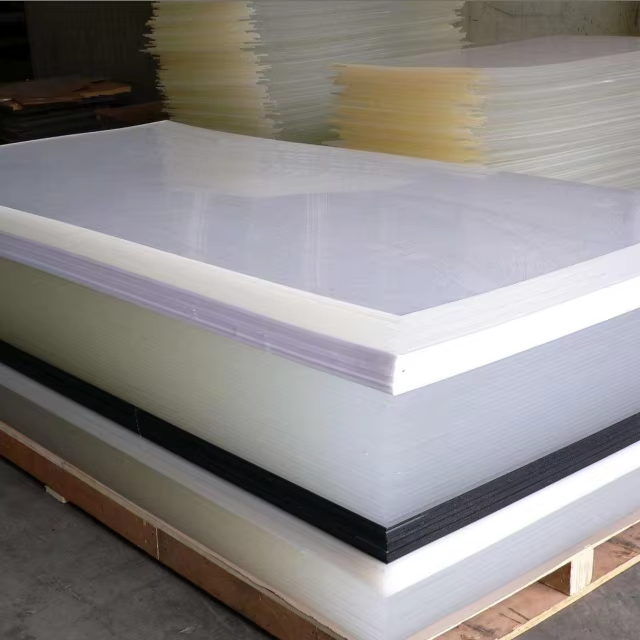
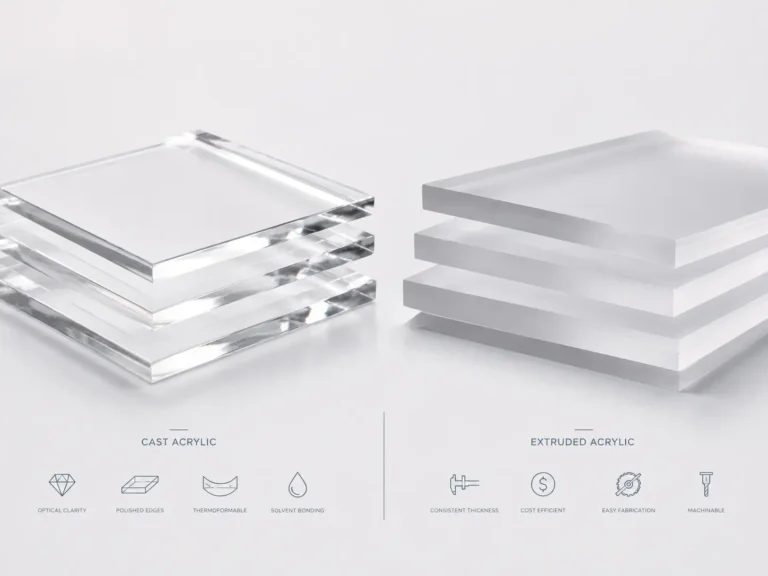
Both cast and extruded acrylic sheets may be used for laser cutting, depending on the project. Cast acrylic is often selected for visual display parts, engraving effects, and applications where edge appearance matters. Extruded acrylic may be suitable for flat panels, economical display components, and projects where thickness consistency is important. The final choice should be confirmed based on thickness, color, cutting requirements, and the expected finished effect.
Cast vs Extruded Acrylic for Laser Cutting
| Factor | Cast Acrylic | Extruded Acrylic | Buyer Note |
|---|---|---|---|
| Visual edge quality | Often suitable for clean visual parts | Can work well depending on grade and settings | Confirm samples if the edge will remain visible |
| Engraving effect | Often gives a clearer frosted effect | Engraving may appear softer | Useful for logos or decorative details |
| Thickness consistency | Can vary by grade and production method | Often more consistent in thickness | Important for slots and assembly |
| Cost consideration | Usually higher than extruded options | Often more cost-efficient | Choose based on project priority |
| Common applications | Logo plates, display parts, decorative panels | Flat panels, economical display components | Buyers should confirm with supplier before bulk production |
Pro Tip
For B2B display projects, do not choose acrylic sheets based only on a product image or color code. Confirm physical samples, lighting conditions, sheet thickness, and batch consistency before mass production.
Key Factors That Affect Laser Cutting Quality
Sheet Thickness
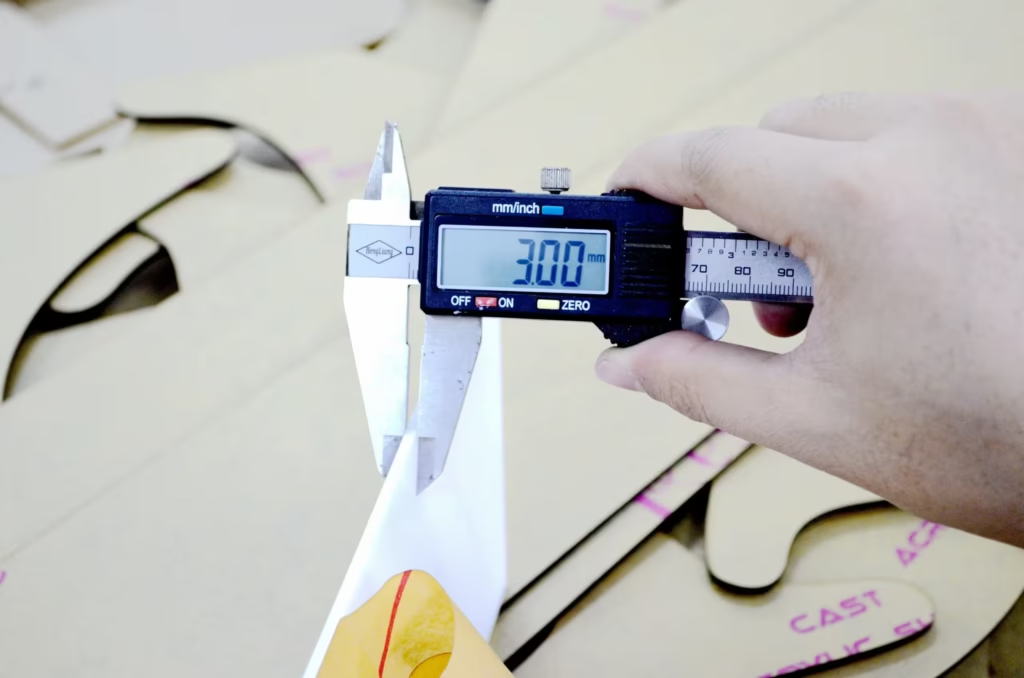
Thickness affects cutting speed, edge quality, strength, and assembly performance. Thin acrylic sheets are often used for POS displays, signage panels, decorative inserts, and lightweight display parts. Thicker sheets may require different cutting methods, slower processing, or additional finishing depending on the project.
If a part needs to fit into slots or connect with other components, thickness tolerance becomes especially important. Even small differences can affect assembly.
Color, Transparency, and Light Transmission
Clear, colored, translucent, and mirror acrylic sheets behave differently in display and signage applications. If the acrylic will be used for illuminated signs or backlit displays, buyers should consider light transmission, color appearance under lighting, and whether the material creates the desired visual effect.
For signage panels and sign faces, material choice should be reviewed together with printing, lighting, and installation conditions.
Pro Tip
If the laser cut acrylic sheet will be used in illuminated signage or retail displays, do not judge the color only from a screen image. Confirm physical samples under the real lighting condition, especially for colored, translucent, or mirror acrylic sheets.
Edge Finish
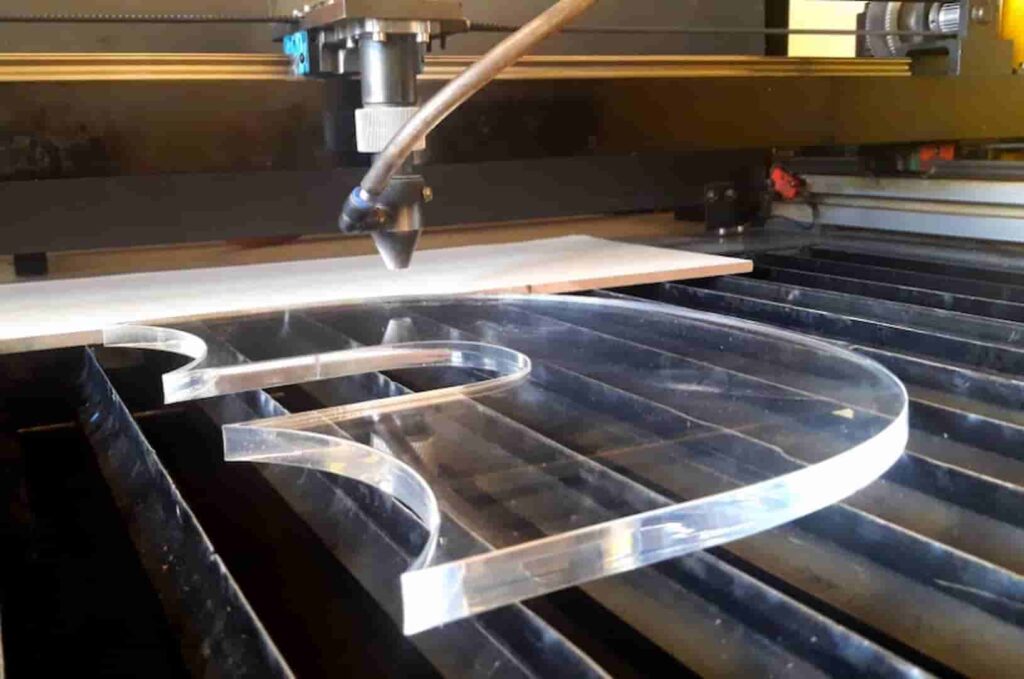
One advantage of laser cut acrylic is that it can create smooth visual edges for many flat parts. However, edge quality still depends on material grade, thickness, cutting settings, and the design itself. Small inner corners, dense details, or unsuitable material selection may increase the risk of heat marks, melting, or cracking.
If the edge is a visible design feature, buyers should clearly state the edge requirement before quotation.
Drawing Accuracy and Cutting Tolerance
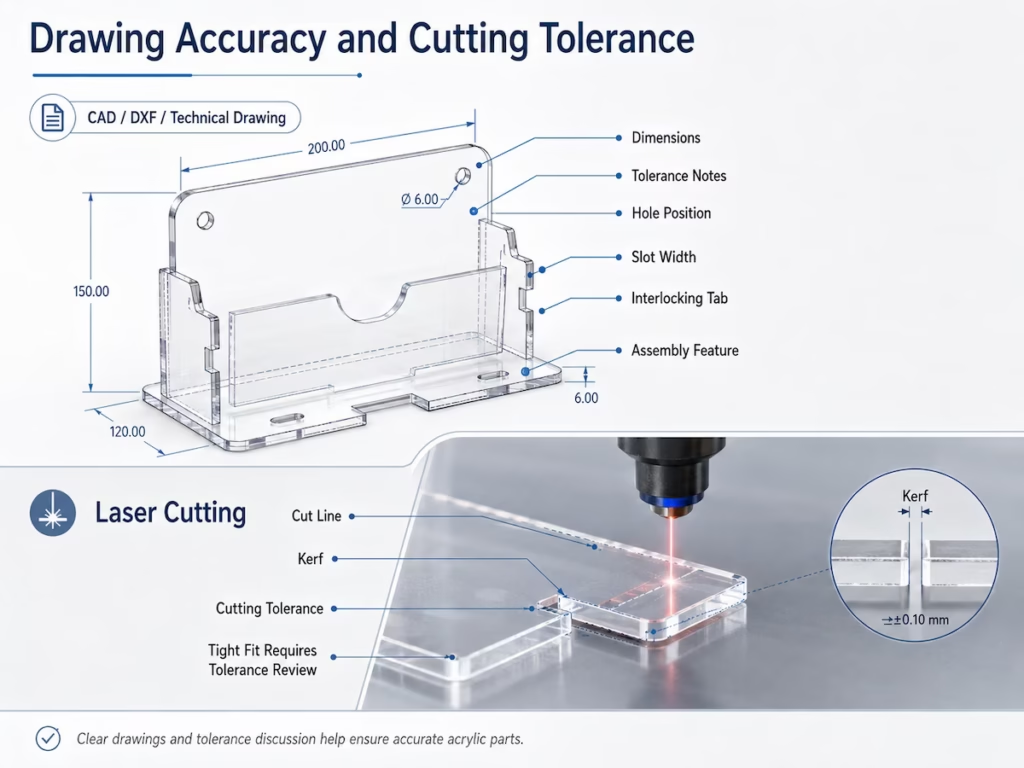
For custom acrylic displays and OEM display projects, drawing quality is a major factor. Suppliers usually need accurate files such as CAD, DXF, or clear technical drawings. If the part includes holes, slots, interlocking tabs, or assembly features, the drawing should include dimensions and tolerance notes.
Laser cutting has a cutting width, often called kerf. If the design requires tight fitting, buyers should discuss kerf and tolerance before production.
Surface Protection and Packaging
Display parts are often judged by appearance. Protective film, handling, and packaging can be just as important as cutting accuracy. Clear and mirror acrylic parts are especially sensitive to scratches. For export or bulk orders, buyers should discuss whether parts need individual protection, layered packing, or special packaging for display-quality surfaces.

Common Applications of Laser Cut Acrylic Sheets
| Application | Common Acrylic Features | Key Buyer Concern |
|---|---|---|
| Retail displays | Clear, colored, or mirror acrylic | Visual quality, surface protection, brand appearance |
| POS displays | Thin sheets, slots, small components | Fit accuracy and assembly stability |
| Signage panels | Colored or translucent acrylic | Color, light transmission, outdoor suitability |
| Logo plates | Clear, colored, mirror, or printed acrylic | Edge finish and brand presentation |
| Product risers | Clear or colored acrylic | Clean edges and suitable strength |
| OEM acrylic parts | Custom size, holes, slots, bending | Drawing accuracy and repeatability |
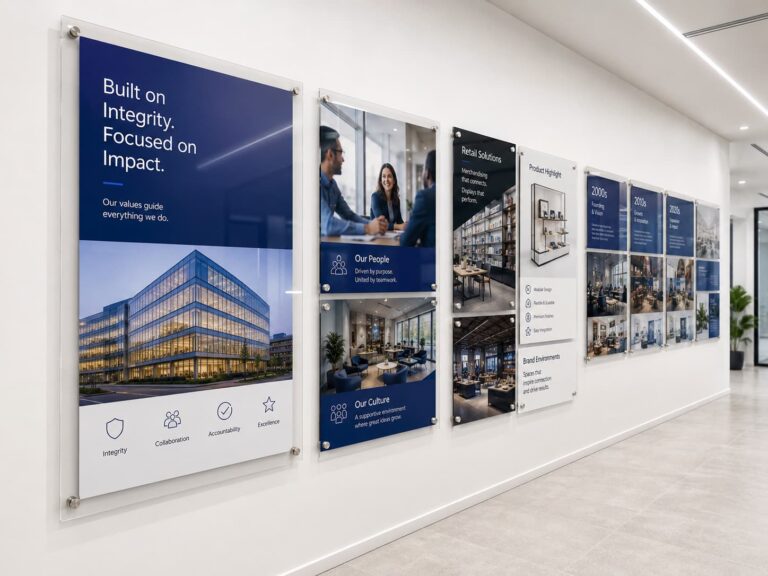
Laser cut acrylic sheets are especially useful when a project requires repeatable flat parts, clean outlines, logo shapes, or decorative profiles. For retail and POS displays, they can be used as shelves, side panels, trays, dividers, header cards, product risers, and assembly components. For signage, they may be used as acrylic sign faces, letters, logo panels, or decorative layers.
For OEM acrylic display materials, laser cutting can support repeat production when drawings, material specifications, and tolerances are clearly confirmed.
Common Problems When Laser Cutting Acrylic Sheets
| Problem | Possible Cause | How Buyers Can Reduce Risk |
|---|---|---|
| Burned or yellow edge | Unsuitable settings, material, or thickness | Confirm samples and edge requirements |
| Cracking near corners | Sharp inner corners or stress concentration | Add suitable radius and review drawing design |
| Poor assembly fit | Missing tolerance or kerf consideration | Provide full assembly drawings and fit notes |
| Color mismatch | Different batches or unconfirmed samples | Confirm physical samples before bulk order |
| Surface scratches | Handling or packaging issues | Request protective film and suitable packaging |
| Uneven visual effect | Material, lighting, or finish mismatch | Test material under real application conditions |
Many laser cutting problems can be reduced before production by improving the RFQ information. Instead of sending only a simple picture, buyers should provide drawings, thickness, material type, quantity, application, and assembly requirements. This helps the supplier review the project more accurately.
Pro Tip
If the acrylic parts need bending, polishing, bonding, printing, or assembly after laser cutting, mention these requirements before production. The right sheet thickness, edge finish, and tolerance should be reviewed together with the full fabrication process, not only the cutting profile.
Laser Cutting vs CNC Cutting Acrylic Sheets
Laser cutting and CNC cutting are both useful for acrylic fabrication, but they are not the same. Choosing the right method depends on part thickness, edge requirements, mechanical features, and final application.
| Method | Better For | Advantages | Buyer Note |
|---|---|---|---|
| Laser cutting | Thin sheets, logos, detailed shapes, display panels | Clean visual edges and efficient profile cutting | Suitable for many flat visual parts |
| CNC cutting | Thicker sheets, grooves, holes, structural parts | Better for mechanical features and heavier components | Useful when strength and assembly details matter |
Laser cutting is often preferred for thin acrylic sheets, logo plates, decorative shapes, and flat display panels. CNC cutting may be better when the part needs grooves, countersunk holes, thicker material, or more mechanical strength.
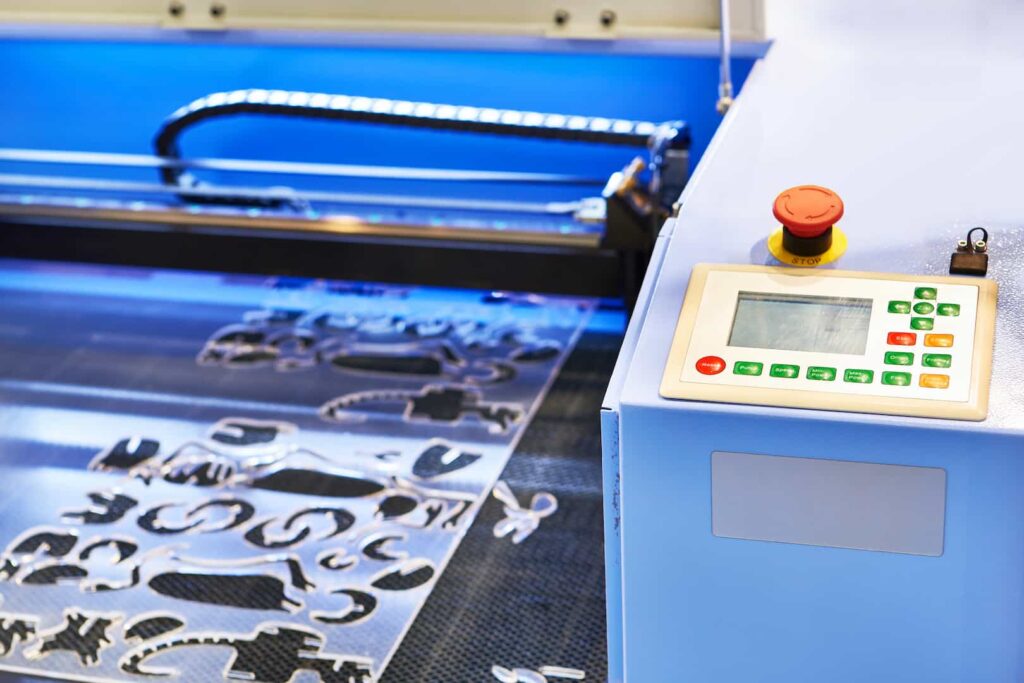
For some custom acrylic fabrication projects, both methods may be used together with polishing, bending, bonding, or printing.
Buyer Checklist Before Requesting a Quote
Before requesting a quote for laser cut acrylic sheets, B2B buyers can prepare the following information:
| Information | Example | Why It Matters |
|---|---|---|
| Drawing file | CAD, DXF, PDF | Helps confirm size, holes, slots, and cutting path |
| Sheet thickness | Project-specific | Affects cutting method, cost, and strength |
| Material type | Clear, colored, mirror, cast, extruded | Affects edge quality and appearance |
| Quantity | Sample, small batch, bulk order | Helps estimate production and packaging |
| Application | POS display, sign panel, OEM component | Helps review material and finish |
| Edge requirement | As-cut, polished, visible edge | Affects fabrication planning |
| Assembly method | Slotting, bonding, screws | Affects tolerance and drawing review |
| Packaging needs | Bulk pack or individual protection | Important for display-quality parts |
Important Note
If laser cut parts need to fit into slots, frames, or assembled structures, share the full assembly drawing instead of only the flat cutting profile. This helps the supplier review tolerance, fit, and possible fabrication risks before production.
Why Work with an Acrylic Sheet Manufacturer for Laser Cut Projects?
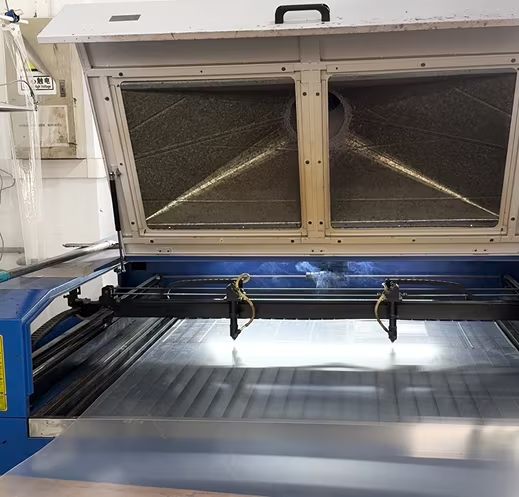
For B2B projects, working with an acrylic sheet manufacturer or acrylic sheet factory can help connect material selection with fabrication requirements. This is important because the final result depends not only on cutting, but also on sheet quality, thickness options, color consistency, surface finish, packaging, and project communication.
A manufacturer that understands custom acrylic fabrication can help buyers review whether clear, colored, mirror, cast, or extruded acrylic is more suitable for the project. They can also help check whether the design may require laser cutting, CNC cutting, polishing, bending, bonding, or special packaging.
Grandview Acrylic supports B2B buyers with acrylic sheet supply and custom fabrication for retail displays, POS displays, signage panels, and OEM display projects. The goal is not simply to provide material, but to help buyers choose acrylic sheets that fit the real application and production requirements.
Not sure which acrylic sheet fits your display project? Share your display concept , material requirement, and drawing files, and our team can help recommend suitable sheet options.
FAQ
The best acrylic sheets for laser cutting depend on the application. Clear, colored, mirror, cast, and extruded acrylic can all be considered, but buyers should confirm thickness, edge quality, color, surface finish, and fabrication requirements before production.
Yes, colored acrylic sheets are often used for laser cut retail displays, POS displays, decorative panels, and brand fixtures. For B2B orders, buyers should confirm physical samples, batch consistency, and how the color appears under the project’s lighting conditions.
Cast acrylic is often selected for visual parts and engraving effects, while extruded acrylic may be suitable for economical flat panels and repeat components. The better choice depends on thickness, edge requirement, budget, quantity, and final application.
Thickness should be selected based on the part size, structure, display load, assembly method, and visual requirement. For parts with slots or interlocking structures, buyers should confirm thickness tolerance and fit before production.
Laser cutting can produce clean edges on acrylic, but burned or yellow edges may appear if material, thickness, settings, or design details are not suitable. If edge appearance matters, buyers should request samples or confirm edge requirements before bulk production.
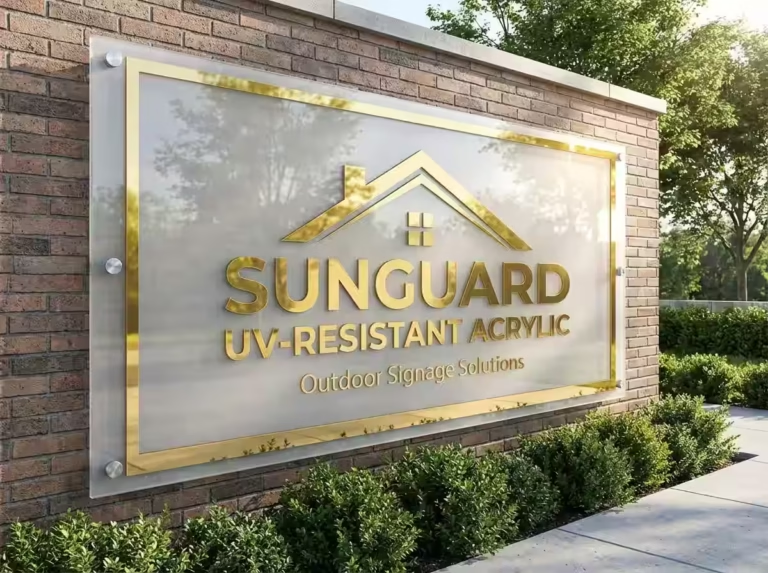
Yes, laser cut acrylic sheets can be used for signage panels, logo plates, letters, and decorative sign components. If the sign is illuminated or used outdoors, buyers should also review light transmission, color stability, material grade, and installation environment.
Prepare drawing files, material type, thickness, color, quantity, application, edge requirements, assembly details, and packaging needs. Clear RFQ information helps the supplier provide a more accurate recommendation and quotation.
Conclusion
Choosing acrylic sheets for laser cutting is not only a material decision. For B2B display, signage, and OEM projects, the final result depends on sheet type, thickness, color consistency, edge quality, tolerance, surface protection, and fabrication planning.
Buyers should evaluate how the acrylic sheet will be used, how it will be cut, whether it needs polishing or bending, and how the finished parts will be assembled and packaged. Clear drawings and detailed project requirements can reduce mistakes and improve quotation accuracy.
Grandview Acrylic provides acrylic sheet supply and custom fabrication support for international B2B projects. If you are planning a laser cut acrylic display, signage panel, or OEM component project, send your material requirements, drawings, quantity, and application details for a practical review.
References and Further Reading
The following sources are provided for readers who want to review neutral material standards, acrylic sheet properties, and general fabrication references. They are used to support technical understanding, not to compare competitor pricing or product claims.
ASTM International — Standard Specification for Poly(Methyl Methacrylate) Acrylic Plastic Sheet
Useful for understanding acrylic sheet specification language, PMMA sheet classification, and material standard references. View source
Röhm / PLEXIGLAS — PMMA Sheet Standards
Reference page for PMMA sheet standards, including categories related to cast and extruded acrylic sheet products. View source
Plaskolite — OPTIX General Purpose Acrylic Sheet
Technical product information for extruded acrylic sheet properties, including clarity, fabrication use, and weather-related material notes. View PDF
3A Composites — AKRYLON Acrylic Sheet Product Guide
Product guide with general acrylic sheet application and fabrication references, including displays, signage, bending, engraving, polishing, and lighting uses. View PDF
Note: Acrylic sheet performance can vary by grade, thickness, color, surface finish, processing method, and supplier. Buyers should confirm project-specific requirements with their acrylic sheet supplier before production.