Choosing between acrylic frames and traditional glass frames may seem like a small detail, but it can affect how safe, clear, durable, and practical your display will be over time. Whether you are framing family photos, artwork, retail posters, certificates, signage graphics, or commercial display panels, the front protective material matters.
For many years, glass was the standard choice for picture frames and display covers. It feels familiar, looks clean, and resists everyday surface scratches well. But acrylic has become a popular alternative because it is lighter, more impact-resistant, easier to handle, and safer for large-format or high-traffic displays.
So which is best? The honest answer is: it depends on the size, location, budget, and risk level of your project. This guide compares acrylic frames and traditional glass in a practical way, so you can make a better choice instead of simply following old habits.
Acrylic Frames vs. Traditional Glass: A Quick Comparison
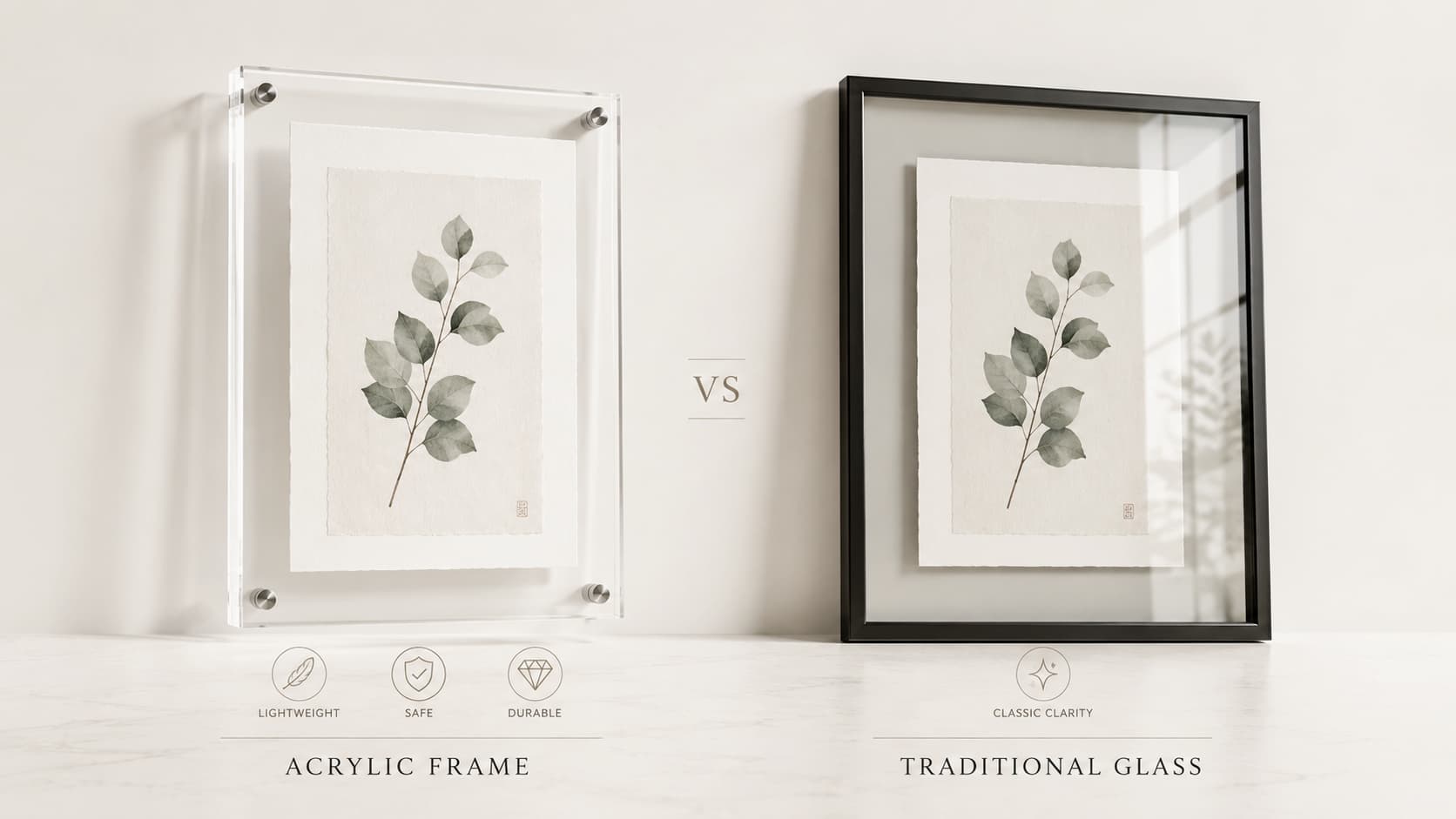
If you only need a fast answer, acrylic frames are usually better for large displays, shipping, public spaces, children’s rooms, schools, offices, galleries, and commercial environments. Traditional glass is still a good choice for smaller indoor frames where scratch resistance, low cost, and a classic feel are the main priorities.
| Factor | Acrylic Frames | Traditional Glass Frames |
|---|---|---|
| Weight | Much lighter | Heavier |
| Safety | More shatter-resistant | Can break into sharp pieces |
| Clarity | Very high optical clarity | High clarity, depending on glass type |
| Scratch resistance | More likely to scratch if cleaned incorrectly | More scratch-resistant in daily use |
| Large-size display | Easier to handle and hang | Heavy and more fragile |
| Shipping | Lower breakage risk | Higher breakage risk |
| Best use | Commercial displays, large frames, retail, schools, offices, shipped frames | Small indoor frames, low-touch areas, budget decorative framing |
The key is not to ask “Which material is always better?” A better question is: Which material is better for this display environment?
Industry Data: Acrylic vs. Glass Material Properties
The table below uses published material data from acrylic and glass industry sources. Actual performance may vary based on thickness, coatings, manufacturing method, and product grade, but these numbers are useful for understanding why acrylic and glass behave differently.
| Property | Acrylic / PMMA | Soda-Lime Glass | Why It Matters |
|---|---|---|---|
| Density | Around 1.19 g/cm³ | Around 2.44–2.5 g/cm³ | Acrylic is much lighter, which helps with large frames, wall mounting, and shipping. |
| Visible light transmission | Up to about 92% | Typically about 85–90% for standard soda-lime glass; low-iron glass can be higher | Both materials can look clear, but high-quality acrylic can offer excellent optical clarity. |
| Refractive index | Around 1.49 | Around 1.5 | Both materials are visually clear, with similar optical behavior. |
| Breakage behavior | More impact-resistant and shatter-resistant | More brittle and can shatter | Acrylic is safer for public areas, large frames, and transported displays. |
| Surface care | Needs soft cloth and non-abrasive cleaning | More resistant to everyday surface scratches | Glass is harder on the surface, while acrylic needs gentler cleaning. |
This data explains the biggest practical difference:
acrylic is not popular only because it is “plastic.” It is popular because its lower weight and higher breakage resistance solve real problems in framing, display, and transportation.
What Are Acrylic Frames?
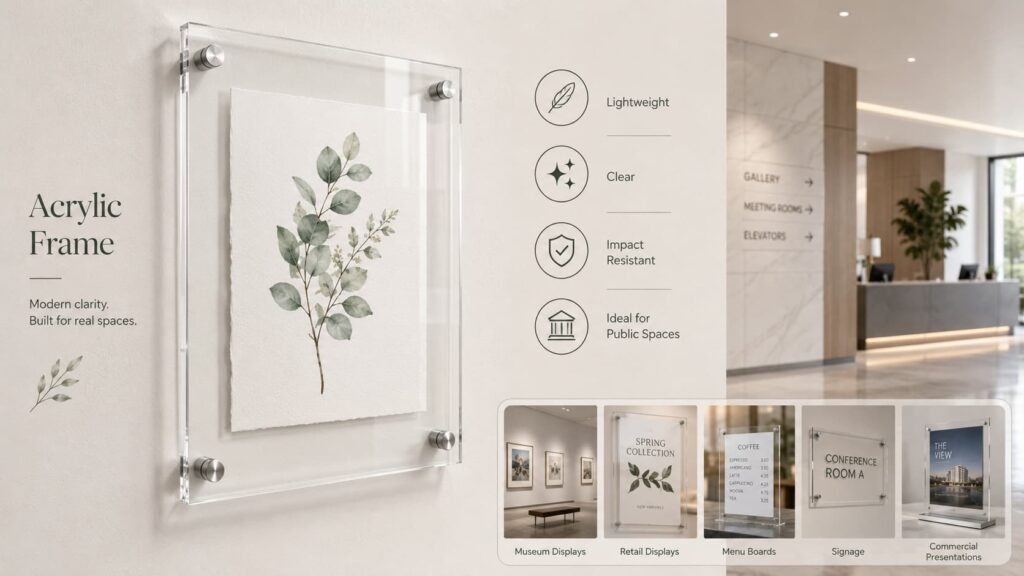
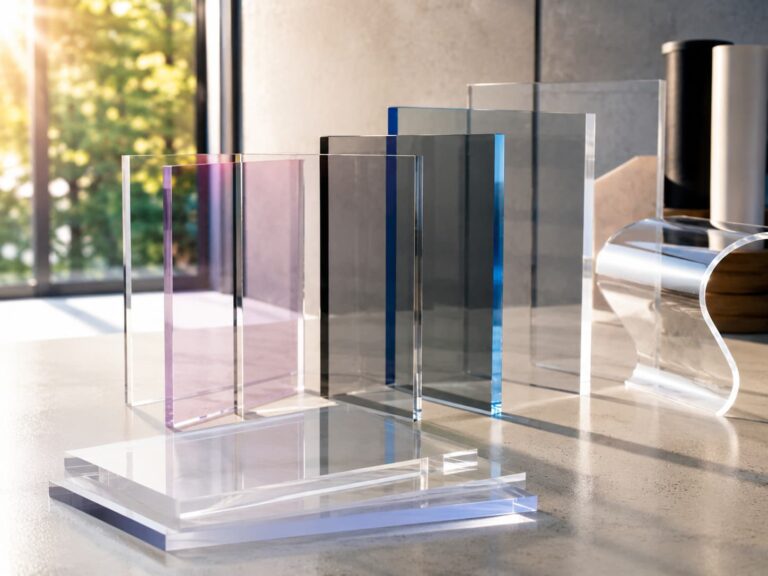
Acrylic frames use clear acrylic sheet, often known as PMMA, Plexiglass, or acrylic glass, as the protective front panel or as part of the frame structure itself. High-quality acrylic is not the same as cheap, cloudy plastic. Clear acrylic can provide excellent transparency and a clean modern appearance.
Acrylic is widely used in picture framing, museum displays, retail display panels, signage, menu boards, protective covers, and commercial presentation products. It is especially useful when the frame is large, frequently moved, shipped long distances, or installed in a public area.
For example, a small tabletop photo frame may not need acrylic. But a large wall frame in a school hallway, hotel lobby, retail store, airport, office, or exhibition space benefits from a material that is lighter and less likely to shatter.

What Are Traditional Glass Frames?
Traditional glass frames use a glass sheet as the front protective cover. In most standard frames, this is soda-lime glass, the common type of glass used in many windows and basic picture frames. It offers good clarity, a familiar feel, and strong surface hardness.
Glass remains a strong choice for small indoor frames that are not moved often. It is also naturally more resistant to minor surface scratches, which makes it practical for simple home décor or low-traffic settings.
However, glass becomes less convenient as the frame gets larger. The weight increases, handling becomes harder, and breakage risk becomes more serious. If glass breaks, it can create sharp pieces that may damage the artwork or cause injury.

Which Is More Durable: Acrylic Frames or Glass Frames?
Durability has two sides: impact resistance and scratch resistance.
For impact resistance, acrylic frames usually have the advantage. Acrylic is more difficult to shatter than glass, which makes it safer for frames that may be bumped, dropped, shipped, or installed in active environments. This is one reason acrylic is often recommended for high-traffic areas, large wall installations, and artwork that needs to be transported.
For scratch resistance, glass usually performs better. Glass has a harder surface and is less likely to show fine scratches from casual cleaning or daily contact. Acrylic can scratch if cleaned with rough paper towels, dry wiping, abrasive cleaners, or harsh tools.
That does not mean acrylic is fragile. It simply means acrylic needs proper care. Use a soft microfiber cloth, mild soap, and clean water. Avoid abrasive pads, dry dusting, and strong solvents unless the acrylic manufacturer specifically approves them.
Pro Tip:
For durability, think about the type of risk first. Acrylic frames are better for impact resistance, safety, shipping, and high-traffic areas, while glass frames are better for everyday scratch resistance. If you choose acrylic, clean it with a soft microfiber cloth and mild soap to keep the surface clear.
Which Looks Better: Acrylic Frames or Glass Frames?
Both materials can look excellent when the right grade is used. Standard glass has a crisp traditional look, while high-quality acrylic offers a clean, lightweight, modern appearance.
The idea that acrylic always looks cheap usually comes from low-grade plastic covers found in very inexpensive frames. Quality acrylic sheet is different. Clear acrylic can transmit up to about 92% of visible light, which is why it is commonly used in displays where clarity matters.
Glass can also look very clear, especially in low-iron or anti-reflective versions. Standard soda-lime glass, however, may have a slight green tint, especially as thickness increases. Low-iron glass improves clarity, but it can also increase cost.
For most everyday displays, both acrylic and glass can look professional. The difference becomes more noticeable when the frame is large, thick, frequently transported, or used in a space where safety matters.
Weight, Safety, and Shipping: Why Acrylic Frames Are Often Easier to Use
One of the strongest advantages of acrylic frames is weight. Acrylic has a density around 1.19 g/cm³, while soda-lime glass is roughly 2.44–2.5 g/cm³. In simple terms, acrylic is less than half the weight of glass by material density.
That difference matters in real life. A lighter frame is easier to carry, easier to hang, and less stressful on walls, hooks, and mounting hardware. It is also easier for workers to install safely.
For shipping, acrylic is often the more practical option because it reduces the risk of breakage in transit. This is especially important for online frame sellers, galleries, event displays, trade shows, retail graphics, and custom acrylic display projects.
If a glass frame breaks during transport, the artwork or printed graphic inside may be damaged. Acrylic reduces that risk.

Cost Comparison: Are Acrylic Frames More Expensive Than Glass?
Acrylic can cost more than standard glass in some frame sizes and grades. However, the material price alone does not tell the full story.
For small, simple frames, glass may be the cheaper option. If the frame will stay indoors, remain in one place, and has low safety risk, standard glass can be practical.
For larger displays, acrylic may offer better overall value. Even if the acrylic panel costs more upfront, it can reduce shipping damage, installation difficulty, replacement risk, and safety concerns. In commercial projects, the “cheapest material” is not always the lowest-cost solution.
A good way to compare cost is to ask:
| Question | Better Choice |
|---|---|
| Is the frame small and used indoors? | Glass may be enough |
| Is the frame large or oversized? | Acrylic is usually easier |
| Will the frame be shipped? | Acrylic reduces breakage risk |
| Is it for a school, hospital, office, or public space? | Acrylic is safer |
| Is scratch resistance the top priority? | Glass may be better |
| Is the display valuable or hard to replace? | Acrylic or premium UV acrylic may be worth considering |
Best Use Cases for Acrylic Frames
Acrylic frames are especially suitable for:
Large Wall Frames and Oversized Displays
Large glass panels become heavy and harder to handle. Acrylic is lighter, making installation easier and safer.

Retail Displays and Commercial Signage
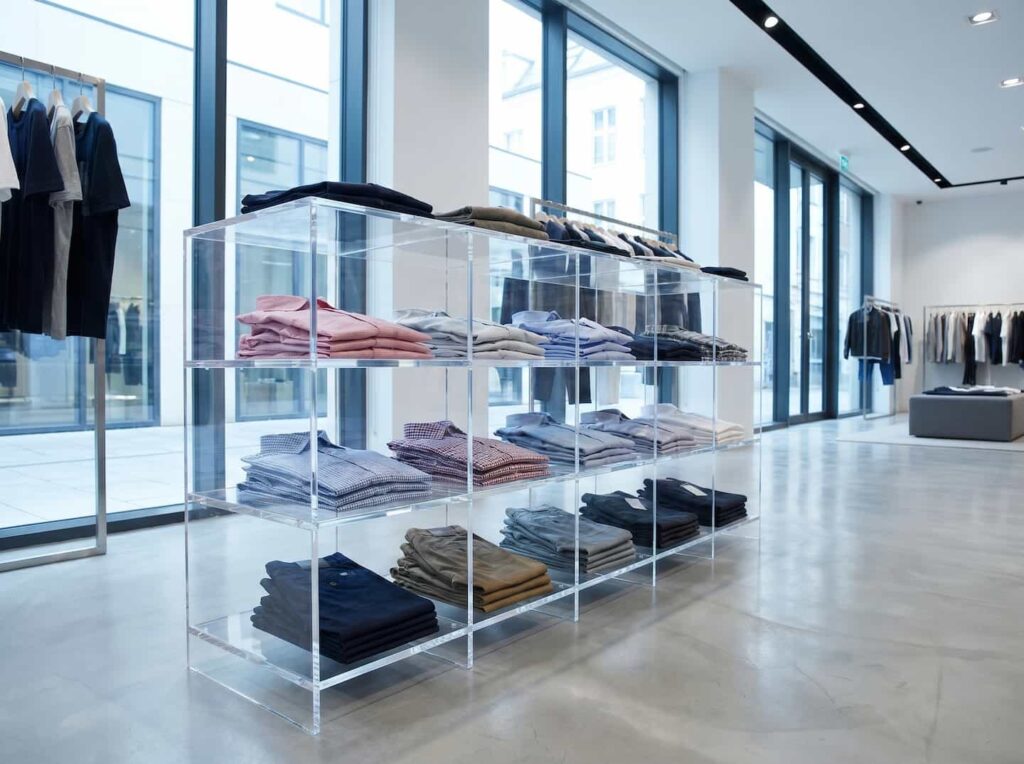
Stores, showrooms, hotels, offices, and trade shows often need displays that are clean, modern, and durable. Acrylic works well because it is lightweight and resistant to breakage.
Schools, Hospitals, and Public Spaces
Safety matters in places with children, patients, visitors, or high foot traffic. Acrylic reduces the risk of sharp broken glass.

Shipped Frames and Online Orders
If a frame needs to travel through packaging, warehouses, or courier systems, acrylic is usually a more reliable choice.

Artwork and Photo Displays
For artwork, photography, and documents, UV-filtering acrylic options are available. Some professional framing acrylic products can block up to 99% of UV rays, helping reduce fading risk. This does not mean every acrylic sheet has the same UV protection, so buyers should check the product grade.


Best Use Cases for Traditional Glass Frames
Glass frames are still useful in many situations.
Small Indoor Frames
For small photo frames, certificates, and decorative prints, glass can be affordable and visually clean.
Low-Touch Display Areas
If the frame is not likely to be bumped, moved, shipped, or handled often, glass may work well.
Projects Where Scratch Resistance Matters Most
If the front surface may be cleaned frequently or touched often, glass has an advantage because it is more resistant to fine surface scratches.
Budget-Friendly Decorative Framing
For simple home decoration, standard glass is often cost-effective.

Final Verdict: Are Acrylic Frames Better Than Traditional Glass?
For most modern display projects, acrylic frames are the better choice when safety, weight, shipping, and large-size handling matter. They are lightweight, clear, more impact-resistant, and easier to use in commercial or public environments.
Traditional glass is still a good choice for small indoor frames where the main priorities are scratch resistance, familiar appearance, and lower upfront cost.
The best decision is not based on tradition. It is based on the real use case:
Choose acrylic frames if the display is large, valuable, frequently shipped, installed in a public space, or needs safer handling. Choose glass if the frame is small, stationary, low-cost, and used in a low-risk indoor setting.
FAQs About Acrylic Frames vs. Traditional Glass
Acrylic frames are better for large displays, shipped frames, public spaces, schools, offices, and areas where safety matters. Glass may be better for small indoor frames where scratch resistance and low cost are more important.
Acrylic can scratch more easily than glass if cleaned incorrectly. Use a soft microfiber cloth, mild soap, and water. Avoid abrasive cleaners, rough towels, and dry wiping.
High-quality acrylic frames do not look cheap. Clear acrylic has excellent optical clarity and can look modern and professional. Cheap plastic covers in low-end frames are different from quality acrylic sheet.
High-quality acrylic can transmit up to about 92% of visible light. Standard soda-lime glass also has good clarity, but transmission can vary depending on thickness, iron content, and coatings.
Yes. Acrylic is often preferred for large displays because it is lighter and more shatter-resistant than traditional glass. This makes it easier to handle, install, and ship.
Sometimes. Acrylic may cost more than standard glass, especially in higher-quality or UV-filtering grades. However, it may reduce total project risk by lowering breakage, shipping damage, and installation difficulty.
Some acrylic framing products are designed with UV-filtering properties and can block up to 99% of harmful UV rays. However, not all acrylic sheets offer the same protection, so always check the product specification before buying.
Reference Sources
The material data in this guide is based on published technical datasheets and recognized testing standards, rather than competitor articles. Acrylic / PMMA values such as specific gravity, refractive index, and total light transmission are referenced from Plaskolite OPTIX acrylic sheet technical data, which lists clear acrylic with a relative density of 1.19, refractive index of 1.49, and total light transmission of 92% under ASTM D1003 testing. (Plaskolite.com)
Soda-lime glass values are referenced from technical glass datasheets. Advanced Optics lists soda-lime glass with a density of 2.44 g/cm³ and Mohs hardness of 6–7, while also noting that trace iron oxide can give soda-lime glass a slight greenish tint. Abrisa Technologies also lists soda-lime glass density at 2.44 g/cm³ and Mohs hardness at 6–7. (Advanced Optics)
For optical performance, this article refers to ASTM D1003, a standard test method used to evaluate haze and luminous transmittance of transparent plastics. This helps explain why light transmission data should be understood as measured material performance, not just marketing language. (ASTM International | ASTM)
For plastic density testing, this article refers to ISO 1183-1, which specifies methods for determining the density of non-cellular plastics, including immersion, liquid pycnometer, and titration methods. (ISO)
For UV protection discussion, this article references technical information from ACRYLITE® Gallery UV filtering OP3 acrylic sheet. Its documentation explains that UV protection is built into the acrylic formulation rather than only applied as a surface coating. Because UV performance varies by acrylic grade, buyers should always check the exact product specification before choosing acrylic frames for artwork, photography, or conservation displays. (ACRYLITE®)
Material values may vary depending on sheet thickness, manufacturing method, coating, grade, supplier, and application environment. The information above is intended to help buyers understand the practical differences between acrylic frames and traditional glass frames, not to replace project-specific technical evaluation.