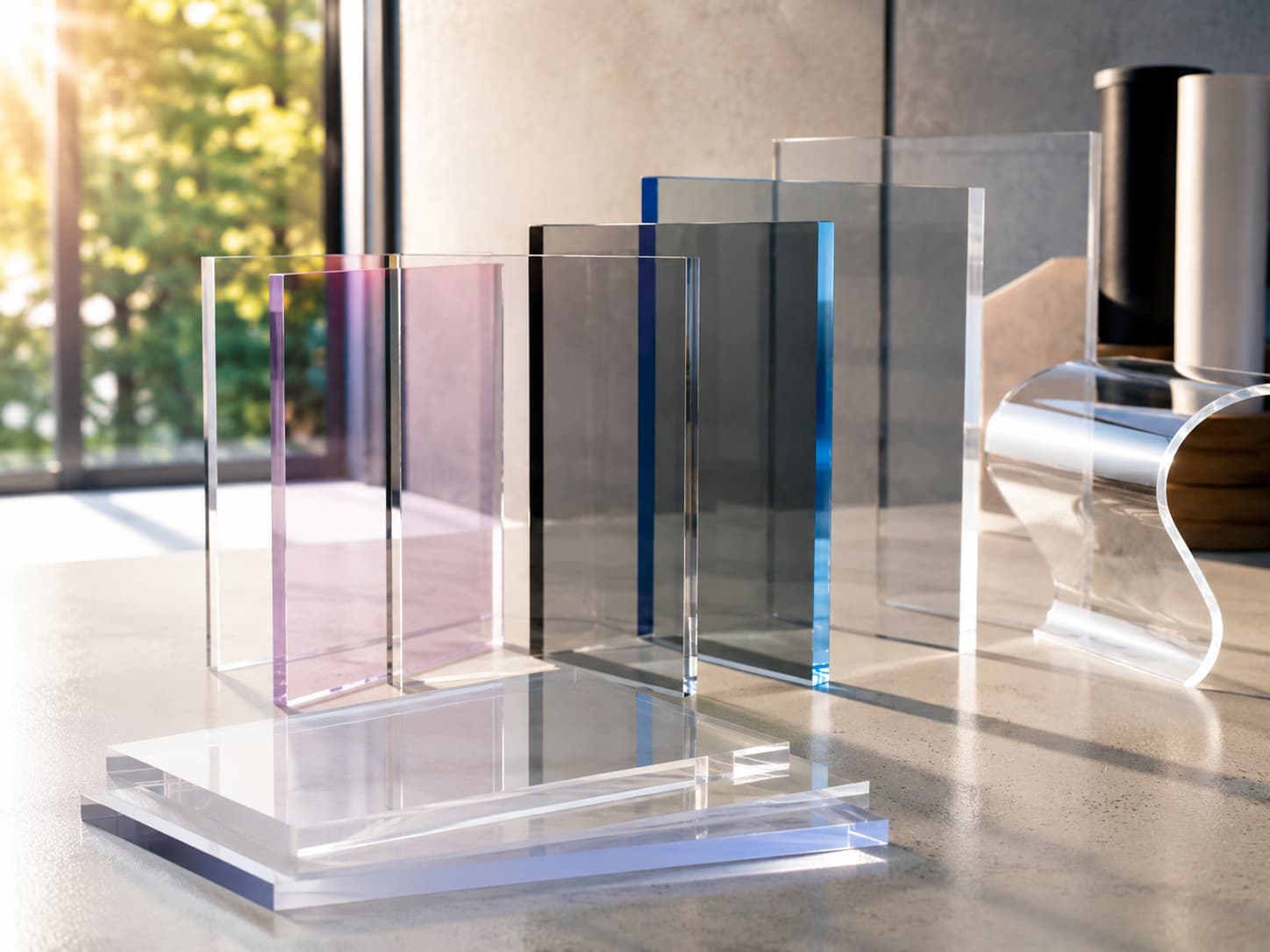
B2B ACRYLIC SHEET SELECTION GUIDE
UV resistant acrylic sheets are not only about sunlight. They affect yellowing risk, light transmission, fabrication quality, and long-term project stability.
For retail display companies, POS display manufacturers, signage companies, and OEM buyers, the practical question is not only “Can acrylic resist UV?” A better question is whether the material will stay visually consistent after cutting, bending, polishing, lighting, installation, packaging, and long-term use.
01
UV Performance
Review yellowing, haze, brittleness, and whether the sheet is suitable for outdoor or window-facing use.
02
Application Fit
Match clear, colored, mirror, frosted, or translucent acrylic with displays, sign faces, and lighting conditions.
03
Fabrication Review
Confirm thickness, tolerance, cutting, bending, polishing, bonding, surface protection, and packaging before production.
Need UV resistant acrylic sheets for display, signage, or OEM projects? Send your color, thickness, size, quantity, drawings, and application details for a custom material review.
Quick Buyer Snapshot
- Best fit: retail displays, POS displays, sign faces, illuminated signs, brand fixtures, protective covers, and OEM acrylic display materials.
- Main buyer concerns: yellowing resistance, light transmission, color consistency, thickness tolerance, edge finish, and fabrication method.
- Common material options: clear acrylic sheets, colored acrylic sheets, mirror acrylic sheets, frosted acrylic sheets, and translucent acrylic sheets.
- Before quoting: prepare application, size, thickness, color, quantity, drawings, lighting condition, fabrication requirements, and packaging needs.
What Are UV Resistant Acrylic Sheets?
UV resistant acrylic sheets are acrylic materials selected to maintain appearance and performance better under ultraviolet exposure compared with low-grade or unsuitable plastic materials. Acrylic, also known as PMMA, is widely used because it offers clarity, lightweight handling, clean visual appearance, and flexible fabrication options.
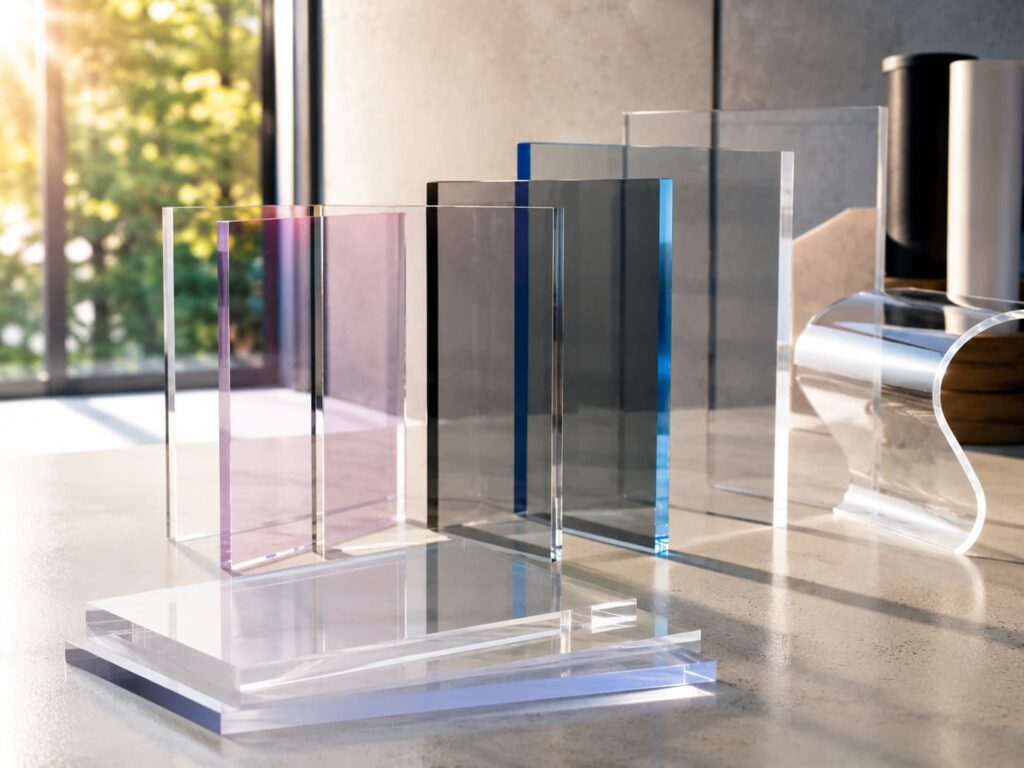
However, not every acrylic sheet is suitable for every environment. Material performance can vary depending on grade, formulation, thickness, color, surface finish, production process, and exposure conditions. For indoor display projects, standard acrylic may be enough. For outdoor signage, window-facing displays, illuminated sign faces, or long-term brand fixtures, buyers should confirm whether the sheet is suitable for UV exposure and lighting conditions.
In practical sourcing, “UV resistant acrylic” may refer to different needs. Some buyers want the sheet itself to resist yellowing and brittleness. Others need the sheet to help reduce UV transmission to protect products, printed graphics, or display contents. These are related, but they are not exactly the same requirement.
Buyer Takeaway: For B2B projects, UV resistance should be reviewed together with application environment, lighting condition, acrylic type, thickness, fabrication method, and expected repeat-order consistency.
UV Resistant vs. UV Filtering Acrylic: What Is the Difference?
Many buyers use “UV resistant” and “UV filtering” as if they mean the same thing. For project sourcing, it is better to separate them. This helps buyers avoid choosing the wrong sheet for display covers, outdoor signs, protective panels, or illuminated applications.
| Term | Main Meaning | B2B Project Relevance |
|---|---|---|
| UV resistant acrylic | The sheet is expected to resist yellowing, haze, or brittleness better under UV exposure. | Useful for outdoor signs, window displays, protective covers, and exposed panels. |
| UV filtering acrylic | The sheet helps reduce UV passing through the material, depending on grade. | Useful for display covers, framing, product protection, and sensitive display contents. |
| Standard acrylic | General-purpose acrylic used for many indoor applications. | Suitable for many displays, but buyers should confirm outdoor or high-UV requirements. |
| Specialty acrylic | Acrylic with specific optical, surface, color, or performance properties. | Useful for custom display, signage, lighting, or OEM fabrication projects. |
For B2B buyers, the right choice depends on the final application. A clear retail display cover may need clarity and product visibility. A sign face may need stable color under sunlight and LED lighting. A POS display may need consistent thickness and clean cutting performance more than extreme outdoor durability.
Important Note
Do not assume that every clear acrylic sheet has the same UV behavior. Buyers should confirm whether the project needs the sheet itself to resist yellowing, the sheet to reduce UV transmission, or both.
Where Are UV Resistant Acrylic Sheets Used?
UV resistant acrylic sheets are used in many display and signage applications where appearance stability matters. The material should be selected based on project environment, lighting condition, fabrication method, and visual requirements.
Retail Displays
Used for showcases, display covers, shelf panels, cosmetic counters, and transparent protective display components.
POS Displays
Useful for repeated campaign displays where cutting accuracy, bending quality, batch repeatability, and packaging matter.
Outdoor Sign Faces
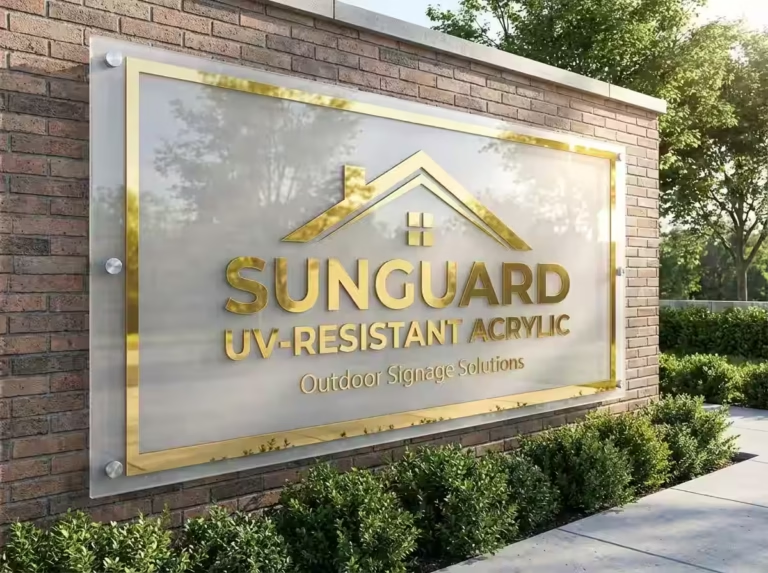
Used for sign panels exposed to sunlight, weather conditions, LED lighting, and brand color requirements.
Illuminated Signs
Selected when light transmission, diffusion, color under LEDs, and even brightness are important to the final effect.
Brand Fixtures
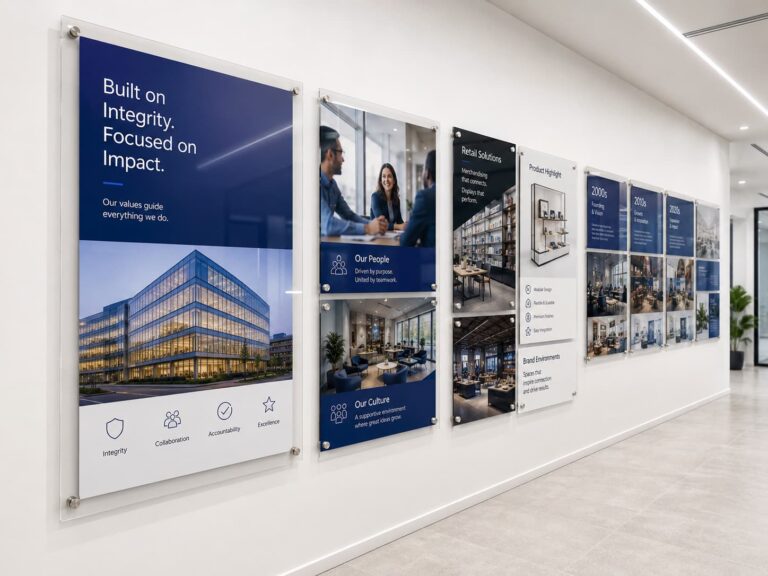
Used for chain store displays, decorative brand panels, store fixture parts, and custom colored acrylic projects.
OEM Acrylic Parts
Used for custom acrylic display materials that must match drawings, tolerance, fabrication sequence, and packaging needs.
| Application | Common Buyer Concern | Recommended Acrylic Focus |
|---|---|---|
| Retail displays | Clarity, product visibility, surface appearance | Clear acrylic sheets with good optical quality and clean edges |
| POS displays | Batch repeatability, bending quality, custom fabrication | Thin acrylic sheets with stable thickness and processing performance |
| Outdoor sign faces | Sunlight exposure, color change, weather conditions | UV resistant acrylic sheets suitable for outdoor-facing applications |
| Illuminated signs | Light transmission, color under LEDs, even brightness | Colored or translucent acrylic matched with lighting conditions |
| Brand fixtures | Color consistency, surface finish, repeat orders | Custom colored acrylic sheets with sample confirmation |
| Mirror or decorative displays | Surface protection, scratch visibility, visual impact | Mirror acrylic sheets with protective film and careful packaging |
The biggest mistake is choosing acrylic only by appearance in a photo. For display and signage projects, the same material may look different under daylight, LED lighting, printed graphics, or behind a diffuser. Physical samples are important before bulk production.
Key Selection Factors for B2B Buyers
UV resistant acrylic sheets should be reviewed as part of a complete material decision. The following factors usually affect both appearance and production reliability.
Yellowing Resistance
Yellowing can affect brand color, product visibility, and customer satisfaction. Buyers should confirm whether the selected acrylic grade is suitable for the exposure environment instead of assuming all sheets perform the same.
Light Transmission
Light transmission matters for clear display covers, sign faces, lightboxes, and illuminated panels. The final effect depends on sheet color, thickness, surface finish, LED layout, and cabinet depth.
Thickness & Tolerance
Thickness affects rigidity, weight, edge finish, bending behavior, and assembly fit. For OEM display materials, buyers should confirm tolerance requirements before mass production.
Color Consistency
Colored acrylic sheets are often used in brand displays, store fixtures, illuminated signs, and decorative panels. For repeat orders, batch-to-batch color consistency becomes more important.
Surface & Edge Finish
Rough edges, whitening, burn marks, cracks, or polishing inconsistency can reduce the perceived quality of the final display. Edge quality depends on material grade and fabrication method.
Fabrication Method
Laser cutting, CNC cutting, bending, polishing, bonding, and packaging should be reviewed before material selection, especially for custom acrylic sheets and OEM display projects.
If the project depends heavily on thickness, bending, assembly, or sign face fitting, buyers can also review our acrylic sheet thickness selection guide before confirming production.
Pro Tip
For B2B display and signage projects, do not approve acrylic sheets based only on screen images. Confirm physical samples, lighting conditions, thickness, fabrication method, and batch consistency before bulk production.
Clear, Colored, Mirror, or Frosted Acrylic: Which Option Fits Your Project?
Different acrylic sheet types serve different project goals. A B2B acrylic supplier should help buyers compare not only color, but also processing behavior and final application.
| Acrylic Type | Suitable Applications | Selection Focus |
|---|---|---|
| Clear acrylic sheets | Display covers, product showcases, protective panels | Clarity, yellowing resistance, edge finish |
| Colored acrylic sheets | Retail displays, sign panels, brand fixtures | Color consistency, lighting effect, batch stability |
| Mirror acrylic sheets | Cosmetic displays, retail backdrops, decorative fixtures | Surface protection, scratch control, flatness |
| Frosted acrylic sheets | Diffusers, privacy panels, soft display backgrounds | Surface texture, light diffusion, cleaning method |
| Translucent acrylic sheets | Illuminated signs, lightboxes, sign faces | Light transmission, LED matching, color appearance |
For illuminated signs, buyers should not choose color only from a standard sample card. The same colored acrylic can appear different when backlit, edge-lit, or installed under different LED temperatures. For projects that need high clarity and visible edges, the guide on clear acrylic sheets for display manufacturing can support early material evaluation.
Fabrication Details That Affect Final Quality
For custom acrylic sheets, material selection and fabrication method should be discussed together. A sheet that looks acceptable before processing may still create problems during laser cutting, CNC cutting, bending, polishing, or bonding.
Fabrication Review Flow
Material Grade
Thickness & Color
Cutting Method
Bending / Polishing
Packing Review
Cutting & Machining
- Laser cutting is commonly used for thin acrylic sheets and detailed display components.
- CNC cutting is useful for holes, slots, thicker sheets, and precision assembly parts.
- Buyers should confirm material thickness, cutting edge expectations, drawings, tolerances, and assembly needs.
Bending & Finishing
- Bending depends on thickness, bend radius, heating method, and acrylic type.
- Polishing improves visible edges, especially for retail displays and high-visibility products.
- Bonding quality depends on edge preparation, design, adhesive choice, and production handling.
For projects with complex shapes or precise fitting needs, buyers can review acrylic sheets for laser cutting and custom acrylic CNC cutting before finalizing drawings.
Planning an OEM Acrylic Display Project?
Send your drawing, target thickness, color reference, quantity, and fabrication method. Grandview Acrylic can help review suitable acrylic sheet options before production.
Common Problems and How to Avoid Them
UV resistant acrylic sheet projects may look simple at the material selection stage, but practical problems can appear during lighting, fabrication, assembly, packaging, and repeat production.
Mistake 1: Choosing only by price
Low-cost material may create higher project risk if it causes yellowing, cracking, poor edge quality, inconsistent color, or repeated production waste.
Mistake 2: Ignoring lighting conditions
Acrylic color and clarity can look different under daylight, LED lighting, edge lighting, or behind a diffuser. Buyers should test physical samples under real project conditions.
Mistake 3: Treating sheet supply and fabrication separately
If cutting, bending, polishing, bonding, or assembly is required, material selection should be reviewed together with the fabrication sequence before production.
| Problem | Possible Cause | Better Sourcing Approach |
|---|---|---|
| Yellowing or haze | Unsuitable grade or long UV exposure | Confirm UV requirements and application environment |
| Uneven lighting | Wrong color, thickness, or diffusion choice | Test acrylic with real LED conditions |
| Edge whitening or cracking | Cutting or bending stress | Confirm fabrication method before material selection |
| Color mismatch | Different batches or no sample approval | Approve physical samples and discuss repeat-order needs |
| Poor assembly fit | Thickness tolerance not considered | Provide tolerance and assembly drawings |
| Scratches during shipping | Weak surface protection or packaging | Confirm protective film and export packaging method |
Buyer Takeaway: For repeat retail display, POS display, or signage projects, consistency matters more than one good-looking sample. Review color, thickness, light effect, edge finish, and packaging before bulk production.
What to Prepare Before Requesting a Quote
A clear RFQ helps the acrylic sheet manufacturer recommend the right material faster. Instead of sending only size and quantity, B2B buyers should explain how the sheet will be used, processed, installed, and packed.
Project Review Points
These details help determine material choice, fabrication route, sample review, and production risk before bulk orders.
Application Environment
Indoor, outdoor, window-facing, illuminated, and high-touch display projects require different material and surface protection decisions.
Material Specification
Size, thickness, color, surface finish, transparency, diffusion, and batch requirements affect both price and suitability.
Fabrication Method
Cutting, CNC machining, drilling, bending, polishing, bonding, or printing requirements should be confirmed before material selection.
Batch & Packing Needs
Repeat orders, color consistency, surface protection, and export packaging can affect production planning and delivery quality.
- Application: retail display, POS display, sign face, lightbox, cover, fixture, or OEM part
- Indoor, outdoor, or window-facing use
- Required thickness and size
- Clear, colored, mirror, frosted, translucent, or custom color requirement
- Quantity and expected repeat-order needs
- Drawing files, reference images, or samples
- Cutting, CNC, bending, polishing, bonding, printing, or packaging requirements
- Lighting condition, especially for illuminated signs
Need Help Choosing a UV Resistant Acrylic Sheet?
Share your application, drawing, size, thickness, color, quantity, lighting condition, and fabrication needs. Our team can help review suitable acrylic sheet options for display, signage, and OEM projects.
Why Work with an Acrylic Sheet Manufacturer for B2B Projects?

For simple retail orders, buyers may only compare price and size. For B2B projects, the decision is more complex. A custom acrylic sheet manufacturer can help review material selection, color matching, thickness options, cutting method, edge finish, packaging, and production repeatability.
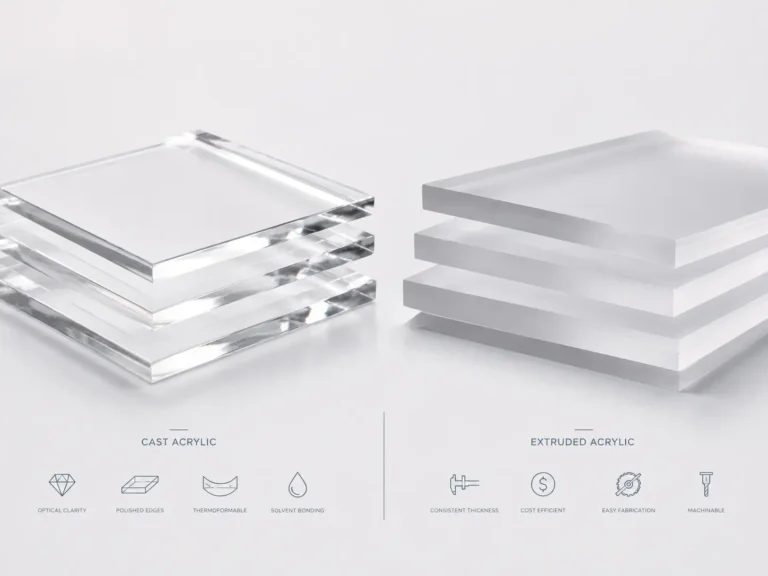
Grandview Acrylic supports B2B buyers with acrylic sheet supply and custom fabrication for displays, signage, retail fixtures, and OEM acrylic display materials. The goal is not only to provide sheets, but also to help buyers reduce sourcing risk before production. For buyers still comparing production routes, the guide on cast vs extruded acrylic sheets can also support early material selection.
FAQ
Are acrylic sheets naturally UV resistant?
Acrylic generally has better outdoor appearance stability than many common plastics, but performance depends on grade, thickness, color, exposure environment, and supplier specifications. Buyers should confirm suitability for outdoor or high-UV applications.
What is the difference between UV resistant and UV filtering acrylic?
UV resistant acrylic focuses on how well the sheet itself resists yellowing, haze, or brittleness. UV filtering acrylic focuses on reducing UV transmission through the sheet. Some projects may require one or both properties.
Will acrylic sheets yellow in sunlight?
Low-grade or unsuitable acrylic may yellow or lose clarity under long-term sunlight exposure. UV resistant acrylic sheets are selected to reduce this risk, but buyers should confirm material grade and application conditions with the supplier.
Are UV resistant acrylic sheets suitable for outdoor signage?
They can be suitable for many outdoor sign faces and panels when the correct grade, thickness, color, and fabrication method are selected. Lighting, installation environment, and weather exposure should also be considered.
Can UV resistant acrylic sheets be laser cut or CNC cut?
Yes, acrylic sheets are commonly laser cut and CNC cut. The final edge quality depends on sheet grade, thickness, cutting settings, design, and finishing requirements.
Can I request custom colors or custom sizes?
For B2B projects, custom colors, custom sizes, and fabrication support may be available depending on quantity, material type, and project requirements. Buyers should provide color references, drawings, and application details.
What should I send before requesting a quote?
Send the application, size, thickness, color or finish, quantity, drawings or reference images, fabrication requirements, and whether the sheet will be used indoors, outdoors, or under lighting.
Conclusion
UV resistant acrylic sheets are not only a material choice. For B2B display, signage, and OEM projects, they affect appearance, light transmission, color consistency, fabrication quality, and long-term project reliability.
Before choosing a sheet, buyers should confirm the application, exposure environment, thickness, color, lighting condition, edge finish, and fabrication method. This helps reduce yellowing risk, processing problems, color mismatch, and assembly issues.
Grandview Acrylic works with B2B buyers on acrylic sheet supply and custom fabrication for displays, signage, and OEM projects. Send your drawings, sizes, colors, thickness requirements, quantity, and application details to discuss suitable acrylic sheet options for your project.
References and Further Reading
The following neutral resources are provided for readers who want to review general PMMA acrylic sheet specifications, fabrication methods, cutting and forming guidance, LED sign face materials, light transmission, UV exposure, and care or cleaning considerations. They are included to support technical understanding, not to compare competitor pricing or product claims.
ASTM International — ASTM D4802 Standard Specification for PMMA Acrylic Plastic Sheet
Useful for understanding general specification language for monolithic poly(methyl methacrylate) acrylic plastic sheets, including composition, sheet quality, optical clarity, and performance-related material properties. View source
Plaskolite — OPTIX® Acrylic Sheet Fabrication Guide
Useful for reviewing general acrylic sheet fabrication topics such as cutting, machining, finishing, forming, annealing, care, cleaning, and how processing conditions may affect edge quality and internal stress. View source
PLEXIGLAS® — Cutting PLEXIGLAS® Acrylic Sheet
Useful for understanding how cutting method, tool selection, sheet thickness, and desired cut-edge quality can affect acrylic sheet processing for display panels, sign faces, inserts, and custom fabricated parts. View source
PLEXIGLAS® — Bending and Forming Acrylic Sheet
Helpful for reviewing forming considerations such as surface heating, linear heating, cooling, protective film handling, and process planning before selecting acrylic sheet thickness or color for bent display components. View source
ACRYLITE® — LED Sign Grade Acrylic Technical Information
Useful for reviewing acrylic sheet use in LED sign applications, including light transmission, clarity, cutting and machining considerations, and sign-grade acrylic performance factors. View source
ACRYLITE® — Care, Cleaning, and Maintaining Acrylic Sheet
Useful for reviewing general care and cleaning guidance for acrylic sheet surfaces, including washing, rinsing, drying, wiping, and scratch-control considerations for visible display surfaces and sign faces. View source
Note: UV resistant acrylic sheet selection can vary by material grade, sheet type, thickness, color, surface finish, light condition, fabrication process, installation environment, packaging method, and final application. Buyers should confirm project-specific details with their acrylic sheet supplier, fabrication partner, engineer, or project team before mass production.