B2B ACRYLIC PRINTING & FABRICATION GUIDE
Printed acrylic is not just about the graphic. It is about the sheet, process, finish, and final project fit.
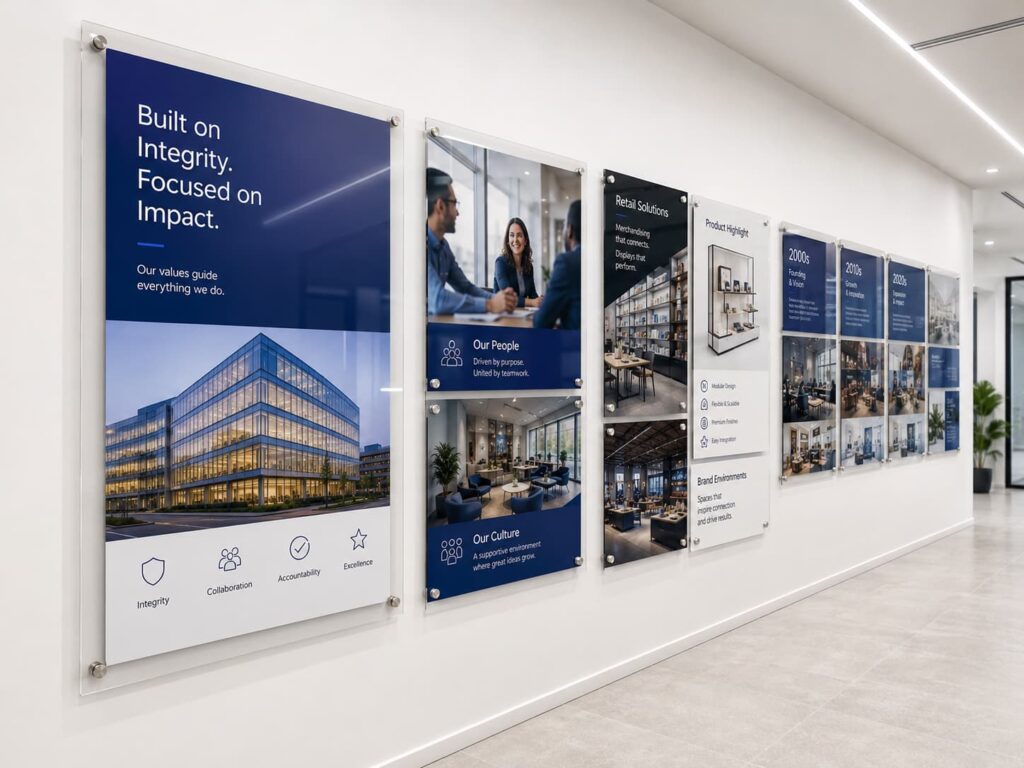
For business signs, retail display panels, POP displays, office branding, menu boards, exhibition graphics, and OEM acrylic components, the final result depends on more than the artwork or printing machine. Sheet type, thickness, printing method, cutting sequence, edge finish, mounting style, surface protection, and packaging can all affect the finished display quality.
01
Material Choice
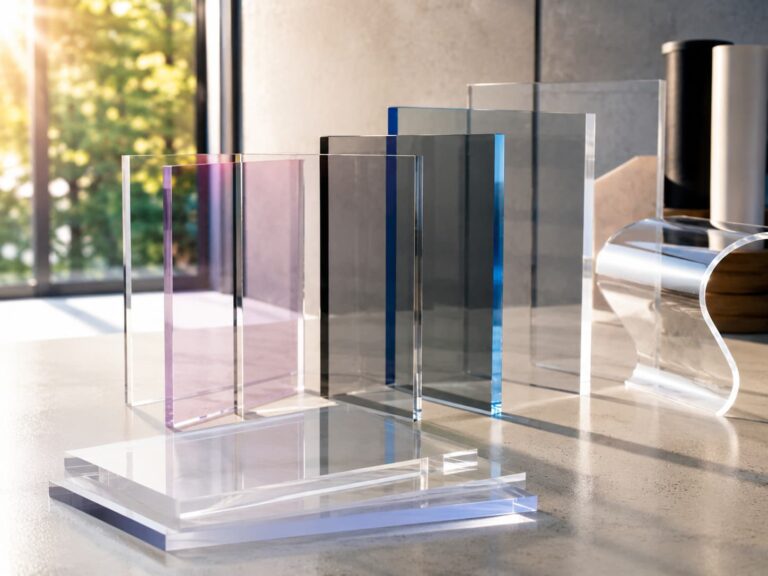
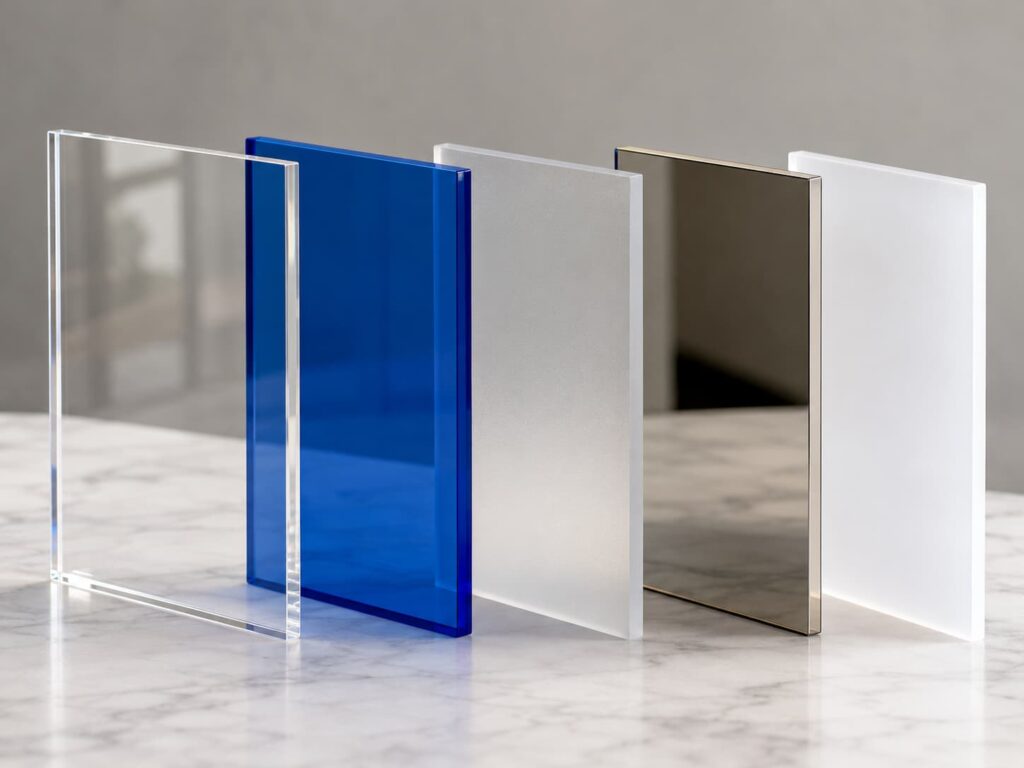
Clear, colored, frosted, mirror, or translucent acrylic can create very different printed results.
02
Printing Method
UV printing, reverse printing, screen printing, or lamination should match the actual application.
03
Fabrication Fit
Cutting, drilling, polishing, bending, and packaging must be planned before production.
For buyers, the key question is not simply “Can acrylic be printed?” The more practical question is: which acrylic sheet, printing method, and fabrication process will work best for the actual application?
Quick Buyer Snapshot
- Best fit: business signs, retail displays, POP panels, office branding, menu boards, wayfinding signs, and OEM display parts.
- Common materials: clear acrylic sheets, colored acrylic sheets, frosted acrylic, mirror acrylic, and translucent acrylic sheets.
- Main processes: UV printing, reverse printing, screen printing, laser cutting, CNC cutting, drilling, polishing, and bending.
- Quote preparation: artwork, size, thickness, quantity, application, print side, fabrication method, and packaging requirements.
Why Printed Acrylic Sheets Matter for B2B Projects
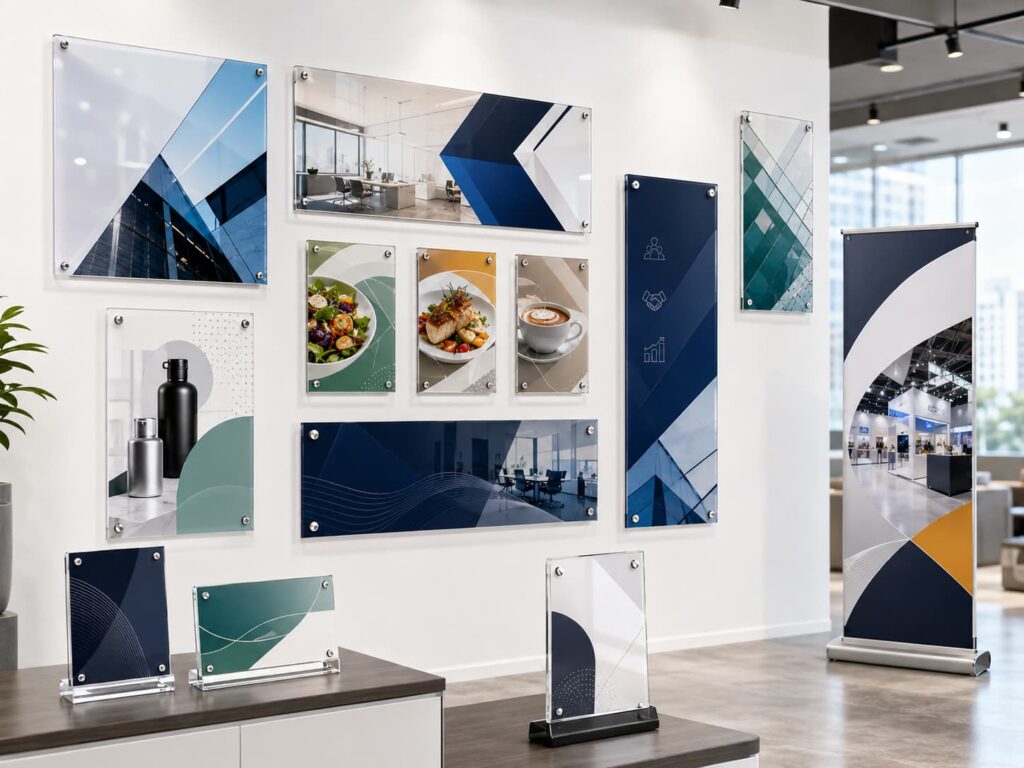
Printed acrylic sheets are often selected when a project requires both visual quality and material stability. Compared with simple printed film or paper-based graphics, acrylic can provide a more rigid, clean, and professional appearance for commercial displays and signage.
In retail and brand display projects, the printed panel may be part of a larger structure. It may need to fit into a metal frame, attach to a display stand, align with lighting, or match other store fixture components. In these cases, the sheet is not just a decorative surface. It becomes part of the final product structure.
That is why B2B buyers should consider acrylic sheet selection, printing method, fabrication accuracy, and packing method together instead of treating printing as a separate step. If the project also involves cut parts, store fixtures, display panels, or sign faces, it is useful to review related material topics such as clear acrylic sheets for display manufacturing, acrylic sheet thickness selection, and custom acrylic CNC cutting.
Buyer Takeaway: For printed acrylic signs and display panels, printing quality is only one part of the final result. Sheet type, thickness, cutting accuracy, edge finish, surface protection, and packaging are just as important for B2B projects.
Common Applications for Custom Printed Acrylic Signs and Display Panels
Printed acrylic is used across many commercial environments. The best sheet type and fabrication method will depend on how the panel is installed, handled, viewed, cleaned, shipped, and maintained.
Business Signs
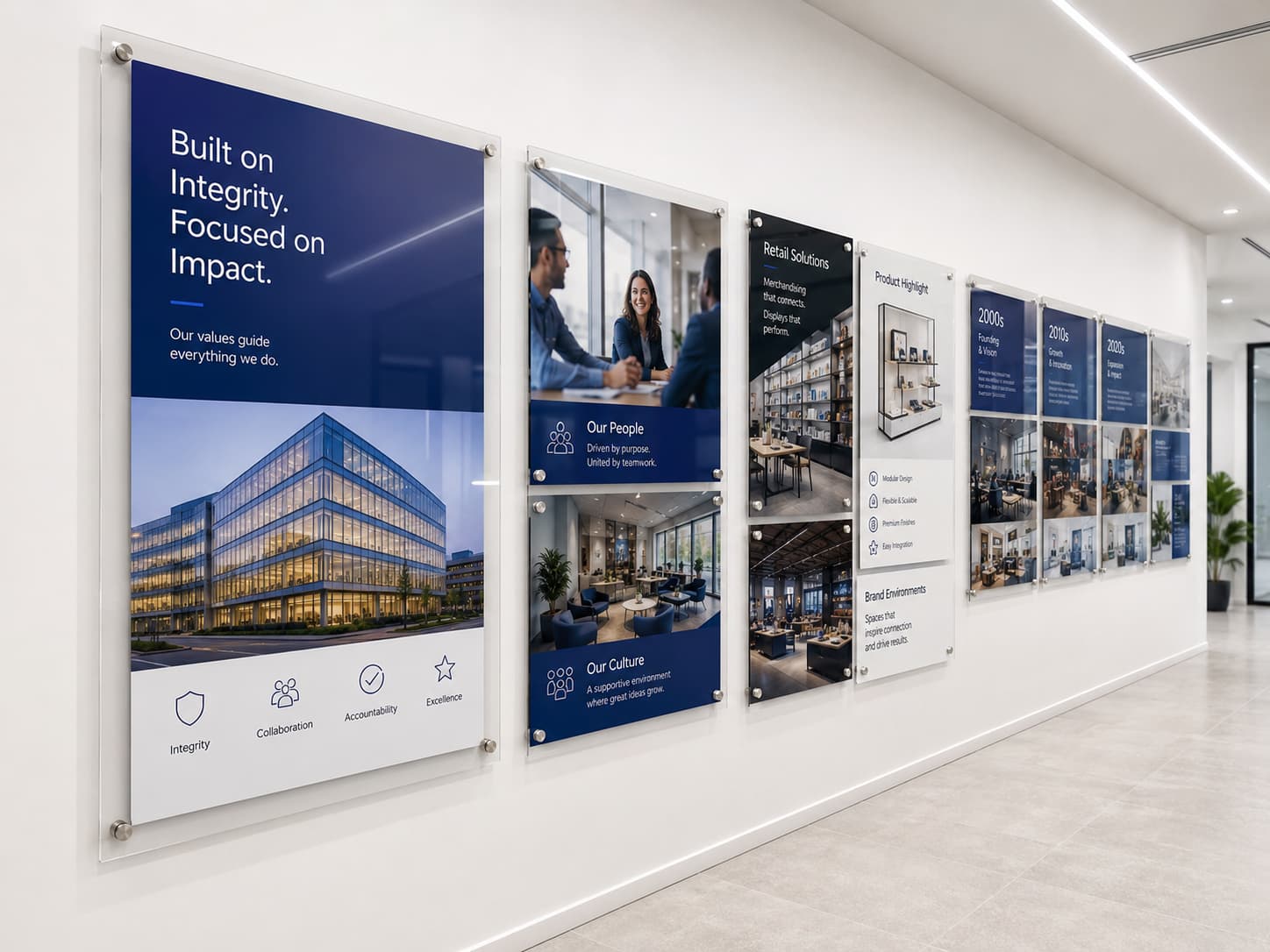
Used for office signs, wall signs, reception panels, directional signs, and interior branding areas.
Retail Displays
Suitable for brand panels, shelf displays, product display stands, cosmetic counters, and store fixture parts.
POP / POS Displays
Used for promotional panels, countertop displays, repeated campaign parts, and custom printed acrylic components.
Menu Boards
Used in restaurants, QSR locations, cafes, and retail service counters where cleaning and readability matter.
Trade Show Displays
Useful for exhibition panels, booth graphics, lightweight display structures, and branded presentation components.
OEM Display Parts
Used for custom printed acrylic parts that must match drawings, tolerances, colors, and batch requirements.
| Application | Typical Use | Buyer Focus |
|---|---|---|
| Business signs | Office signs, reception signs, wall signs | Print clarity, mounting method, thickness |
| Retail displays | Brand panels, shelf displays, product display stands | Color consistency, scratch control, edge finish |
| POP / POS displays | Promotional panels, countertop display parts | Cutting accuracy, repeated batch quality |
| Menu boards | Restaurant and QSR signage | Surface protection, cleaning requirements |
| Wayfinding signs | Directional signs, interior signage | Readability, drilling, installation method |
| Trade show displays | Exhibition panels, booth graphics | Lightweight material, protective packaging |
| OEM display parts | Custom printed acrylic components | Drawing, tolerance, quantity, packing |
For example, a printed acrylic office sign may require clean reverse printing, polished edges, and standoff holes. A retail display panel may need consistent color across many stores. A POP display part may require repeated cutting accuracy so every component fits the same structure.
Choosing the Right Acrylic Sheet Type for Printed Projects
Different acrylic sheet types create different visual effects. Buyers should choose based on the display environment, brand style, lighting condition, fabrication method, and final installation method.
| Acrylic Sheet Type | Suitable Printed Applications | Buyer Focus |
|---|---|---|
| Clear acrylic sheets | Reverse printing, transparent signs, display panels | Clarity, surface protection, edge finish |
| Colored acrylic sheets | Brand displays, decorative signs, retail fixtures | Color consistency, batch stability |
| Frosted acrylic sheets | Office signs, privacy-style panels, light diffusion displays | Surface texture, printing contrast |
| Mirror acrylic sheets | Cosmetic displays, luxury retail panels | Scratch control, masking, handling |
| Translucent acrylic sheets | Lightbox panels, illuminated signs | Light transmission, LED effect |
Clear acrylic is often used when buyers want depth, transparency, or second-surface printing. Colored acrylic can support brand identity, especially for retail displays and decorative panels. Frosted and translucent acrylic sheets are useful when lighting or soft diffusion is part of the design. Mirror acrylic is more sensitive to handling and should be reviewed carefully when cutting, printing, or packing finished parts. For projects that depend heavily on color appearance, it is also helpful to review colored acrylic sheets for displays before confirming a production order.
Pro Tip
For brand display projects, do not approve acrylic sheets only from screen images. Buyers should confirm physical samples, lighting conditions, sheet thickness, and batch consistency before mass production.
UV Printing, Reverse Printing, and Screen Printing on Acrylic
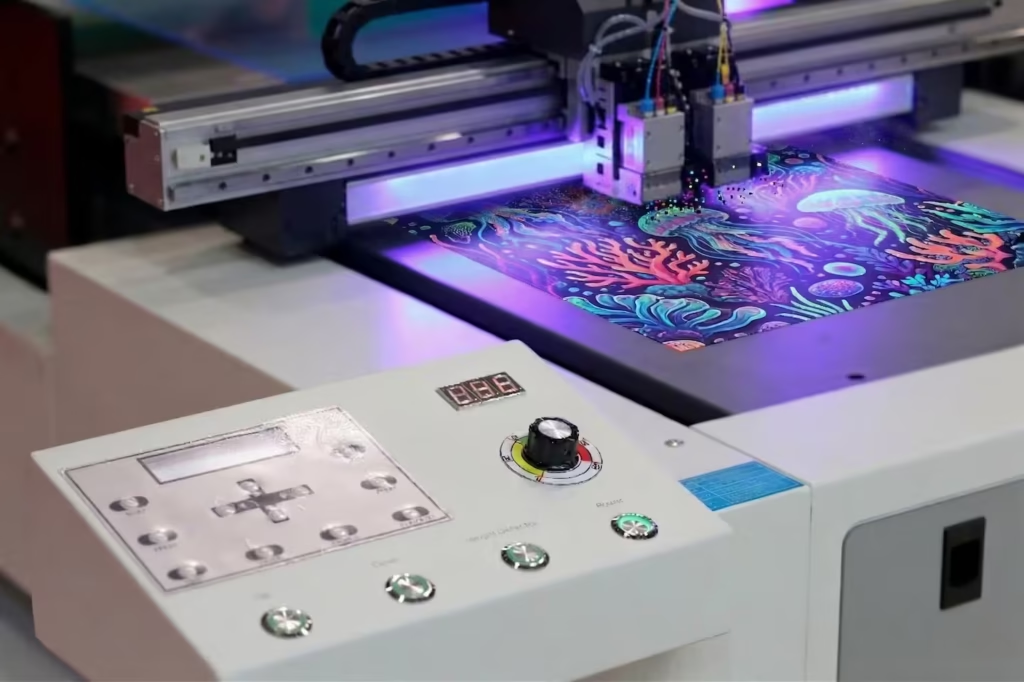
Printing method affects cost, visual result, durability, and production workflow. There is no single method that fits every project. The right method depends on artwork complexity, color requirements, viewing direction, quantity, installation environment, and whether the panel needs additional cutting or bending.
| Printing Method | Common Use | What Buyers Should Confirm |
|---|---|---|
| UV printing | Full-color display graphics, business signs, retail panels | Ink adhesion, surface cleanliness, curing quality |
| Reverse printing | Clear acrylic signs, protected graphics, transparent panels | Viewing direction, background color, installation side |
| Screen printing | Repeated logos, simple color graphics, batch production | Color matching, batch consistency |
| Film or graphic lamination | Promotional displays, temporary graphics | Adhesion, edge peeling risk, durability needs |
UV printing is commonly used for full-color graphics and flexible custom designs. Reverse printing is often used on clear acrylic sheets, where the image is printed on the back side and viewed through the acrylic surface. This can help protect the printed graphic from direct contact, depending on the application. Screen printing may be suitable for repeated logos or simple color graphics when batch consistency is important.
For outdoor signs or illuminated panels, buyers should also confirm whether the printed acrylic will face sunlight, cleaning chemicals, moisture, or LED lighting. Performance can vary by ink system, acrylic grade, sheet color, print layer, and project environment.
Simple B2B Process Map
Artwork Review
Sheet Selection
Printing Method
Cutting & Finishing
Packing Review
Fabrication Details That Affect Printed Acrylic Quality
Many printed acrylic problems happen after printing, not during printing. Cutting, polishing, drilling, bending, and packing can all affect the final appearance. If a project needs custom shapes, repeated parts, or tight assembly fit, fabrication should be reviewed before production begins.
For example, if a printed panel needs mounting holes, the buyer should confirm hole position, hole diameter, and whether holes are drilled before or after printing. If the panel needs polished edges, the supplier should understand the required edge finish before production. If the acrylic part will be inserted into a display structure, thickness tolerance and cutting accuracy become more important. For projects with complex shapes, buyers can also review acrylic sheets for laser cutting and Acrylic CNC Service for custom displays and precision-cut parts.
Before Printing
- Confirm acrylic sheet type and thickness
- Check whether the artwork needs white ink or backing color
- Confirm front printing or reverse printing
- Review whether cutting should happen before or after printing
After Printing
- Review edge polishing and visible edge requirements
- Confirm drilling, bending, bonding, or mounting details
- Protect printed surfaces during handling
- Use suitable packaging for finished panels
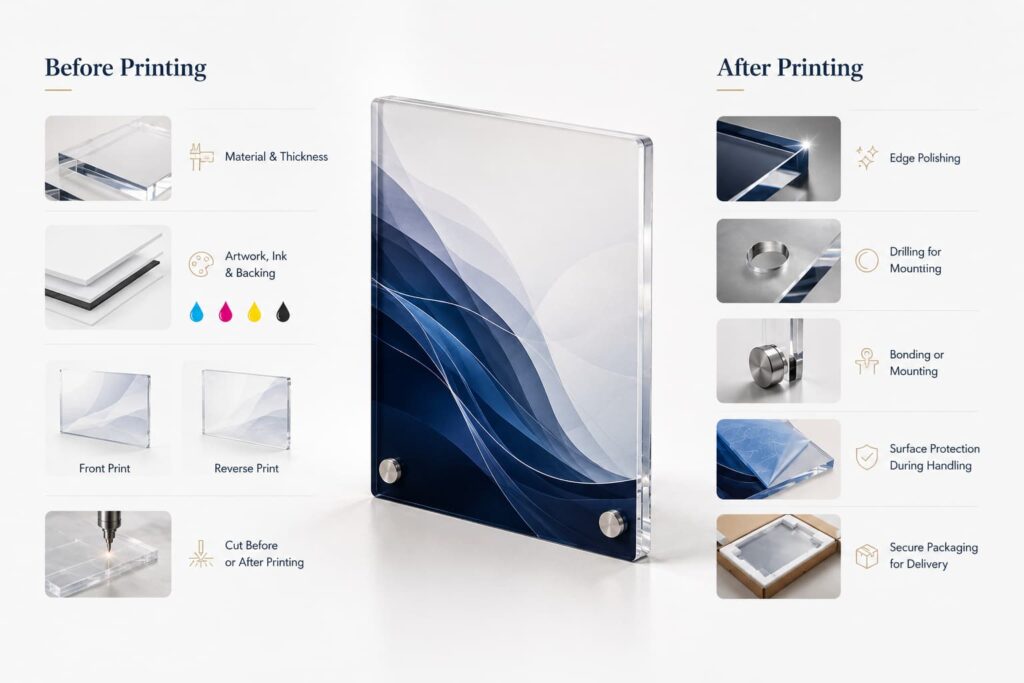
Common fabrication steps include:
- Laser cutting for clean custom shapes
- CNC cutting for thicker panels or precision parts
- Edge polishing for visible display edges
- Drilling mounting holes for signs and wall panels
- Heat bending for display stands or angled parts
- Protective masking to reduce scratches during handling
- Custom packing for finished printed panels
Important Note
If the acrylic sheet will be printed, cut, polished, drilled, or bent, confirm the full fabrication sequence before production. Some projects may require printing before cutting, while others may require cutting and edge finishing before printing.
Common Problems in Printed Acrylic Projects and How to Avoid Them
Acrylic printing projects may look simple on a design file, but production details can create quality issues if they are not confirmed early. The following problems are common in display, signage, and OEM projects.
Mistake 1: Choosing only by appearance
A sheet may look good in a photo but behave differently under lighting, printing, cutting, or repeated store fixture assembly. Confirm samples and project conditions before mass production.
Mistake 2: Not confirming print side
Front printing and reverse printing create different visual results. If the viewing side is not marked clearly, the final panel may be installed in the wrong direction.
Mistake 3: Treating printed panels like raw sheets
Finished printed acrylic panels need more careful handling and packaging than raw sheet stock, especially when the surface, edge, or graphic layer is visible in the final product.
| Common Problem | Possible Cause | How to Reduce Risk |
|---|---|---|
| Color mismatch | Different sheet batches, lighting conditions, or print settings | Confirm physical samples and color references |
| Poor ink adhesion | Surface contamination or unsuitable printing process | Confirm cleaning, ink system, and acrylic grade |
| Scratches during handling | Inadequate masking or packing | Use protective film and proper packaging |
| Rough or chipped edges | Wrong cutting method or poor tool condition | Confirm laser/CNC method and edge finish |
| Wrong print direction | Front printing vs reverse printing not confirmed | Mark viewing side clearly in drawings |
| Assembly issues | Thickness or cutting tolerance not reviewed | Confirm finished size, slot width, and tolerance needs |
| Damage during shipping | Finished panels packed like raw sheets | Use project-specific protective packing |
For OEM display projects, these details matter because one small problem may repeat across hundreds or thousands of parts. A reliable acrylic sheet manufacturer should help buyers review both material selection and fabrication requirements before bulk production.
Buyer Takeaway: For repeated retail display or signage projects, consistency matters more than one perfect sample. Buyers should review color, thickness, cutting accuracy, surface protection, and packing before confirming production.
Custom Printed Acrylic Projects: Buyer Decision Matrix
Before choosing the cheapest option, buyers should match the project type with the right material and fabrication route. A thin indoor retail insert, a thick reception sign, and a translucent LED sign panel should not be evaluated with the same checklist.
| Project Need | Recommended Review Point | Why It Matters |
|---|---|---|
| High-end office sign | Clear acrylic, reverse printing, polished edge, standoff holes | Creates cleaner depth and a more finished wall-mounted effect |
| Retail display rollout | Color consistency, repeated cutting accuracy, protective packing | Helps maintain the same brand look across repeated store fixtures |
| POP display campaign | Fast production, repeatable shapes, safe surface protection | Useful for campaign parts that need consistent appearance and quick assembly |
| Illuminated sign panel | Translucent acrylic, light transmission, LED effect, print density | Helps reduce uneven lighting and visible hot spots |
| OEM acrylic component | Drawing, tolerance, fabrication sequence, packaging method | Helps reduce assembly problems and repeated batch defects |
What Buyers Should Confirm Before Requesting a Quote
A good quote depends on clear project information. Instead of treating quotation as a simple price request, B2B buyers should use this stage to confirm how the material, printing method, fabrication sequence, and packaging plan work together.
Quote Review Knowledge Points
These are the details that usually determine whether a printed acrylic project can move from artwork to stable production without repeated revisions.
Application Context
Indoor signs, outdoor panels, illuminated displays, and high-touch retail fixtures require different sheet choices, print layers, and surface protection.
Artwork & Print Side
Front printing, reverse printing, white ink, backing color, and viewing direction can change depth, readability, scratch exposure, and installation logic.
Sheet & Fabrication Fit
Thickness, hole position, edge finish, cutting tolerance, bending needs, and bonding details affect whether the printed panel can fit the final structure.
Batch & Packaging Control
Repeated orders need stable color, consistent cutting, protected surfaces, and packaging designed for finished printed panels rather than raw sheets.
Planning a Custom Printed Acrylic Project?
Send your artwork, size, thickness, quantity, and application details for a practical acrylic sheet and fabrication review.
Why Work with an Acrylic Sheet Manufacturer for Custom Printed Projects?
For simple decorative signs, buyers may only need an online sign shop. But for B2B display manufacturing, retail fixtures, signage panels, and OEM acrylic parts, working with an acrylic sheet manufacturer or custom fabrication supplier can make communication easier.
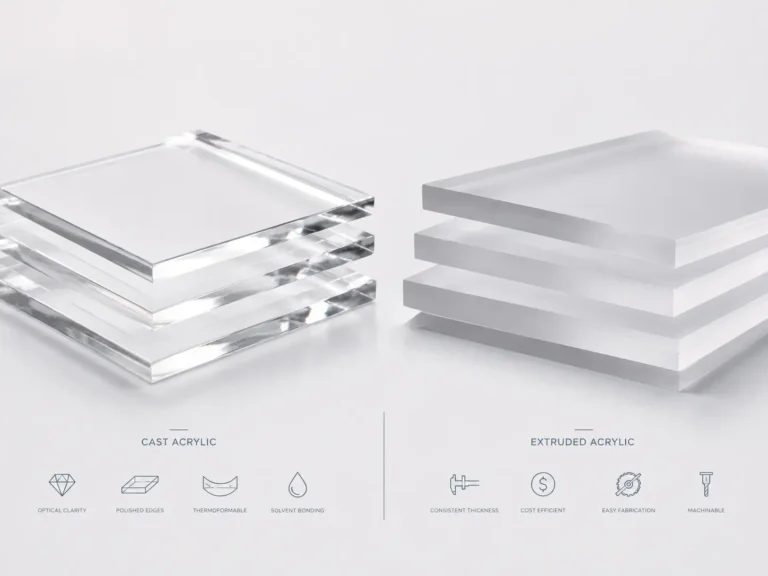
A factory-side supplier can help review sheet type, thickness options, color consistency, cutting method, edge finish, and packing requirements together. This is especially useful when the project includes printed panels plus additional fabrication such as cutting, bending, polishing, drilling, or assembly support. For buyers still comparing material types, the guide on cast vs extruded acrylic sheets can also support early material selection.
Grandview Acrylic supports B2B buyers with acrylic sheet supply and custom fabrication for display, signage, retail, and OEM applications. The goal is not only to provide sheets, but also to help buyers reduce avoidable material and fabrication risks before production.
FAQ
Can acrylic sheets be UV printed?
Yes, acrylic sheets can be UV printed for many display and signage applications. Buyers should confirm sheet surface condition, ink compatibility, printing side, and final application environment before production.
What acrylic sheet is best for printed signs?
Clear acrylic, colored acrylic, frosted acrylic, and translucent acrylic can all be used for printed signs. The best choice depends on viewing effect, lighting, thickness, mounting method, and whether the sign is used indoors or outdoors.
What is reverse printing on acrylic?
Reverse printing means printing on the back side of a clear acrylic sheet so the image is viewed through the acrylic surface. It is often used for signs, display panels, and brand graphics where a cleaner front surface is desired.
Can printed acrylic sheets be laser cut or CNC cut?
Yes, printed acrylic sheets can often be laser cut or CNC cut, but the cutting sequence should be confirmed before production. Some projects require cutting before printing, while others require printing first.
Are printed acrylic panels suitable for retail displays?
Printed acrylic panels are widely used for retail displays, POP displays, product display stands, and brand fixture panels. Buyers should confirm color consistency, scratch protection, edge quality, and packaging for repeated orders.
What should I prepare before requesting a custom printed acrylic quote?
Prepare artwork, size, thickness, acrylic type, color, quantity, printing side, application, and any cutting, polishing, drilling, bending, or packaging requirements.
Conclusion
Custom printed acrylic sheets can be used for business signs, retail displays, POP panels, office branding, wayfinding signs, and OEM display components. For B2B buyers, the most important decision is not only how the acrylic will be printed, but how the sheet, printing method, cutting process, edge finish, mounting style, and packaging work together.
By reviewing these details before production, buyers can reduce avoidable problems such as color mismatch, rough edges, poor print direction, scratches, or assembly issues.
Grandview Acrylic provides acrylic sheet supply and custom fabrication support for B2B display and signage projects. If you are planning a custom printed acrylic project, send your artwork, drawings, thickness, size, quantity, and application details for review.
References and Further Reading
The following neutral resources are provided for readers who want to review general PMMA acrylic sheet specifications, fabrication methods, cutting and forming guidance, LED sign face materials, light transmission, UV resistance, and care or cleaning considerations. They are included to support technical understanding, not to compare competitor pricing or product claims.
ASTM International — ASTM D4802 Standard Specification for PMMA Acrylic Plastic Sheet
Useful for understanding general specification language for monolithic poly(methyl methacrylate) acrylic plastic sheets, including composition, sheet quality, optical clarity, and performance-related material properties. View source
Plaskolite — OPTIX® Acrylic Sheet Fabrication Guide
Useful for understanding general acrylic sheet fabrication topics such as cutting, machining, finishing, forming, annealing, care, cleaning, and how processing conditions may affect edge quality and internal stress. View source
PLEXIGLAS® — Cutting PLEXIGLAS® Acrylic Sheet
Useful for understanding how cutting method, tool selection, sheet thickness, and desired cut-edge quality can affect acrylic sheet processing for display panels, sign faces, inserts, and custom fabricated parts. View source
PLEXIGLAS® — Bending and Forming Acrylic Sheet
Helpful for reviewing forming considerations such as surface heating, linear heating, cooling, protective film handling, and process planning before selecting acrylic sheet thickness or color for bent display components. View source
ACRYLITE® — LED Sign Grade Acrylic Technical Information
Useful for reviewing acrylic sheet use in LED sign applications, including light transmission, clarity, cutting and machining considerations, and sign-grade acrylic performance factors. View source
ACRYLITE® — Care, Cleaning, and Maintaining Acrylic Sheet
Useful for reviewing general care and cleaning guidance for acrylic sheet surfaces, including washing, rinsing, drying, wiping, and scratch-control considerations for visible display surfaces and sign faces. View source
Note: Printed acrylic sheet selection can vary by material grade, sheet type, thickness, color, surface finish, printing method, lighting condition, fabrication process, installation environment, packaging method, and final application. Buyers should confirm project-specific details with their acrylic sheet supplier, fabrication partner, engineer, or project team before mass production.