MATERIAL TYPE · LIGHT · FINISHED PART
One sheet can belong to five categories at once.
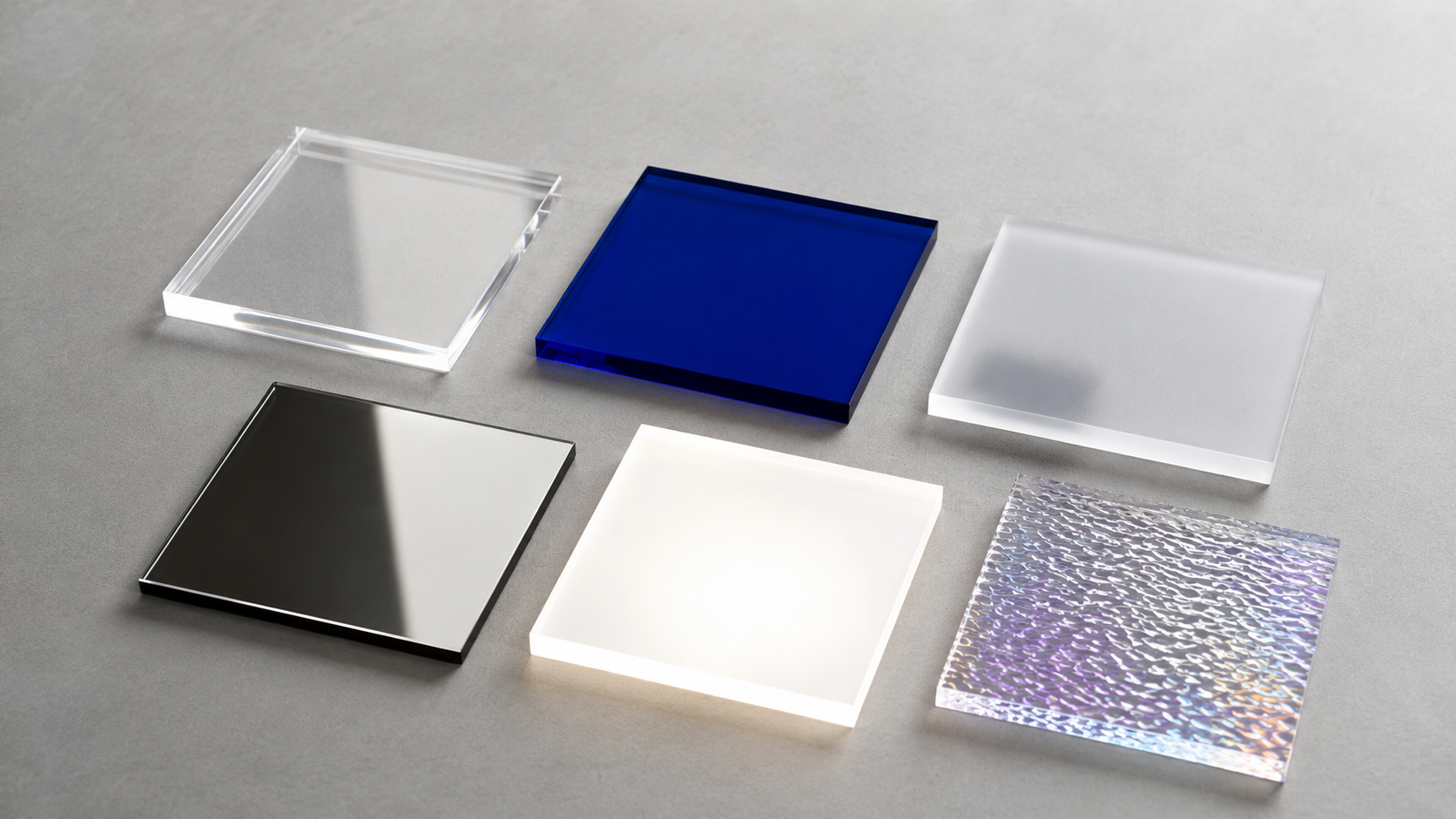
Clear, colored, frosted, and mirror describe what buyers first notice. A workable specification must also define how the sheet handles light, fabrication, use, and delivery.
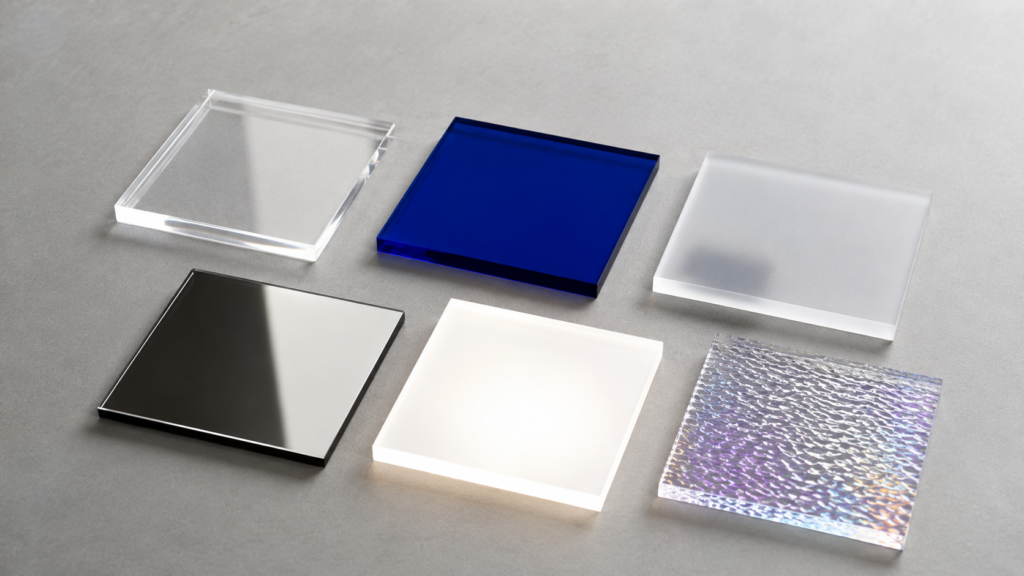
“Blue acrylic sheet” sounds like a specification, but it is only the beginning of one.
The sheet could be transparent, translucent, or opaque. It might have a gloss, matte, or textured surface. It could be cast or extruded, intended for indoor decoration, backlighting, outdoor exposure, machining, bending, or printing. The buyer may need full sheets, cut blanks, or completed components.
Five Questions Define the Acrylic Sheet Type
Acrylic sheets can belong to several categories at the same time. Clear, colored, frosted, and mirror are useful starting points, but they do not completely define how the material will look, process, or perform as a finished part.
How is the sheet made, and does the manufacturing route affect the planned processing?
Should the viewer see through it, receive softened light, or see no detail behind it?
What should the visible face reflect, conceal, soften, or emphasize?
Does the application require a project-specific grade rather than general-purpose acrylic?
Where should material supply end and fabrication begin?
None of these labels replaces the others. For example, “frosted” describes a surface or visual effect; it does not automatically identify the manufacturing process, light-diffusing performance, thickness, or delivery format.
Start With What the Viewer and the Light Must Do
The first selection step does not require a long material catalog. Begin with the visual job. ASTM D1003 treats haze and luminous transmittance as separate optical measurements, which is a useful reminder that “clear,” “lets light through,” and “diffuses light” do not mean the same thing.[1]
Choose the visual function first. Confirm the grade and fabrication second.
Direct visibility is the job.
START WITH CLEAR OR TRANSPARENTLight passes, detail recedes.
COMPARE TRANSLUCENT AND FROSTEDVisibility must be controlled.
START WITH OPAQUE GRADESReflection is the function.
EVALUATE MIRROR ACRYLICQuick Comparison of Common Acrylic Sheet Types
This comparison provides an initial direction, not a final engineering specification. Panel dimensions, thickness, support, fabrication, mounting, lighting, and environment still need to be reviewed.
| Acrylic type | Main visual function | Common applications | What buyers should confirm |
|---|---|---|---|
| Clear | Maximum visibility | Transparent covers, guards, cases, enclosures, furniture parts | Clarity, surface condition, thickness, edge finish, support |
| Colored | Color with controlled transparency | Brand panels, interiors, lighting features, fixtures | Transparent, translucent, or opaque; lighting; physical sample |
| Frosted / Matte | Softened view and reduced reflection | Privacy panels, partitions, covers, decorative surfaces | Finish sides, cleaning, fingerprint visibility, lighting |
| Mirror | Reflective appearance | Decorative panels, furniture details, exhibition components | Flat support, viewing distance, backing, surface protection |
| Light-Diffusing | Controlled light distribution | Lightboxes, luminaires, illuminated and architectural panels | Grade, thickness, LED arrangement, brightness, diffusion |
| Decorative | Pattern, angle, or special surface effect | Branded interiors, furniture accents, event installations | Viewing angle, pattern variation, orientation, batch appearance |
| Functional Grade | Application-specific behavior | Outdoor panels, electronics, equipment covers, high-contact areas | Exact grade, technical data, processing limits, documentation |
How the Main Acrylic Sheet Types Behave in Real Projects
The following categories are organized by their most important buyer decision—not by how many product names can be fitted into an acrylic catalog.
Clear Acrylic Sheets
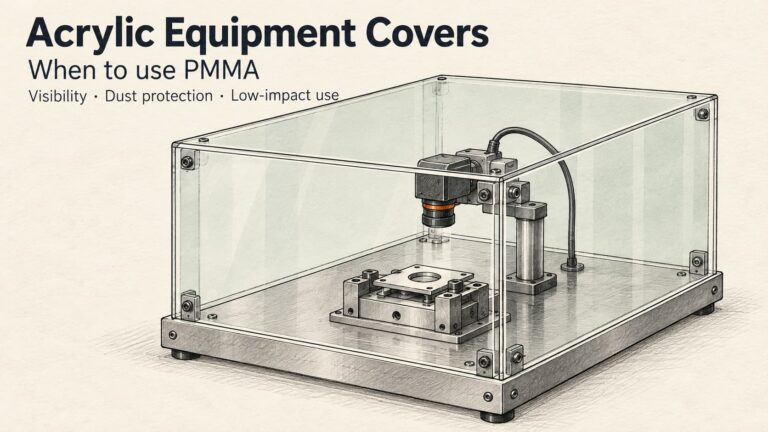
Clear acrylic sheets are used when direct visibility is the main requirement. Typical examples include transparent machine covers, product enclosures, furniture panels, protective screens, cases, and components where the contents must remain visible.
Clear material also makes fabrication quality easier to see. Scratches, rough edges, bubbles in a bonded joint, and poor polishing may be more noticeable than on an opaque sheet.
For close-view or customer-facing parts, evaluate surface protection, edge appearance, hole quality, assembly details, and packaging—not transparency alone.
Colored Acrylic: Transparent, Translucent, or Opaque?
Colored acrylic sheets may preserve visibility, soften it, or block it. The color name alone does not tell the buyer what happens to light.
Objects and detail remain visible through the color.
Light passes while detail behind the sheet becomes less distinct.
Visibility is blocked; exact light blocking still depends on grade.
The same nominal color may appear different in daylight, under warm or cool LEDs, when backlit, or when ordered in another thickness. For a deeper optical comparison, see the guide to transparent, translucent, and opaque acrylic sheets.
Frosted, Matte, and Textured Acrylic
Frosted acrylic softens visibility and creates a less glossy appearance. It is often considered for privacy panels, office partitions, furniture inserts, decorative covers, and interior features.
However, “frosted,” “matte,” and “light-diffusing” are not automatically interchangeable. A frosted surface may reduce glare or blur detail without being engineered to distribute LED light evenly.
Textured acrylic adds orientation to the specification. Ribbed, patterned, or embossed surfaces may look different when rotated, cut, bent, or installed beside another panel.
Mirror and Decorative Acrylic
Mirror acrylic uses a reflective layer to create a mirror-like appearance while remaining suitable for many lightweight decorative and fabricated applications.
The final reflection depends on more than the sheet. Panel dimensions, flatness, backing, mounting pressure, and viewing distance can influence visible distortion. Surface masking, handling, and packaging also require attention.
Decorative categories can include gold mirror, iridescent, glitter, pearlescent, embedded-flake, and other effect sheets. For angle-dependent or patterned materials, approve a sample large enough to show orientation, pattern distribution, and expected variation.
Browse the Grandview acrylic material catalog for available visual categories and product-specific information.
Light-Diffusing and Functional Acrylic Grades
Acrylic for illumination should be selected according to the lighting method, not simply because the sheet appears white or translucent.
Backlit, edge-lit, and side-lit systems may require different optical behavior. PLEXIGLAS, for example, separates acrylic materials intended for backlighting from materials designed for edge lighting in its technical product guidance.[3]
The finished effect also depends on sheet grade, thickness, LED arrangement, cabinet depth, color, and surface. A raw sample held near one lamp is not a substitute for testing the intended lighting assembly.
Functional Grades Are Requirements, Not Decorative Names
Some acrylic sheets are formulated or treated for a specific operating condition. These may include UV-resistant, light-diffusing, abrasion-resistant, anti-static, electrostatic-dissipative, UV-filtering, UV-transmitting, or impact-modified grades.
If yes, confirm the exact product grade and supporting technical information. Do not treat UV resistance, hard coating, static control, light diffusion, or impact modification as standard properties of every acrylic sheet.
This is especially important for regulated applications, outdoor exposure, electronic enclosures, protective installations, and projects in which the required property must be documented or tested.
Cast and Extruded Run Across the Visual Categories
Cast and extruded are manufacturing choices—not separate colors or finishes. A clear, colored, frosted, or specialty sheet may still require the production method to be confirmed separately.
Visual type answers “what should it look like?” Manufacturing route answers “how was this sheet produced?”
The manufacturing process may influence thickness behavior, forming, engraving, machining, and finishing. Neither option should be described as universally better. ACRYLITE’s technical comparison likewise separates the two production methods before discussing their respective characteristics.[2]
A buyer planning detailed engraving may prioritize different behavior from one producing thermoformed covers or tightly fitted CNC components. Continue with the full cast vs extruded acrylic sheet guide when the manufacturing route is the central decision.
Choose the Sheet With the Finished Part in Mind
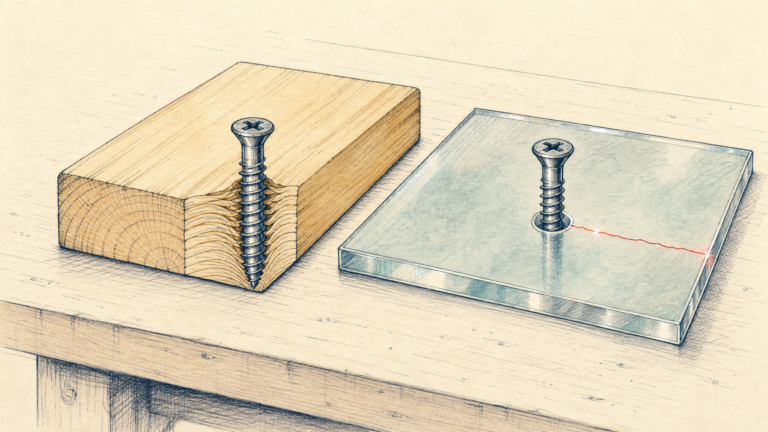
A raw sheet sample can look acceptable and still become unsuitable after processing. The material should be reviewed against the finished geometry, visible surfaces, assembly, and production sequence.
The sheet changes roles as it moves through production.
Laser, saw, or CNC edge
Holes, slots, and fit
Polished or machined edges
Bending and thermoforming
Front or reverse surface
Bonding and mounting
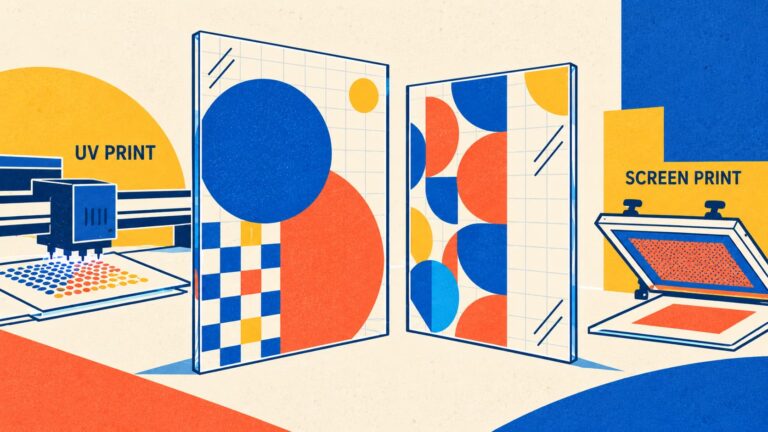
The sequence matters too. Printing before bending, polishing before bonding, removing masking too early, or changing the backing behind a translucent color may introduce different production and appearance risks.
Thickness also needs to be evaluated with dimensions, support, mounting, and geometry. A nominal thickness alone does not establish whether a panel will remain rigid or fit an assembly. The acrylic sheet thickness guide covers these factors in more detail.
Validate the Complete Sample Before Bulk Production
A useful sample should represent the intended production combination. This is especially important for color-sensitive projects, illuminated components, mirror surfaces, fitted assemblies, and repeat orders.
Approve the combination—not just the color chip.
Confirm the acrylic type, grade, and relevant manufacturing route.
Transparent, translucent, opaque, frosted, mirror, or another defined effect.
Use the intended thickness and representative part size when they affect appearance or fit.
Review daylight, backlighting, edge lighting, or installed illumination as relevant.
Include representative edges, holes, slots, bends, prints, or joints.
Check reflection, contrast, diffusion, and distortion under the intended installation condition.
Whole Sheet, Cut Blank, or Finished Component?
Material selection and purchasing format should be decided together. The same acrylic grade can enter the buyer’s workflow at three very different points.
Whole Sheet
Suitable when the buyer maintains stock or performs cutting and fabrication locally.
Cut-to-Size Blank
Reduces internal cutting work for panels, inserts, covers, and standardized parts.
Finished Component
May include drilling, machining, polishing, bending, printing, bonding, or assembly from drawings.
Before requesting a quotation, prepare the intended acrylic type, visual effect, thickness, dimensions, fabrication requirements, quantity, and delivery destination. Grandview Acrylic can review these details for sheet supply or drawing-based acrylic machining.
PROJECT MATERIAL REVIEW
Still deciding between clear, colored, frosted, mirror, or a functional grade?
Share the application, desired visual effect, lighting condition, thickness, dimensions, and quantity. Add a drawing when the material will be processed into a finished component.
Submit the Acrylic RequirementFrequently Asked Questions
What are the main types of acrylic sheets?
The most familiar visual types are clear, colored, frosted, mirror, translucent, opaque, textured, and decorative acrylic. Sheets may also be classified by manufacturing process, functional grade, thickness, and supply format.
Is Plexiglass a different type of acrylic?
Plexiglass is commonly used as a general name for PMMA acrylic sheet, although PLEXIGLAS is also a registered brand. Perspex, Lucite, and ACRYLITE are other brand names associated with PMMA products. They are not visual categories such as frosted or mirror acrylic.
Is frosted acrylic the same as translucent acrylic?
Not necessarily. Frosted usually describes a surface or visual finish. Translucent describes how light passes through the sheet. One material may be both, but the terms do not define the same property.
Which acrylic sheet is best for lighting?
Translucent or engineered light-diffusing grades are common starting points. The final choice depends on the lighting method, material grade, thickness, LED arrangement, cabinet depth, desired brightness, and acceptable hotspot visibility.
Which acrylic type is best for laser cutting?
There is no universal answer for every part. Manufacturing process, thickness, color, surface, engraving, edge requirement, geometry, and machine settings all influence the result. Test cutting is advisable when fit or visible edge quality is critical.
Can acrylic color be approved from a photograph?
A photograph is useful for initial screening but should not be the final approval method for color-sensitive production. Monitor settings, camera exposure, lighting, thickness, backing, and surface finish can change the apparent color.
Can the same acrylic type be supplied as a whole sheet and a finished part?
Often, yes. The available supply form depends on the material, dimensions, processing requirements, quantity, and supplier capability. State whether you need whole sheets, cut blanks, or completed components in the RFQ.
Conclusion: Select the Complete Specification
Choosing among the different types of acrylic sheets is not simply a matter of selecting clear, colored, frosted, or mirror.
Start with the required visual function: visibility, softened light, privacy, light blocking, reflection, or a decorative effect. Then confirm the manufacturing process, grade, thickness, fabrication, environment, sample conditions, and supply format.
A complete specification gives the supplier something useful to evaluate—and gives the buyer a better chance of receiving a material that works as a finished part, not just one that looks right as an unprocessed sheet.
TECHNICAL SOURCE MATERIAL
References and Further Reading
-
[1]ASTM D1003 — Haze and Luminous Transmittance of Transparent Plastics
Source: ASTM International. Supports the distinction between haze and luminous transmittance when discussing clear, translucent, and light-scattering plastics.
View Source -
[2]What Is the Difference Between Cast and Extruded Acrylic Sheet?
Source: ACRYLITE / POLYVANTIS. Supports the distinction between cell-cast and continuously manufactured extruded acrylic sheets.
View Source -
[3]Acrylic Sheets for LED Backlighting and Edge Lighting
Source: PLEXIGLAS / Röhm. Supports the distinction between acrylic materials developed for backlighting and those intended for edge-lighting applications.
View Source
Material appearance and processing remain grade- and project-specific. Confirm the relevant product data, drawing requirements, and representative sample before production.